
Guide: When Honking on Mallorca Is Allowed — and When It Causes Trouble
Guide: When Honking on Mallorca Is Allowed — and When It Causes Trouble
Not every press of the horn is legal. A clear question, a few rules from the traffic code, and practical tips for daily life and holidays in Mallorca.
Key question: When is honking allowed on Mallorca — and when can it get expensive?
The horn is still an omnipresent signal on the island: in the morning on Passeig Mallorca when taxi drivers tap their horns, or in the evening in Santa Catalina when someone is being called to a parking space. But what many treat as a reflex is legally restricted. In short: honking is permitted when it serves safety; anything else can result in a fine.
Critical assessment
The traffic rules do not treat the horn as a free pass for trouble on the roads. Article 110 of the Spanish traffic regulations prohibits abusive use. In practice this means: unnecessary or provocative honking is an administrative offense and can be punished with a fine — commonly up to around €80. Points are generally not deducted for this. The aim of this paragraph is clear: less noise, less stress, fewer aggressive situations behind the wheel.
What is often missing from the public debate
The debate usually focuses on fines — but less on how confusion arises, as recent coverage of new penalties shows in New Fines in Mallorca: Why Buyers Are Now Being Charged Too. Tourists with rental cars do not know the fine distinctions, as covered in Cruising Safely on Mallorca: What Tourists and Authorities Should Finally Do Differently. Commuters on the Ma-20 or holiday drivers on the winding MA-10 often react reflexively. There is a lack of visible signs at critical points, information at rental stations, and a simple, memorable multi-language communication campaign.
Typical everyday scene in Mallorca
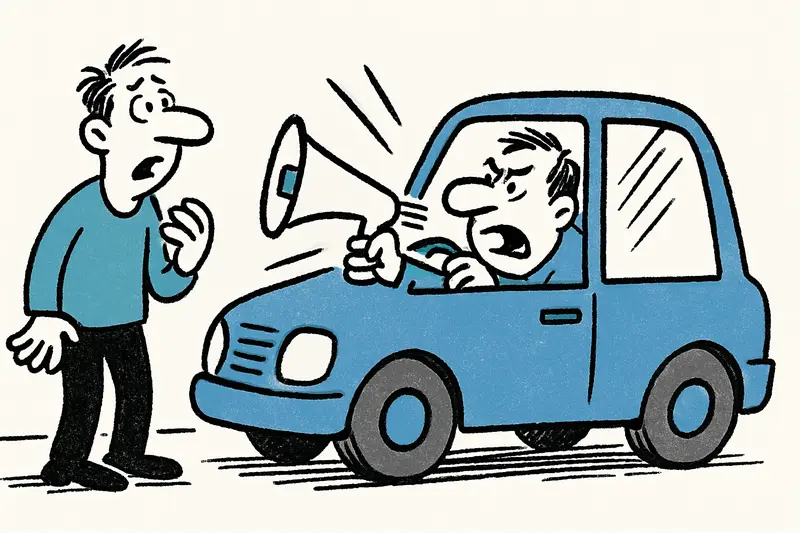
Imagine: a Saturday morning, market in Olivar, vans squeezing into Calle Sindicat. A driver honks because a customer is slowly reversing out of a space. A passerby startles, voices rise. Such minor conflicts are everyday occurrences here. They show: the horn triggers more than a warning — it can change the mood.
What the rules aim for — and where exceptions apply
Honking is allowed when it directly helps prevent an accident — for example during tight overtaking maneuvers outside built-up areas or as a warning signal before a narrow mountain bend. Honking as a greeting, out of anger, or as a pressure tactic in city traffic is not permitted. Nighttime honking in residential areas is also taboo, as is honking in tunnels, on overpasses, or at level crossings, because the noise is amplified and distracting in those places.
Concrete proposals for improvement
A few practical ideas for authorities and everyday life: better signage on mountain roads indicating mutual caution; information leaflets at rental car companies and the airport; brief notes in driving lessons addressing local specifics like the MA-10; targeted patrols in residential areas during night hours; and clear guidance for taxi and delivery drivers so honking does not become routine.
What drivers can do here, concretely
Rule number one: only honk when there is an immediate danger. Use a short, targeted beep instead of a long press. In narrow, blind bends in the Tramuntana, drive slowly and use headlights or flash signals to communicate. In residential streets and at night: stay calm. If you believe a fine was unjustified, note the incident and consider contesting it — see Who pays when the police direct drivers into a residents-only zone? A Mallorca farce with consequences; better informed, you can make a clearer argument.
Conclusion
The horn is a safety tool, not a vent for frustration. On Mallorca, between harbor activity and narrow mountain roads, a little less reflex and a little more consideration would noticeably ease traffic. Authorities, rental companies and drivers can work together to ensure honking is needed less often — and when it is used, it is used correctly.
Frequently asked questions
When is honking allowed while driving in Mallorca?
Can you get fined for honking in Mallorca?
Is it okay to honk in Mallorca traffic if someone is blocking the road?
Where is honking especially discouraged in Mallorca?
What should rental car drivers in Mallorca know about using the horn?
How should you drive on Mallorca's mountain roads without using the horn too much?
Is it normal to hear honking in Palma de Mallorca?
What is the best way to avoid a fine for honking in Mallorca?
Similar News
Are the Balearic Islands the Southern Border of Europe? A Reality Check on Immigration
The Balearic Islands are again calling for EU aid after a sharp rise in arrivals by sea. Conflicting priorities between ...

"Expensive chaos" and many open questions: What clients can do when a lawyer suddenly stops responding
Several clients complain that a well-known German lawyer in Mallorca has been unreachable for months. Key question: What...
TV tip: 'The Last Problem' — Mallorca as the setting of a classic crime
A classic whodunit on Mallorca: A new miniseries set in spring 1959 brings storm, an isolated hotel and a dense web of s...
Nipping Sea Creatures: Why Bathers in Cala Major and Elsewhere Should Be Cautious
In Cala Major, bathers have reported being nipped by small fish. What is behind it, how can problems be avoided — and wh...
Forced eviction in Santa Catalina: When a 65-year-old slept in her car and showered on the beach — a question of responsibility
The story of Pilar López from Santa Catalina represents a problem affecting many Mallorcans: How can an island with a bo...
More to explore
Discover more interesting content

Can Cap de Bou

Townhouse Lleo 72
