
When the Cloud Comes: Tourist Deluge Paralyzes Palma — a Reality Check
When the Cloud Comes: Tourist Deluge Paralyzes Palma — a Reality Check
Cooler temperatures and a yellow weather warning drew massive crowds to Palma on Friday. Why the city quickly slips into chaos and which simple measures could help.
When the cloud comes: Tourist deluge paralyzes Palma — a reality check
Why a rainy day quickly brings everything to a halt and what Palma is missing
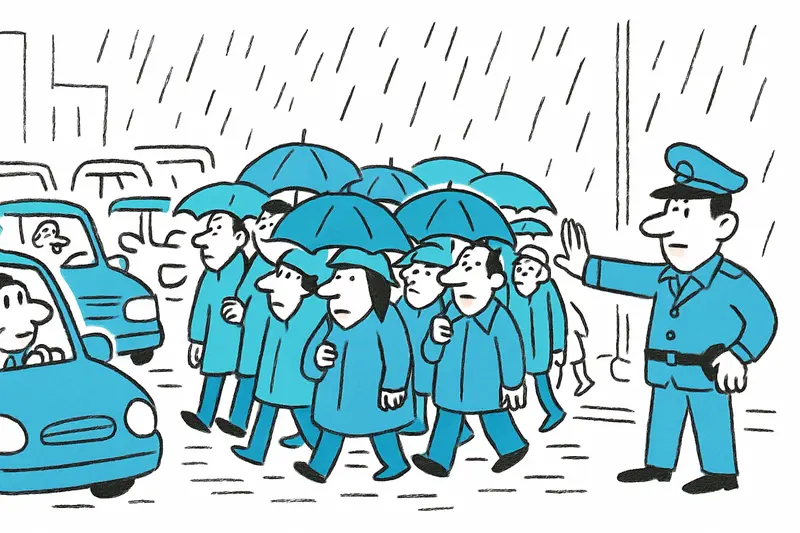
On Friday at midday Palma turned in places into a scene locals know all too well: honking, long lines of cars in front of parking garages, people with umbrellas slowly strolling along the Avingudes, and police officers directing traffic by hand at intersections. The official weather situation — a cold front with a Yellow Alert on Saturday on the coast — led many holidaymakers to skip the beach and instead flood the city centre. The result: standstills in places.
Key question: Why is one rainy morning enough to block Palma so much, and how can such spontaneous mass movements be better managed?
Initial assessment: As described in Palma in a weather jam: When gray days roll over the city, Palma is a magnet in rainy periods because it offers everything visitors look for on a gray day — the cathedral, museums, narrow streets, cafés. At the same time the city is designed for predictable visitor flows, not for unpredictable, short-term peaks. Parking garages near the old town fill up quickly. Bus lines and taxi capacities are limited. Pedestrian routes clog, delivery traffic is delayed. The consequence is not only frustration among guests but also additional noise and air pollution for residents.
What is often missing in public debate: the awareness that this is not just about isolated events but about a recurring pattern. A cold front does not arrive unexpectedly — weather forecasts are available, as noted in Storm Alert: Is Mallorca Prepared for the Deluge? — but infrastructure and crisis management are rarely prepared for short-term visitor waves. There is a lack of data that shows in real time where crowds are forming, flexible traffic concepts, and coordinated communication at the relevant points (ports, airports, large car parks).
A small everyday scene: On Paseo Mallorca dozens of cars now stand in a row, drivers with maps in their hands, tourist groups in colorful rain jackets walking toward Plaza Major. An EMT bus takes ten minutes longer than usual because it struggles through the Avingudes; you can smell diesel on the street, occasionally a driving instructor barks instructions from the shoulder. Such images show that the problem is not abstract — it is audible, visible and measurable.
Concrete solutions that could have immediate effect:
1) Dynamic signage and real-time data: Variable boards at the entrances to the city centre and an open data feed indicating which car parks have free spaces. That reduces pointless search traffic.
2) Short-term shuttle offers: When weather warnings occur, deploy additional shuttle buses at short notice from large car parks outside (e.g. at major access routes) to the old town. Operators like private car park companies or public transport can cooperate here.
3) Pop-up parking zones and temporary driving bans: Areas that can serve as park & ride during peak times, and clearer rules for delivery times so that the Avingudes are not additionally congested.
4) Communication triggers: When AEMET reports a warning level, tourist offices, hoteliers and car rental companies should send automated notices to guests — suggestions: alternative programmes, earlier museum visits, bicycle or boat offers to flatten the peaks.
5) Promotion of active alternatives: Strengthen bike rental stations, designate temporary bike lanes to make short trips in the city more attractive.
At the political level, a clarification of roles is often missing: Who coordinates in such cases? City hall, the traffic office, the tourism board or private operators? Without clear responsibility, measures remain half-hearted. This lack of coordination has shown consequences in prior events like Orange storm cripples Palma: parks closed, markets cancelled – Is the city well prepared? Nor is it regularly examined which ecological costs such concentrations entail — increased emissions, noise, wear of the paving.
Another often overlooked point: Not all guests are the same. Families with children, older visitors or groups aim for different destinations and need different offers. Finer segmentation in short-term information services would help distribute demand more precisely.
Conclusion: Palma shows on a rainy Friday what can happen when infrastructure and communication are not prepared for short-term visitor waves. This is not a natural event that one must simply ride out; it is an organizational problem with tangible solutions. More data, better roadside signals, flexible bus lines and clear responsibilities would help the next 'Operación nube' pass through the city less abruptly. The city and its visitors would breathe more easily — and perhaps the café owners too.
Frequently asked questions
Why does Palma get so crowded when it rains?
What should I do in Palma on a rainy day to avoid traffic and parking problems?
Is Palma still worth visiting when the weather turns bad?
How bad can traffic get in Palma after a rain warning?
What kind of day trips or activities work well in Palma when it rains?
Which areas of Palma are most affected when tourists move inland on a rainy day?
Should I expect bus delays in Palma when the weather changes suddenly?
What could Palma do better to manage sudden visitor surges in bad weather?
Similar News

More water than last year: Mallorca's reservoirs breathe easier
September rain refilled the Tramuntana's reserves: overall fill around 35 percent, Cúber at 40.42 percent, Gorg Blau at ...
Three Luxury Hotels in Banyalbufar: Lots of Money, Many Questions
A Danish investor plans three exclusive accommodations in Banyalbufar — including the historic Son Valentí. The announce...
2.1 tonnes of cocaine on sailing yacht off Spain's coast – a reality check for the coastguard
A 14-metre yacht was seized with 2.1 tonnes of cocaine. Who monitors the ports, how does the international hunt succeed ...

Heat Bonus in Mallorca: 100 Euros Extra for Outdoor Staff at MarSenses
MarSenses pays employees who worked outdoors in August an extra €100 as recognition. Lighter uniforms, reduced hours for...
Renovating in Mallorca: What You Really Can Do Without Neighbour Consent
Many think they can do whatever they want in their apartment. That's partly true — but only as long as structural elemen...
More to explore
Discover more interesting content

Can Cap de Bou

Townhouse Lleo 72
