
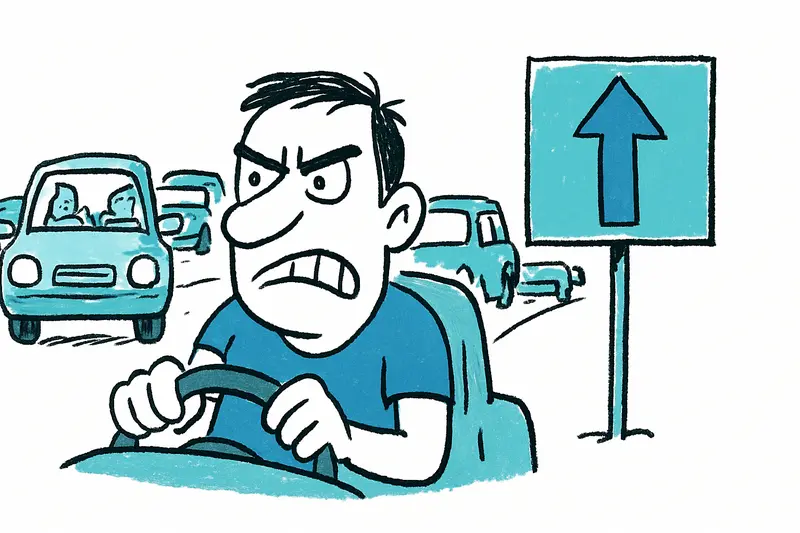
When the island stands still: What Lucas Cordalis’ anger about the traffic jam on Mallorca reveals
When the island stands still: What Lucas Cordalis’ anger about the traffic jam on Mallorca reveals
Key question: Why are roads on Mallorca getting clogged more often, and what solutions exist beyond TV-show debates? A critical look with an everyday scene from Santa Ponsa and concrete proposals.
When the island stands still: What Lucas Cordalis’ anger about the traffic jam on Mallorca reveals
Key question: How can we prevent Mallorca from getting stuck in traffic and its own population from being pushed to the margins?
The gist is quick to tell: A prominent resident, who has lived on the island for over twenty years, recently voiced complaints about changing mobility on Mallorca. He describes routines that used to take hardly any time as now turning into endless drives. This observation is not just celebrity gossip. When, on a hot morning, cars stand in the zigzag of the sun on the Ma-1 near Palma and the air conditioners hum, you realise: personal frustration meets a structural problem here.
What’s behind it? A combination of high rents and purchase prices in tourist-attractive locations, more commuters, a debate over a rental car cap, a growing short-term rental market and the spatial separation of living and working. Many who work on the island can no longer afford central housing and are pushed to the periphery or neighbouring municipalities — with the car as the only practical bridge between home and workplace. The result is congested access roads, overloaded roundabouts in Palma and a declining quality of life for residents.
A look at everyday life: Monday morning in Santa Ponsa. Children with school backpacks, a café where cups clink, delivery vehicles manoeuvring along the seafront and a neat scheduled bus that hopefully still finds a place. Beside it, a queue of small cars trying to merge onto the Ma-1. From the radio: traffic reports. This is not a snapshot, but has become the normality for many here.
Public debate often remains limited to outrage — “The island is being clogged up” — or to blaming tourists, second-home owners or commuters. What’s missing: clear figures, multiple perspectives and above all a sober engagement with the island’s spatial structure; a reality check on massification would help. The everyday perspective is also lacking: how do shift work in hotels, delivery logistics and school times influence mobility behaviour? What role do rental car fleets, car-sharing offers and the frequency of regional bus services play?
Those who want solutions need bundled measures. Some concrete proposals that have proven successful in similar regions or would be practicable here:
1. Promote housing for employees. Municipalities and the island government should use urban planning instruments to create affordable housing close to employment centres: social housing, subsidised staff accommodation for hotels and craft businesses, temporary rental quotas for workers.
2. Better regulate short-term rentals. Stricter controls and a zonal model: where tourist short-term rental is strong, quotas must be limited and funds redirected to social housing.
3. Relieve commuter traffic. Expansion and increased frequency of intercity bus lines, targeted express shuttles in high season, incentivised carpooling, park-and-ride points outside main arteries with shuttle connections.
4. Work hours sensitive to traffic. Companies, hotels and public institutions should increasingly consider flexible shift models to ease morning and evening rush hours. A pragmatic pilot project in a municipality could quickly show effects.
5. Infrastructure for cycling and walking. Investments in safe cycle paths on short commuter routes, especially between peripheral settlements and train stations or bus stops, reduce short car trips.
6. Mobility management instead of isolated measures. Every municipality should have a local mobility concept: coordinated bus schedules, delivery time windows for businesses, charging stations for electric vehicles and clear rules for delivery zones in town centres.
Transparency is at least as important. Politics and administrations must disclose what effects tourist capacities have on housing costs and traffic. Only then can priorities be set. Another missing perspective: that of the employees themselves. Their daily routines are often unknown in committees — and yet they determine traffic flow.
What does not work: loud appeals without infrastructure. A TV show in which celebrities voice their displeasure can raise awareness. But without coordinated measures, such statements remain symbolic politics.
Conclusion: The anger of a long-time island resident is symptomatic of a shift that is reorganising Mallorca: housing yields to commuting, streets become extensions of the housing market. Whoever wants the island to remain livable must think traffic relief and affordability together. Otherwise the phrase “Nothing but traffic” will soon be a sober description of everyday life — and that would be a pity for the people who work and live here.
On the Ma-1, between Palma and Andratx, the exhaust keeps humming. The solution does not lie in a single measure, but in a series of small, locally anchored steps. The start could be made today at a town-hall table in Santa Ponsa, Cala Mayor or Palma. There, where people start their engines every morning and hope to arrive on time.
Frequently asked questions
Why is Mallorca’s traffic getting worse, and what does that mean for residents?
What practical steps can help reduce commuter traffic on Mallorca?
How does regulating short-term rentals affect housing and traffic on the island?
Why consider flexible work hours as a mobility measure in Mallorca?
What role do cycling and walking play in Mallorca’s traffic strategy?
What is a local mobility concept and why does Mallorca need one?
As a visitor, how can I travel through Mallorca with less impact on traffic?
How can Mallorca balance livability with tourism and job growth?
Similar News

Stolen Motorcycle in Palma: Fatal Crash in Coll d'en Rabassa Shortly After Theft
A motorcycle parked on Plaza Miquel Dolç in Son Gotleu was reportedly stolen in the early hours. Hours later two men cra...
When More Guests Mean Less: Mallorca's Restaurants at the Limit
Despite record visitor numbers, the revenues of many restaurants are shrinking. Why more visitors don't automatically me...
Ballermann 2026: Heat, crowded promenade and rising prices – how much longer?
Bright sunshine, over 35 degrees in the shade and busy venues at Playa de Palma: Tourists enjoy the parties, restaurateu...
Stolen motorcycle, high-speed escape, deadly crash: An accident in Palma that raises questions
A motorcycle stolen in Son Gotleu ended up hours later on the Cardenal-Rossell in Coll d'en Rabassa in a deadly collisio...

Found dead in Son Gotleu: Dog walk ends fatally — what is missing in the investigation?
A 68-year-old man was found dead on Sunday morning on Tomás Rullàn street in Son Gotleu. According to his partner, he ha...
More to explore
Discover more interesting content

Boat Tour with BBQ along Es Trenc Beach
Private transfer from Mallorca Airport (PMI) to Pollensa
