
Who protects us from such drivers?: Kamikaze overtaking maneuvers in Ibiza and what we must learn
Who protects us from such drivers?: Kamikaze overtaking maneuvers in Ibiza and what we must learn
A Porsche driver repeatedly overtakes on a winding country road near Santa Eulària — a dashcam recording shows how narrowly disaster was avoided. Why such maneuvers are not just drama but a systemic problem, and what concrete steps should be taken now.
Who protects us from such drivers?: Kamikaze overtaking maneuvers in Ibiza and what we must learn
A dashcam recording from Santa Eulària shows how quickly thoughtless actions on narrow island roads can turn into a drama
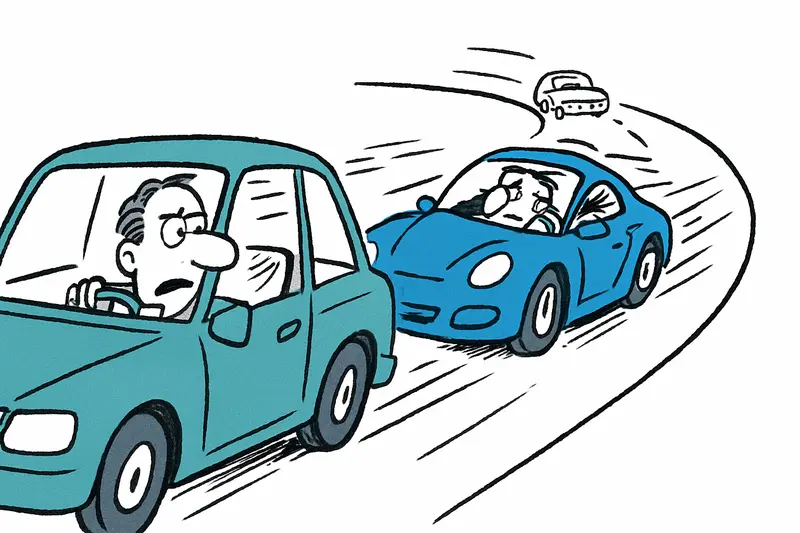
The video does not show a crime spree, but only seconds - and yet that brevity is enough to make your hair stand on end. On a winding section in the municipality of Santa Eulària, a sports car driver performed several risky overtaking maneuvers even though oncoming traffic was approaching. A dashcam captured everything; the owner of the recorded vehicle, an island resident, said he was in shock for hours afterwards.
Main question: How can it be that individuals can race like this on narrow country roads without being stopped earlier - and what responsibility do politicians, the police, sports car owners and rental companies of luxury or sports cars bear?
The scene itself is brief: A Porsche overtakes a car, and a few seconds later the same vehicle begins another overtaking, this time overtaking not one but two cars, on a stretch with a solid center line. Only because an oncoming car braked hard was a head-on collision avoided. The witness called the local police; the Guardia Civil is responsible for the investigation.
Critical analysis: The problem is not just the stupidity of an individual. On the Balearic Islands several factors come together that encourage risky behavior. Winding roads, little space and a lack of visibility of the opposite lane increase the risk, as discussed in Mallorca's Curves without a Racing Heart: Staying Safe on the Tramuntana & Co.. Added to this are powerful vehicles that psychologically tempt drivers to overestimate their abilities. And in the high season traffic density and stress increase; on secondary roads experience and speed often diverge.
What is often missing in the public debate is the system perspective. People shout about the 'kamikaze driver' - rightly - but there is little discussion about how infrastructure, controls and incentives interact; recent episodes such as the Aggressive driver in Bendinat: Why the streets can no longer remain calm case underline the point. Why are there no physical lane separations or additional warning signs or speed cameras on many dangerous sections — a lack that was a factor in incidents such as the Serious accident near Santa Eugènia: How could it come to this?? Why are personnel and technology of the traffic police often limited in rural areas? And last but not least: How do rental companies of luxury or sports cars manage to check owner profiles and promote responsible behavior?
An everyday scene from Mallorca to illustrate: On a hot morning on Passeig Mallorca I often hear a sports car rev as it heads out of town toward the countryside. People in the cafe glance up, some smile, others frown. The sound is part of summer, but on narrow mountain roads that very sound can be the prelude to an accident. The island is no substitute racetrack; the tight curves in Deià or in the Tramuntana mountains punish recklessness immediately, as shown by Cars on Their Roofs near Valldemossa: A Wake-Up Call for Greater Safety on Mountain Curves.
Concrete measures that could take effect immediately:
1) More targeted controls: mobile speed cameras and a focused presence of the Guardia Civil on known danger stretches, especially at peak times. Visible controls often have a preventive effect.
2) Road engineering measures: On short, particularly winding sections small interventions suffice - mirrors at tight bends, better marking of the center line, lane narrowing before dangerous overtaking zones, conspicuous warning markings.
3) Stricter rental rules: Rental companies could introduce stricter age and driving fitness checks for high-performance vehicles, mandatory short safety briefings and GPS minimum speed warnings.
4) Local campaigns: Visible, locally branded information campaigns (in car parks, ferry terminals, tourist offices) with clear examples from the region - not abstract appeals but concrete instructions: 'Curve X: No overtaking'.
5) Sanctions and follow-up: Faster procedures for dangerous behavior, higher fines for deliberate risky overtaking and targeted withdrawal of driving licenses for repeat offenders.
What is still missing? Better cooperation between municipalities, traffic authorities and island institutions. Santa Eulària has now reported an incident; that is the right first step. But one report is not enough. Dangerous stretches must be systematically recorded and prioritized - not only by accident statistics but also by near-misses, which often do not appear in official figures.
My personal view: In Mallorca, at the plaza or at the village bakery, people quickly talk about individual cases. The challenge is to translate these conversations into clear measures. People here love their islands; their narrow roads are part of their identity - and precisely for that reason we also have the duty to keep them safe.
Conclusion: The video from Santa Eulària is a call for vigilance. It shows how close a tragedy can be. Responsibility lies not only with the drivers but also with the structures that do not sufficiently prevent risky behavior. Anyone traveling on the island - resident or tourist - is entitled to clearly visible rules, regular controls and infrastructure that does not reward recklessness. If we want that, the steps are manageable both technically and organizationally. The question remains for administrators and politicians: Will they act before the next video does not end well?
Frequently asked questions
Why is overtaking on Mallorca’s winding roads so risky?
What road tweaks could help prevent dangerous overtaking on Mallorca?
What role should rental car companies play in preventing reckless driving on Mallorca?
Are there enforcement strategies that could curb dangerous overtaking on Mallorca?
How can local campaigns help people understand overtaking rules on Mallorca?
Why is cross-agency cooperation important for road safety on Mallorca?
What can residents do to advocate for safer roads on Mallorca?
How should drivers navigate Mallorca’s mountain roads safely?
Similar News
Ryanair Flight Diverted to Barcelona: An In-Flight Emergency and the Questions That Follow
A Ryanair jet from Pisa to Málaga landed in Barcelona after a passenger became acutely ill. Why these cases need more at...
Alarm in Port de Pollença: What now for the polluted bay?
Hundreds of people protested on the beach of Port de Pollença. The environmental organization Arrels Marines demands a p...

Micaela Schäfer: Between Playa de Palma and a Berlin Law Firm — New Calm, an Old Tomcat and Solid Finances
The party artist from the Ballermann scene appears surprisingly down-to-earth: a new relationship with a Berlin lawyer, ...
At Playa de Palma: Fire in Residential Building – six people rescued on the roof, what is missing in prevention?
In the evening a fire broke out on the first floor of a five‑storey building on Calle Trasimé. Six residents fled to the...
New License Requirement for Mini-Boats in Mallorca: Protection Measure or Tourism Brake?
From October 1 renters of small recreational boats in the Balearics must present a boating license. Critical questions r...
More to explore
Discover more interesting content

Boat Tour with BBQ along Es Trenc Beach

Private transfer from Mallorca Airport (PMI) to Pollensa
