
Andalusia in Flames: What the Devastating Wildfire Means for the Island
Andalusia in Flames: What the Devastating Wildfire Means for the Island
A devastating wildfire in the province of Almería has cost dozens of lives and shows that the Balearic Islands urgently need to rethink their preparations against large fires.
Andalusia in Flames: What the Devastating Wildfire Means for the Island
Key question: Have we learned enough in Mallorca — before the next fire threatens the coast?
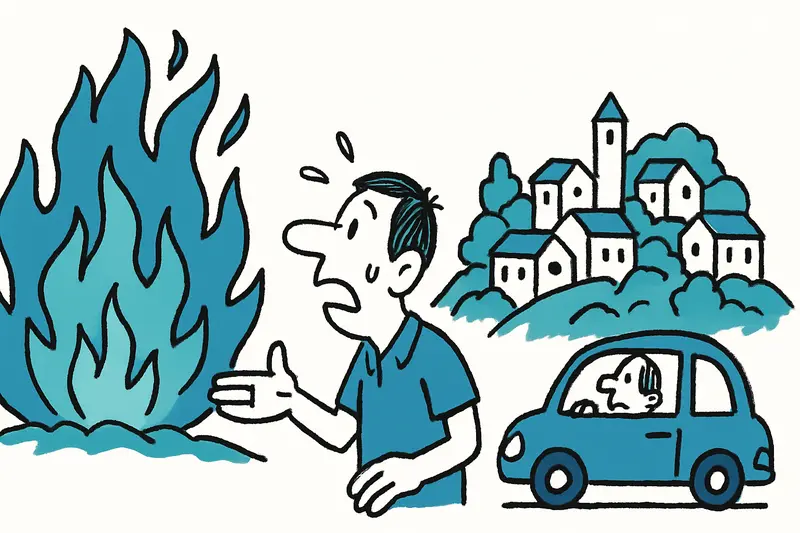
Late in the afternoon a fire broke out in the hinterland of the Costa de Almería, which quickly swept across large areas and, according to official reports, cost numerous people their lives. Several towns were evacuated and a campsite cleared; people sat in cars trapped by heat and smoke. In those hours it became clear how quickly a local flame can turn into a regional tragedy.
Critical analysis: The causes of such fires cannot be pinned to a single point. Drought, heat, strong winds and flammable vegetation create the conditions. Added to this are infrastructure weaknesses: narrow country roads without alternative routes, settlements on the edges of forest areas and limited capacities in equipment and personnel. In Almería, around 150 emergency personnel fought the flames through the night; available forces apparently were not enough to completely avert dangers to the population.
What is often missing in the public debate: the discussion stays too much at headlines about evacuations and fatalities. There is little talk about long-term spatial planning, the daily maintenance of protection strips or binding requirements for holiday facilities near forest edges. The everyday realities of emergency workers and residents are seldom translated seriously into political decisions — for example through reliable maps, escape plans and regular alarm drills, as described in Back from the firefront: What Mallorca's responders really need.
A concrete everyday scene here on Mallorca: On the Passeig Marítim in Palma an elderly woman sits in the shade, the air smells faintly of burnt resin, an EMT bus arrives with its window half open, passengers look anxiously out to sea. The group of retirees from Sóller who go to the market every morning talk about how quickly smoke once turned the sky yellow — an experience also documented in Smoke from Galicia and Castile drifts as far as Palma. The image is not alarmism; it is a reminder of how close such events are even on an island with strong tourism.
Concrete solutions, achievable and effective: First, approach preventive landscape management more systematically — regularly clear firebreaks at village entrances, remove invasive thorny shrubs, maintain trees and bushes at protective distances from houses. Second, make evacuation and rescue plans mandatory at municipal level and provide them in multiple languages; many holiday guests do not know the local escape routes, a point emphasized in Mallorca on Alert: Highest Wildfire Warning Level and Scorching Heat – What to Do Now. Third, better equip local fire departments: more water reservoirs, mobile pumps and targeted air support in peak periods. Fourth, traffic planning: motorway sections and country roads that run through risk areas need bypass lanes and stopping points so evacuations do not get stuck in traffic jams.
Technology alone is not enough: we also need information work. Island residents, landlords and tourism operators must be required to explain to guests, during the arrival process, how to behave in the event of a wildfire — short, clear, without panic. Municipalities could hand out simple checklists: emergency bag, meeting point, phone numbers of local services. It costs little but is effective in practice.
Financing is another challenge. Operations, aftercare for the injured and reconstruction strain budgets. One idea: regional reserves that are activated during fire periods, combined with insurance models that create incentives for fire-preventing measures. On Mallorca, this could motivate both private individuals and municipalities to take action.
What we must take from Almería without falling into despair: prevention pays off, evacuation concepts must be simple and well known, and authorities need better interfaces with tourism businesses. It's not about demonizing tourism, but about designing places where people can live and work safely — in summer as well as in winter.
Concise conclusion: The images from Andalusia show a bitter truth: fires know no district borders. On Mallorca you can sometimes smell smoke in the evening and see monuments that shimmer slightly gray in the backlight. That must not become a normal summer phenomenon. If we do not act, we risk that another catastrophe will happen not far away but on our doorstep. Prevention, clear evacuation rules and practical neighborhood assistance are the urgent tasks now — and they are doable.
Frequently asked questions
Is Mallorca at wildfire risk this summer, and what should residents know?
What preventive measures are recommended for Mallorca to reduce wildfire risk?
How should tourists be prepared for wildfires when visiting Mallorca?
What infrastructure changes are proposed to improve wildfire safety on Mallorca?
What does the scene on Palma's Passeig Marítim tell us about wildfire risk in urban Mallorca?
What lessons can Sóller residents take from the wildfire discussion?
How can visitors and locals share responsibility for wildfire safety on Mallorca?
How are wildfire prevention and response funding ideas planned for Mallorca?
Similar News

Missing 24-year-old from Bavaria found on Mallorca
The 24-year-old woman from the Augsburg area who had been missing since August 3 was found on Mallorca. Family members, ...

Heat and Power: Why the Balearic Islands Are Sweating Now — a Reality Check
Weeks of heat waves, rising cooling demand and suddenly flickering lights: Mallorca, Ibiza and Formentera have seen an i...
When the Water Taps Run Dry: Why Tankers Are Not the Solution
In villages like Deià, Valldemossa or on Menorca, municipalities are limiting water use because of drought. Who decides,...

Ryanair Flight Diverted to Barcelona: An In-Flight Emergency and the Questions That Follow
A Ryanair jet from Pisa to Málaga landed in Barcelona after a passenger became acutely ill. Why these cases need more at...
Alarm in Port de Pollença: What now for the polluted bay?
Hundreds of people protested on the beach of Port de Pollença. The environmental organization Arrels Marines demands a p...
More to explore
Discover more interesting content

Boat Tour with BBQ along Es Trenc Beach

Private transfer from Mallorca Airport (PMI) to Pollensa
