
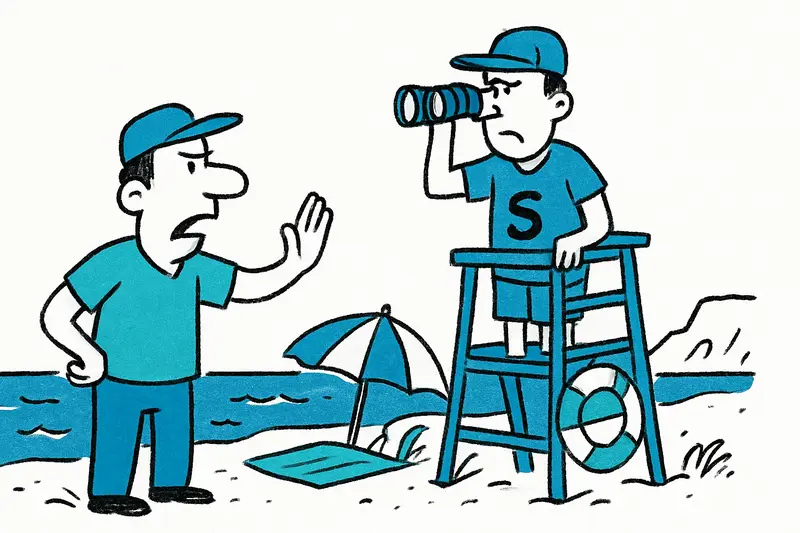
Who really protects Mallorca's coasts? A reality check after the viral beach video
Who really protects Mallorca's coasts? A reality check after the viral beach video
A viral online video compared developed coasts in Turkey with Mallorca's beaches and praised the island. A good moment to take a closer look: How secure is access to the sea here, and where does it still fall short?
Who really protects Mallorca's coasts? A reality check after the viral beach video
Key question: Do laws and public awareness protect our beaches — or are we only a little better than others?
A foreign online video recently reached more than 2.6 million views and presented Mallorca in contrast to densely built coasts in Turkey. The creator, an investigative journalist from Istanbul, traveled here several times and praised how free and accessible some coves appear. Nice to hear. But the praise must not lead us to stop critically examining what really happens behind the narrow strip of sand and sea.
Critical analysis
Yes, in Spain — and therefore also in the Balearic Islands — there is legally a public coastal strip that must not be permanently privatized. That is why places like Es Trenc look almost unchanged in satellite images over the years — unlike some partially developed coastlines in other countries, as reported in Digital Eyes on Mallorca's Beaches: Protection or Surveillance?. Still: laws are only as strong as their enforcement. The case at the end of 2025, when towels were laid out at a well-known beach hotel to "reserve" space and the area was labeled as private online, exposed the weakness. Authorities and civil society intervened, and within a little more than two weeks the dispute was resolved. That speaks to functioning mechanisms — but it was a single case, made public through complaint and pressure. Questions about bathing water monitoring have also been raised, see Can you still safely swim in the sea around Mallorca? A look at water quality in 2025.
What is missing in the public debate
We often talk about spectacular cases and satellite images. Less attention is paid to how subtle forms of access loss arise: leaving sunbeds and towels to "reserve" spots, private events in the morning before the season starts, unclear boundaries in development plans, or temporary concessions for beach sections. It is also rarely discussed how well staffed and financed the control authorities on the islands actually are, as discussed in Fewer Blue Flags in Mallorca: What Does That Say About Our Beaches?. From Mallorca you can see tourist flows, but the small day-to-day processes that can erode coastal rights remain in the shadows.
Everyday observation
Early morning at Es Trenc: the sound of the sea, guitar music from people greeting the sunrise, fishermen rolling up their nets, and older residents returning with shopping bags. A municipal vehicle slowly drives along the dune road, an employee picks up plastic, another couple takes photos that later appear on social networks. Such scenes show: beaches are habitat, workplace, and playground. Small coves' safety and information needs were underscored by Tragedy in Son Bauló: Small Cove, Big Questions — How Safe Are Mallorca's Unassuming Beaches?. If suddenly an area is surrounded by a party or private signs appear, people notice immediately — and react.
Concrete solutions
When we talk about securing permanent access, pragmatic, implementable steps help: 1) a digital, publicly accessible register of all beach concessions and approved interventions; 2) regular seasonal satellite or drone comparisons, supplemented by citizen reports; 3) an easy-to-use reporting platform (also via WhatsApp/Telegram) that holds authorities and municipalities accountable; 4) sanctions tied to revenue rather than fixed fines so that deterrence is effective; 5) mandatory neutrality clauses in hotel and event contracts for coastal use; 6) local stewardship models: municipalities, residents and businesses jointly develop beach regulations and maintenance plans.
Why this would help in practice
These measures combine technical monitoring with everyday oversight. Satellite images detect large-scale changes, while the reporting platform catches the small, annoying cases — from "reserved" towels to illegal fences. Higher, proportionate penalties and transparent permit lists reduce profit-driven abuses. And when residents are genuinely involved in council structures, the likelihood that violations are reported and remedied early increases.
Concise conclusion
Praise from a foreign video feels good, but it must not make us complacent. Mallorca is currently better off than many coastal regions — yet beach protection is not automatic. It needs visible rules, reliable controls, transparent data and people who go to the sea in the morning and keep watch. In short: legal texts alone are not enough. Everyday protection is needed — and we must organize it together.
Frequently asked questions
Is Mallorca's coastline truly public, and can it be privatized?
What everyday actions threaten beach access in Mallorca?
What concrete steps could improve Mallorca’s beach access and protection?
How are authorities and residents involved in protecting Mallorca's beaches?
Can visitors report beach access issues in Mallorca, and how?
What real-world example shows enforcement in Mallorca's coastline?
What should be included in beach regulation and management to protect Mallorca’s coast?
When is the best time to visit Mallorca beaches to see them in their natural state?
Similar News

Arenal: How Two Strangers Stole Jewelry from a 91‑Year‑Old — and What We Should Learn
In El Arenal two young women managed to gain the trust of a 91‑year‑old and steal jewelry from her apartment. A family f...

Cool Night, Mild Days: Autumn Shows on Mallorca – Good for Land and People
The Tramuntana brought the coldest night in months: around 8 °C, 11–12 °C in the lowlands. Daytime temperatures rise aga...
Llucmajor bets on a new waste contract – is it enough to end the waste crisis?
The municipality of Llucmajor has signed a €36.6 million contract with Urbaser for eight years. After summers of overflo...
103 km/h in Sant Miquel: Is Palma prepared against highly tuned e-scooters?
An e-scooter seized in Palma reached 103.2 km/h. What gaps do such cases reveal — and how can the city prevent pedestria...

When a Hotel Guest Brought Classical Life to Port de Sóller
A pianist in a hotel room, an idea — and since 2005 a small, charming festival in October has been filling the church of...
More to explore
Discover more interesting content

Can Cap de Bou

Townhouse Lleo 72
