
Why are our young people leaving? An emigrant takes stock — and we must listen
Why are our young people leaving? An emigrant takes stock — and we must listen
A young Mallorcan who emigrated in 2022 started a debate with a video. His observations about language, housing and safety bring old problems back to the table. A critical assessment with concrete proposals.
Why are our young people leaving? An emigrant takes stock — and we must listen
Guiding question: Who is losing the island — and who will act before it is too late?
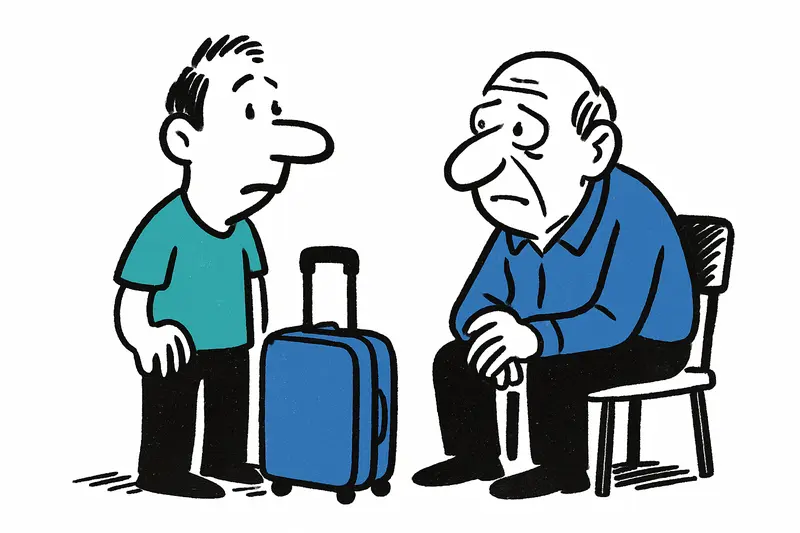
A man from Inca who emigrated in 2022 and now lives in Switzerland sparked many reactions with a personal video. He returns roughly every six months, notices changes and names reasons: rising cost of living, housing shortages, the disappearance of the Mallorquí language in everyday situations, and a changed sense of safety — especially at night.
This is not an isolated case; similar accounts appear in Why Mallorcans are Moving to Galicia — and Why We Should Be Worried. The account fits a broader experience of many young people here: training is completed abroad, jobs are kept there, and starting a family is postponed; for official migration figures see Spanish National Institute of Statistics data on migration.
Critical analysis
The problems the emigrant describes are intertwined. The housing market and tourism pressure push rents and purchase prices up, as reported in When Rent Decides: How Villages Lose Their Families. Higher costs make work abroad more attractive to young people. If the neighborhood also changes — fewer long-established families, more holiday rentals, different language patterns — a cycle emerges: less local presence means less pressure on politicians to provide solutions, because voices and voter patterns shift.
The feeling of insecurity at night is complex: it is partly a real perception of crime, and partly a different social dynamic in urban neighborhoods and tourist hotspots. All together it changes the impression locals have of their homeland. That a man who spends a lot of time abroad says he feels confirmed in his decision is a political signal — not just a personal story.
What is often missing from the public discourse
There is much talk about visitor numbers, revenues and infrastructure. What is too rarely visible is how everyday life, language and neighborhoods change. Also marginalized are concrete experiences of young people who leave and the consequences for schools, clubs and traditional crafts. Too rarely is the question asked: What policies would motivate people to stay or return?
Everyday scene from Mallorca
In the late afternoon, when the sun falls on Plaça d'Espanya in Inca and store employees lower the shutters of the small shops, you can see it: empty apartments with keys held by landlords, cafes where conversations are dominated by Spanish or English, and seniors who remember earlier times. A young father riding his bike past a construction site is surprised by the rents he has seen. Such images stay in the minds of those who come back every six months and echo cases like When Space Becomes a Luxury: Why a Family Left Mallorca.
Concrete approaches to solutions
Those who want to act must tackle several areas — and do so together rather than one after the other:
1) Housing policy: Municipal housing programs (via town councils) and targeted occupancy rules for new developments could secure affordable housing for locals. Long-term rental models and support for young families are needed.
2) Regulate short-term rentals: Stricter controls and uniform rules at municipal level would ease market distortions. Transparency about ownership and sanctions against illegal offers are central.
3) Strengthen the local economy: Tax incentives for crafts, small businesses and vocational training would ease resettlement. Partnerships between companies and training institutions create career alternatives locally.
4) Promote language and culture: Schools, clubs and cultural centers must receive programs that strengthen Mallorquí in everyday life — not just symbolically, but through courses, local media projects and funding for cultural initiatives.
5) Safety and public spaces: Better street lighting, visible municipal police presence and more local night buses create the feeling of being safer at night. Prevention work in neighborhoods is more effective than punishment alone.
6) Involve young people: Local participation formats that give young adults real decision-making power would make political responsibility visible and help rebuild trust.
Conclusion — a pointed closing remark
The emigrant speaks from personal experience, but his observations are a warning sign: when language, neighborhood and prospects gradually disappear, the island loses more than tourists or revenue. The question is less who is to blame than who will take responsibility now. There is no miracle cure. But with clear measures that link housing, work, culture and safety, the tide can still be turned. If not, more voices like the one from Inca will fall silent — and eventually they will be missed.
Frequently asked questions
Why are young people leaving Mallorca?
Is Mallorca still affordable for young families?
Does Mallorca feel less safe at night now?
Has Mallorquí become less common in everyday life on Mallorca?
Why do many young people from Inca move away?
What can Mallorca do to keep young people from leaving?
What is the situation in Inca's Plaça d'Espanya in the late afternoon?
What role do holiday rentals play in Mallorca's housing problem?
Similar News
Stolen Motorcycle in Palma: Fatal Crash in Coll d'en Rabassa Shortly After Theft
A motorcycle parked on Plaza Miquel Dolç in Son Gotleu was reportedly stolen in the early hours. Hours later two men cra...
When More Guests Mean Less: Mallorca's Restaurants at the Limit
Despite record visitor numbers, the revenues of many restaurants are shrinking. Why more visitors don't automatically me...
Ballermann 2026: Heat, crowded promenade and rising prices – how much longer?
Bright sunshine, over 35 degrees in the shade and busy venues at Playa de Palma: Tourists enjoy the parties, restaurateu...
Stolen motorcycle, high-speed escape, deadly crash: An accident in Palma that raises questions
A motorcycle stolen in Son Gotleu ended up hours later on the Cardenal-Rossell in Coll d'en Rabassa in a deadly collisio...
Found dead in Son Gotleu: Dog walk ends fatally — what is missing in the investigation?
A 68-year-old man was found dead on Sunday morning on Tomás Rullàn street in Son Gotleu. According to his partner, he ha...
More to explore
Discover more interesting content

Boat Tour with BBQ along Es Trenc Beach

Private transfer from Mallorca Airport (PMI) to Pollensa
