
Why Palma's Old Prison Is Being Sealed — And What Gets Lost
Why Palma's Old Prison Is Being Sealed — And What Gets Lost
Palma is barricading and monitoring its old prison. The measure protects the public, but it raises questions about transparency, housing pressure and heritage conservation.
Why Palma's Old Prison Is Being Sealed — And What Gets Lost
Key question: Is the city's barricading really only protecting public safety — or is it also pushing inconvenient problems out of sight?
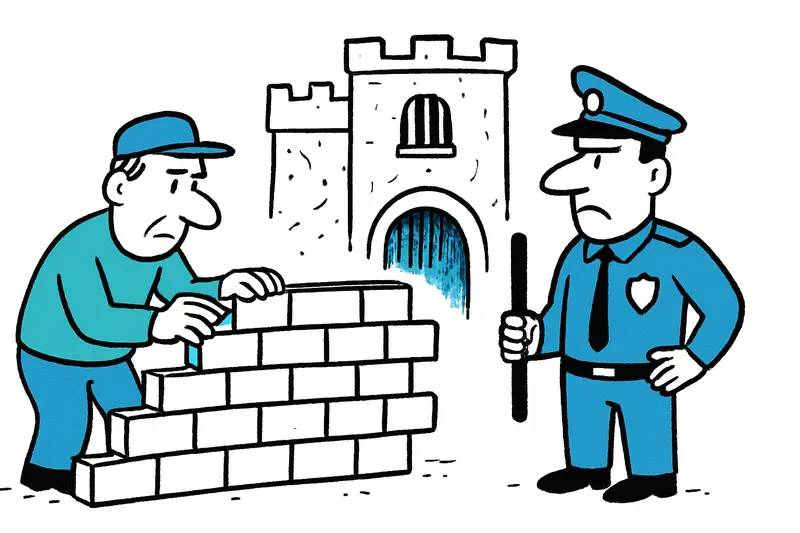
On Wednesday there was an unusual calm on the street in front of the building in the historic block: hammer taps, the whir of a concrete saw, the distant honk of a bus on Carrer d'Antoni Maura — and otherwise only the usual pigeons circling above the roofs of La Llotja. Workers were sealing doors and windows; within a few days all entrances are to be bricked up. The city justified this with significant safety deficiencies: fire risks and a lack of escape routes, according to town hall sources. Video surveillance is also planned, though technical measures must be coordinated with efforts such as When the Night Hums: How Palma Can Stop Drone Deliveries to the Prison to prevent new risks.
At first glance this sounds like a reasonable precaution. An empty, crumbling building in the middle of Palma is a hazard: unauthorized people could get inside without escape routes; in the event of a fire help might be too late. But sealing the entrances is not only a structural safety measure; it is also a symbolic gesture: it makes the problem invisible.
Behind the protective folklore lie several open questions that have so far been little publicly debated. Who will finance long-term securing or a possible restoration? What happens to people who previously occupied the building or who are generally looking for affordable space? And what effect does the imposition of video surveillance have on the immediate surroundings — does it really provide more safety, or does it merely shift risks to other places, as seen in Watch theft in Palma's Old Town: Escape ends in Barcelona – How safe are our streets??
The critical analysis reveals three lines of conflict: first, safety versus access; second, short-term defense versus long-term planning; third, surveillance versus urban transparency. The city had the building cleared and justified it with concrete danger points. At the same time, it is not clear which alternative offers exist for those affected, how the condition was technically assessed, and what deadlines apply for further steps. The town hall speaks of work "for several days" — but several days are not enough to develop a strategy.
What is missing from the public discourse is a comprehensible perspective on the site: Is the building listed as a historic monument, as discussed in Collapse at Palma's City Wall: What Needs to Happen Now? Are there expert reports on structural integrity and fire safety? Which options were considered — securing, repurposing, phased renovation or a planned demolition with neighborhood participation? Without such information the bricking up remains an administrative solution without a vision for the future.
A scene from everyday life: The owner of the small café around the corner, who sets out the chairs at half past seven in the morning, says she understands the measure. "People used to sleep here, sometimes it smelled of smoke, and tourists stop and stare — that's not a nice sight for the street." At the same time she worries about those who have nowhere else. This dual perception is typical for Palma, as explored in Trust Damaged in the Old Town: What Palma's Jewelry Theft Reveals About a Larger Problem.
Concrete solutions that should now be openly discussed: first, a public, comprehensible expert report on condition and risks that interested parties can also inspect; second, short-term securing measures that do not barricade the entire building, but make accesses controllable and preserve escape routes; third, immediate linkage with social services — outreach teams, temporary accommodation, placement in existing emergency shelters; fourth, examination of reuse options (social housing, cultural space, workshops) with clear timelines and funding proposals; fifth, an independent oversight body to accompany the use of surveillance cameras and ensure data protection.
Technically, much can be done: fire protection experts could give statements on minimal renovation within weeks. A temporary but permeable security model — fences with secured passages, night-lockable but daytime-open contact points for those seeking help — is practicable. The financial lever: EU or regional funds for urban redevelopment, tied to social housing, could make the bill affordable.
Summarized conclusion: Bricking it up is a quick measure that reduces immediate dangers. However, it must not be the end of the debate. If the city only builds walls and installs cameras without simultaneously developing perspectives for use, protection and social care, the problem will be shifted, not solved. Openness, comprehensible assessments and linked social offers are what is needed now — not just the silent walls of a barricaded façade.
When you stroll through the old town on warm evenings, you hear the sounds of the city: children's laughter, passing scooters, the clatter of cutlery on terraces. These sounds deserve an urban planning approach that does not only lock out failures, but creates spaces — for safety, certainly, but also for cohesion.
Frequently asked questions
Why is Palma's old prison being sealed up?
Is it still possible to go inside Palma's old prison?
What are the safety concerns at the old prison in Palma?
Will Palma's old prison be restored or reused later?
What does sealing the old prison mean for the surrounding area in Palma?
What happens to people who used to stay in Palma's old prison?
Will Palma use video surveillance around the old prison?
What should Palma do after sealing the old prison?
Similar News
Cafetería San Siro: A Meeting Place on Schinken Street Since 1966
In the middle of Schinken Street, Cafetería San Siro has been offering Mallorcan hospitality for more than six decades —...
From Ballermann to Prison: What the Verdict Against the Femina Operator Means for Palma
The Munich Regional Court convicted a German operator for subsidy fraud. What does the verdict mean for the Femina Club,...
Underpass Verge de Lluc: 19-year-old fights her way out of flooded car – a warning sign for Palma
A 19-year-old recently escaped swimming from her car after the Verge de Lluc underpass held up to one and a half meters ...
When the Floodgates Open Again: Why Palma's Floods Aren't a Coincidence
A sudden heavy downpour around 5 p.m. brought Palma to a standstill: flooded streets, full basements, panicked commuters...
Playa de Palma: Life-saving at Balneario 11 – Lifeguards Act Quickly
A German holidaymaker suffered cardiac arrest at Playa de Palma. Lifeguards resuscitated her on the beach; emergency ser...
More to explore
Discover more interesting content

Can Cap de Bou

Townhouse Lleo 72
