
More Than Numbers: Why Mallorca's Roads Are Becoming a Death Trap for Wildlife
More Than Numbers: Why Mallorca's Roads Are Becoming a Death Trap for Wildlife
In 2025 the OAFIB project recorded 1,595 dead wild animals on Mallorca. A figure that demands more than sympathy: analysis, an everyday scene and concrete measures to stop the collision course between vehicles and wildlife.
More Than Numbers: Why Mallorca's Roads Are Becoming a Death Trap for Wildlife
Key question: How can the island stop the collision course between traffic and wildlife?
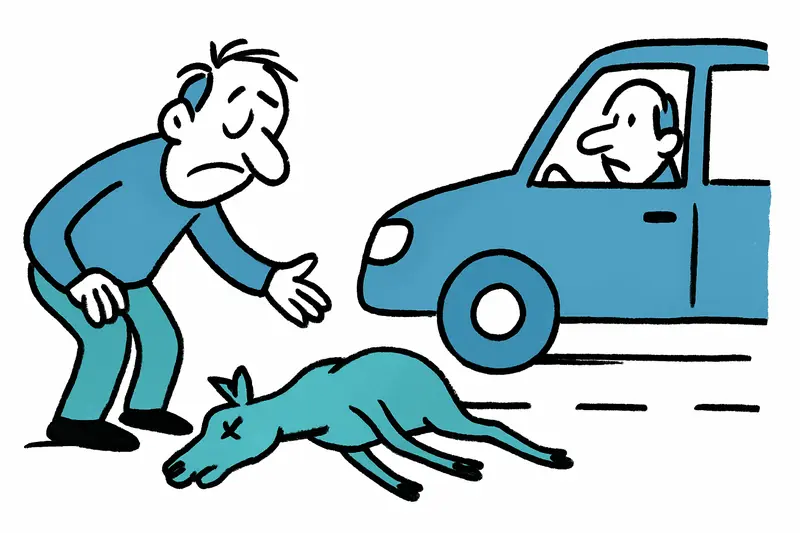
The new statistics from the OAFIB project at the UIB are surprisingly sober: 2,051 wild animals were killed in traffic accidents in the Balearic Islands in 2025, 1,595 of them on Mallorca alone, as reported in Too Many Dead Animals at the Roadside: Why Mallorca's Roads Are Becoming Death Traps. These are not abstract numbers; they are hedgehogs, rabbits, martens, wood pigeons, hares and even house cats that are run over by cars in the morning or at night — or simply cannot avoid collisions in time.
A sober number becomes a symptom here: many of the accidents occur on stretches where people and nature meet closely — routes toward Manacor and the motorway near Llucmajor were mentioned. Precisely where agriculture, suburbs and fast connecting roads meet, the deadly encounters happen. Similar concerns appear in Why Mallorca Remains Dangerous for Bikers — and What Could Really Help.
Critical analysis: The data show hotspots, but this rarely leads to effective countermeasures. The locations are mapped, yet action is too piecemeal and often reactive. Small animals — hedgehogs or rabbits — attract less attention in public debate than wild boar or deer, even though their losses affect ecosystems: they are prey, seed dispersers and herbivores. If measures focus only on "large" species, cascading effects remain unnoticed.
What is missing: a coordinated strategy between road authorities, municipalities and conservation bodies. OAFIB provides data; what is lacking is a priority list for the hotspots, reliable funding for crossing aids and a communicated division of responsibilities: Who enforces speed limits? Who installs fences or underpasses for animals? Without that, maps and tables stay in drawers.
Everyday scene from Mallorca: It is early morning, the sun has just shimmered behind the mountain ridge, the air smells of pine resin and coffee steam. On the Ma-15 toward Manacor a delivery van drives by, a cyclist breathes heavily at the edge of the road. Suddenly a house cat darts across — the driver honks, brakes, evasive action is tight; afterward a stain remains on the asphalt that none of us can later explain. Scenes like this happen here more often than you might think, and they linger: at the bakery, at the bus stop, at the weekly market.
Concrete solutions we should see implemented faster: first, targeted speed management at known hotspots. Speed limits are mundane but effective — especially at night, when many animals are active. A similar call for targeted measures was voiced after coverage of rising motorcycle fatalities in summer in Too Many Deaths on Motorcycles: How Mallorca Can Stop the Summer Trend. Second, physical measures: small underpasses and guiding fences that work particularly well for small game. These measures must be planned in a data-driven way, using OAFIB hotspots as a starting point. Third, better signage and seasonal warnings — for example during breeding seasons or migration periods. Fourth, cooperation with landowners and farmers so that green strips and hedgerows remain safe escape routes rather than being pushed to the roadside.
Technology can help, but it is no panacea: sensor-based warning systems or wildlife detectors at very critical stretches can alert drivers. At the same time, public aid networks are important — reporting channels for injured animals, clear protocols for police, volunteer rescuers and veterinarians.
What we can do immediately: expand local speed controls, install mobile information boards, and allocate municipal funds for pilot tests of crossings. What is needed in the medium term: an island-wide plan that integrates traffic and conservation — with concrete responsibilities (Consell, municipalities, road administration) and a budget for measures at identified hotspots.
What is often forgotten: prevention begins in the minds of road users. Awareness campaigns that show how often and where animals suffer are more effective when run locally — at markets, in schools, at car rental desks. Example: short information in rental car documents or signs on popular exit routes to sensitize drivers.
Pointed conclusion: The OAFIB figures are both an alarm signal and a tool. Those who only comment on them miss the opportunity to make roads safer for animals and people. Mallorca does not need new appeals, but pragmatic, locally implementable measures — speed limits, guiding installations, targeted construction projects and real cooperation between those who plan roads and those who know the natural environment. Otherwise not only biodiversity, but also a part of quality of life will be lost.
Frequently asked questions
Why are so many wild animals being hit on Mallorca’s roads?
What kinds of animals are most often killed in traffic on Mallorca?
Which roads on Mallorca are known wildlife collision hotspots?
What can be done to reduce wildlife deaths on Mallorca’s roads?
Are speed limits effective for protecting wildlife on Mallorca?
When are animals most at risk on Mallorca’s roads?
What should drivers do if they hit an animal in Mallorca?
Can local awareness campaigns really help protect wildlife in Mallorca?
Similar News

Released with Conditions: The Plus Ultra Suspicion and a Mallorcan Finca as Residence
A Dutch entrepreneur, sought in connection with the Plus Ultra case, was extradited to Spain after his arrest in Germany...

Haute Nuit in Puerto Portals: Fashion, Art and Indulgence by the Water
On October 2 the Lobster Club in Puerto Portals will be transformed into a stage for curated fashion, art and culinary e...
Magaluf: Watchtower Alarm – Lifeguards Pull Unconscious Beachgoer from the Water
After a drama in the late afternoon, two lifeguards at Magaluf beach rescued an unconscious 44-year-old man. He was stab...

Turquoise in the City: How dangerous is the color play of the Sa Riera?
The Sa Riera in Palma suddenly turned turquoise — a pretty motif, but behind the effect lies a discharge of saline waste...

Jeckliner at Sunnesching: Cologne spirit sets sail from Palma
In September 2027 the Mein Schiff 2 briefly becomes a floating carnival stage: four days with Cologne bands, comedy and ...
More to explore
Discover more interesting content

Can Cap de Bou

Townhouse Lleo 72
