
Woman's body on Málaga promenade: What we must not ignore
Woman's body on Málaga promenade: What we must not ignore
In the morning, the body of a woman was found on the Paseo Pablo Picasso in Málaga. Who she was, how she ended up in the water and which questions remain unanswered is unclear. A reality check from a Majorcan perspective.
Woman's body on Málaga promenade: What we must not ignore
A reality check that also matters for Mallorca's coasts
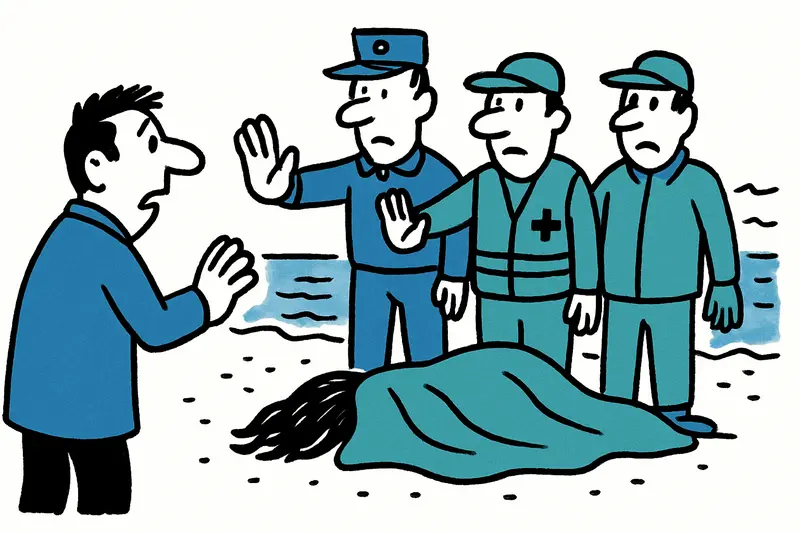
Around 9 a.m. on a cold, windy morning the body of a woman was washed up on the beach at Paseo Pablo Picasso in Málaga. The National Police, local police and rescue services were on site; emergency medics from service 061 declared the death. Reports indicate the woman was found with her head under water. The National Police have taken over the investigation; the cause of death has not yet been determined.
Guiding question
How well are our coasts and beaches really protected — not only against dangers to swimmers but also against the disappearance of people who become victims of accidents or crimes?
Critical analysis
The discovery recalls an unpleasant truth: the sea hides more than treasures and holiday idylls. A body washed ashore is the visible end of a chain of failures, security gaps or simply misfortune. Local investigations initially focus on identity and cause of death, as recent reporting showed in Corpse found in Alcúdia disco ruin: Who is responsible for decaying places?. But questions about how quickly traces are secured, how well beach sections are monitored year-round, and how seamless communication between maritime rescue, coast guard, police and forensics works often remain unanswered. Especially in winter there are fewer people on the beach: fewer witnesses, fewer rescue personnel deployed — this worsens the chances of reconstructing events.
What is missing from the public discourse
Debate about such discoveries quickly turns to sensational elements: location, image, the fact of death. Less attention is paid to how systematically data is combined. Is there an immediate query of missing-person reports nationally and abroad, as was necessary in cases like Two bodies on the coast: Investigations in Ciutadella and off Alcúdia – Many questions remain? What are the procedures for identification via DNA, dental records or personal belongings? And: are winter and off-season deployments assessed differently than in summer, when tourism authorities, police and rescue services prioritize their resources differently? Such detailed questions rarely make headlines but are decisive for clarifying causes and preventing repetition.
Everyday scene from Mallorca
One only needs to walk along Passeig Mallorca in Palma on a dull morning when the sea throws up high waves. Joggers pass by in thick jackets, streetlamps blink, a kiosk owner sweeps sand from the doorway. Most locals do not think of crime now, but of fallen sunshades and wet sandals. It is precisely there, between everyday noise and routine, that the quiet work takes place: police vans stop, paramedics check equipment, municipal workers inspect beach access points. These scenes show: control is possible — if it is planned continuously, not just seasonally.
Concrete solutions
1. Standardized recording protocols: All bodies found on coasts should be documented according to a uniform protocol — time, GPS coordinates, condition, personal effects, initial photos — so investigators always have clear foundations. 2. Connected missing-person queries: A rapid cross-check with national and European missing-person registers can drastically shorten identification times, as incidents such as Body in Es Carnatge: Investigations After Discovery on the Shore have shown. 3. Year-round beach patrols: Even in the off-season there should be at least spot patrols; in bad weather the risk of people getting into distress at sea increases. 4. Forensic rapid-response teams: Mobile units for first intake can secure traces before they are lost. 5. Public information: Sensitive but clear guidance for the public on what to do if someone is found on the beach and how information should be passed on. 6. Cross-region cooperation: The Balearic Islands, Andalusia and other coastal regions should share insights on patterns — for example on movement routes of boat migrants or unusual concentrations along certain coastlines.
Why this concerns Mallorca too
Mallorca is often not just a holiday destination but a hub in Mediterranean traffic: maritime emergencies, illegal crossings and fatal beach findings occur here as elsewhere. When bodies are found on other coasts, we are often indirectly affected — through routes, overcrowded boats, or information gaps in identification, as seen in Body Recovered off East Coast: A Sign of Larger Problems at Sea?.
Pithy conclusion
A found body is not a slogan but a complicated puzzle. Authorities can and must fill the gaps: with better procedures, stronger networks and the willingness to be present even in the gray midwinter of the Mediterranean. People on the promenade do not expect sensations, they want answers. And that is not a luxury — it is a civic duty.
Frequently asked questions
Is it safe to go to Mallorca beaches in winter?
What should I do if I find a body on a beach in Mallorca?
How are bodies identified when they are found on the coast?
Why are sea-related incidents harder to investigate in Mallorca during the off-season?
What happens when a body is found on a beach in Spain?
Is Passeig Mallorca in Palma busy enough for emergencies to be noticed quickly?
Why does Mallorca care about bodies found on other Mediterranean coasts?
What can Mallorca authorities do better when a body is found on the shore?
Similar News

"Expensive chaos" and many open questions: What clients can do when a lawyer suddenly stops responding
Several clients complain that a well-known German lawyer in Mallorca has been unreachable for months. Key question: What...

TV tip: 'The Last Problem' — Mallorca as the setting of a classic crime
A classic whodunit on Mallorca: A new miniseries set in spring 1959 brings storm, an isolated hotel and a dense web of s...
Nipping Sea Creatures: Why Bathers in Cala Major and Elsewhere Should Be Cautious
In Cala Major, bathers have reported being nipped by small fish. What is behind it, how can problems be avoided — and wh...

Forced eviction in Santa Catalina: When a 65-year-old slept in her car and showered on the beach — a question of responsibility
The story of Pilar López from Santa Catalina represents a problem affecting many Mallorcans: How can an island with a bo...
New traffic rules from October 1: What Mallorca visitors and locals need to know
From October 1, 2026, Spain will implement far-reaching changes to traffic regulations. Important for Mallorca: greater ...
More to explore
Discover more interesting content

Can Cap de Bou

Townhouse Lleo 72
