
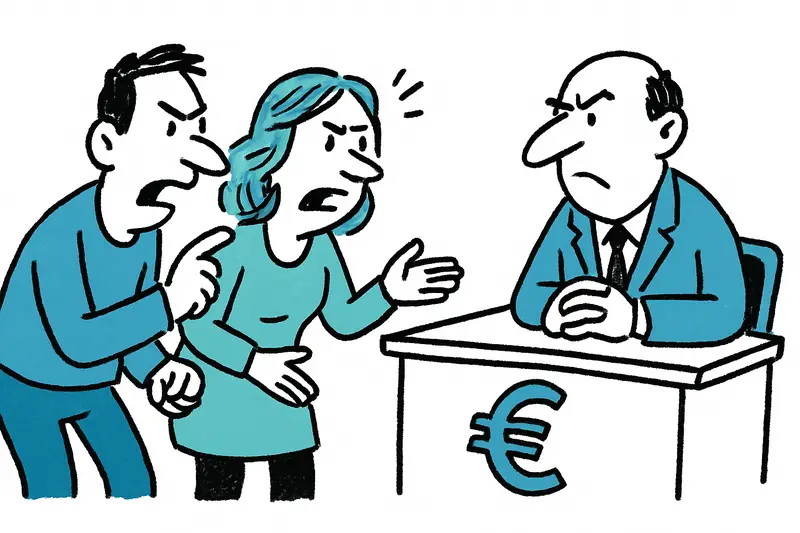
€1300 for five days in Mallorca: Parents demand a fair, transparent solution
€1300 for five days in Mallorca: Parents demand a fair, transparent solution
A planned five-day class trip from a school in Jerez to Mallorca (31 May–4 June 2027) costing around €1300 per child has sparked protest: parents criticise the price, the number of places and the payment terms and demand affordable alternatives.
€1300 for five days in Mallorca: Parents demand a fair, transparent solution
Key question
Is a five-day class trip for eleven- to twelve-year-old primary school children that costs around €1300 per child justifiable — and who is left out if only part of the class can take part?
What it is about
A school from southern Spain is planning a five-day trip to Mallorca from 31 May to 4 June 2027. The package includes flights, bus transfers, full board at the four-star Hotel Fontanellas Playa in Can Pastilla, entrance fees, travel insurance and airport charges. The programme includes, among other things, a visit to the aquarium at Playa de Palma, a walking tour of Palma with a stop at Bellver Castle, a boat trip to Cabrera and a day at Western Water Park in Magaluf. The cost: around €1300 per pupil in shared rooms. Of the just over 40 children in the year group, initially only 25 places are planned; allocation is to be by order of registration. Parents must transfer half of the amount by 5 November 2026, with the balance due by 15 February 2027.
Critical analysis
The price is not entirely surprising: flights plus a hotel right by Playa de Palma in high season push the total up. This pattern is discussed in Autumn Holidays in Mallorca: Expensive Flights, Affordable Hotels – How Does That Fit Together?.
Nevertheless, the calculation seems unreasonably high for families of primary school children. The key issue is not only the absolute figure but the consequence: if only 25 of more than 40 children can go and places are allocated on a first-come, first-served basis, a social selection process arises that disadvantages children from households with fewer liquid means. The early payment deadlines increase this pressure — they force families to raise large sums within short time frames or to go into debt.
What is missing from the public debate
Often only the price as a number is discussed. Much less often are the decision-making processes behind the organisation of the trip: How was the offer chosen? Were multiple quotes obtained? What options were considered for families with lower incomes? Also the question of the educational suitability of the programme for eleven- to twelve-year-olds often remains vague: cultural and experiential elements should be weighed age-appropriately, not just sold as "extras".
An everyday scene in Mallorca
Imagine Can Pastilla at the end of May: Cafés along the promenade are still empty, seagulls fight over a bread roll, and on the sand you can feel the quiet before the rush. For pupils such a trip can be lovely and formative. For families in Jerez who count every cent early, that image is not without bitterness, as Back to School in the Balearic Islands: Families Suddenly Face a €850 Bill shows.
Concrete approaches to solutions
There are several practical alternatives the school and parents can jointly consider: 1) Renegotiation with the tour operator (different accommodation, reduced services, cheaper dates outside peak season). 2) Increasing participant numbers through cheaper logistics (for example coach and ferry connections instead of expensive charter flights, day programmes instead of overnight stays). Broader transport and living-cost trends are examined in Rising Cost of Living in Mallorca: Who Pays the Price?, and local vehicle pricing is detailed in Why Rental Cars in Mallorca Have Become Noticeably More Expensive — and What You Should Know. 3) Financial scaling and social funds: staggered contributions according to ability to pay or a school fund filled by small donations, flea markets and municipal sponsorship. 4) Transparent tendering: obtain multiple offers and make the considerations public so that parents can understand how the price was arrived at. 5) Pedagogical revision: instead of numerous leisure attractions, place greater emphasis on local, low-cost educational content.
Conclusion
The parents' outrage is understandable. This is not about opposing trips per se, but about fairness and transparency. A class trip should unite, not divide. Schools can take more responsibility here: disclose, compare, renegotiate and design social justice measures. When administration, teachers and parents sit at the same table, a solution can often be found where children experience the trip — and parents do not fear for their wallets.
Frequently asked questions
Is €1300 for five days in Mallorca for a class trip justifiable?
How can schools make a Mallorca class trip fair when only part of the class can participate?
What questions should parents ask about the booking process and price of a Mallorca school trip?
What alternatives exist to a five-day Mallorca trip to keep educational value while cutting costs?
What Mallorca highlights might a school trip include, such as Palma, Bellver Castle, Cabrera, and the aquarium?
What should families pack for a Mallorca school trip in late spring?
When is the best time to plan school trips to Mallorca for good weather and fewer crowds?
What educational value should a Mallorca trip offer for middle school students?
Similar News

Prominence Alone Is Not Enough: The Case of Germania Mallorca and the Reality Behind the Dream
After six games the coach is gone. What does that say about ambitions, leadership and everyday life at FC Germania Mallo...

Blackboard on Mondays, Microphone on Weekends: How a Teacher Conquered the Ballermann Stage
She carries teaching materials and playback kits with her: once an elementary school teacher in Germany, today a fixture...

No More Coal Dust: Es Murterar Becomes an Energy Runway for the Future
End of an era: The last coal units at the Es Murterar power plant are being shut down. For Mallorca this means cleaner a...

Winter over the island: Who keeps flying, who pauses — and what does that mean for Mallorca?
Palma airport reports almost eight million seats for the coming winter season. Between expansion by some carriers and co...
Kilograms of Cocaine in the Glove Compartment: Arrests in Son Ferriol Raise Questions
Two men (42, 50) were arrested in Son Ferriol after 2,240.96 grams (about 2.24 kg) of cocaine and just over €2,000 were ...
More to explore
Discover more interesting content

Can Cap de Bou

Townhouse Lleo 72
