
Admission Only with Ticket: Police Stop Excessive Parties Near Son Castelló
Admission Only with Ticket: Police Stop Excessive Parties Near Son Castelló
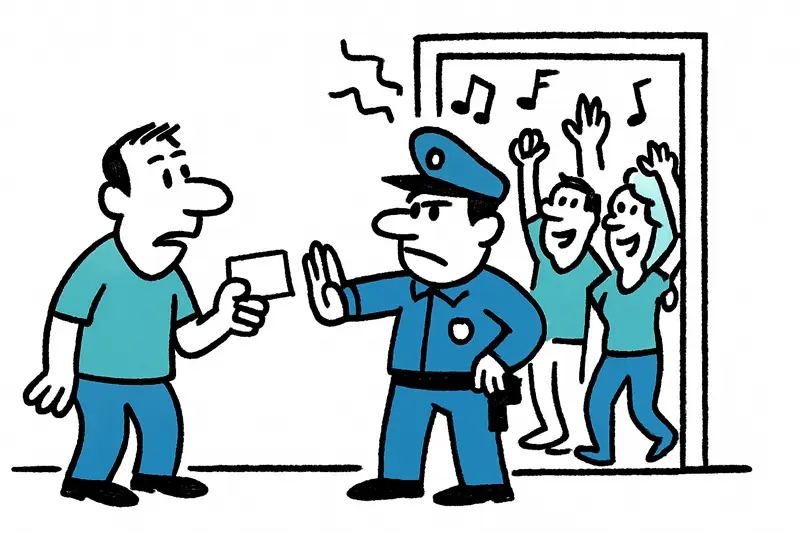
Residents on the road to Sóller complained about constant noise. The local police broke up a concert-like party: tickets, entry controls, minors present and vehicles confiscated.
Admission Only with Ticket: Police Stop Excessive Parties Near Son Castelló
In the early hours of Sunday morning, around 7:30 a.m., the local police were called to a property on the road to Sóller, near the Son Castelló industrial area. Residents reported loud music, access controls, sold admission tickets — and said that the location was not hosting a one-off event but regular parties that were driving neighbors and locals to despair, similar to Escobar party in Son Oliveret: Why do we celebrate criminals — and how do we stop it?.
Key question
How can private homes be prevented from turning into permanently noisy event venues without blanketly penalizing the rights of property owners?
Critical analysis
The operation revealed several problems at once: the police identified a minor on the premises; the 28-year-old resident of the house was charged with noise disturbance, illegal activities and disobedience after refusing to end the event. Authorities also carried out a large-scale traffic check on site: more than 50 vehicles were inspected, a motorcycle reported stolen was immobilized, four vehicles were temporarily taken off the road and twelve citations were issued — eight of them for missing Spanish vehicle inspection (ITV) and four for lack of insurance. Notably, despite the late hour and alcohol consumption, there were no charges for driving under the influence; many guests apparently left their cars at the venue.
What is missing from the public debate
The debate quickly turns to "banning parties" or "increasing police presence." Two issues are rarely addressed: first, the role of digital advertising. When parties grow quickly via social networks, more practical tools are needed to detect illegal large events early. Second, clear supervision of such properties is lacking: who regularly organizes commercial events in residential areas, and how can the municipality consistently act against repeated disturbances?
Everyday scene from Mallorca
Imagine the street: it is still dim, the garbage truck rumbles past, the shutters of a residential building are closed. Bass booms from the neighboring plot, birds flee, a dog barks on repeat. Residents, many of them workers or families with small children, stand with a coffee cup in hand and count the hours of sleep they've lost, while parents in other neighborhoods have taken to the streets, as seen in Protest at Cas Capiscol: Parents demand safe school routes in Son Busquets. Son Castelló is an industrial zone by day, but at night a garden gate can turn into a club — to the great annoyance of the people who live and work here, as seen when a green area near Son Bonet required a municipal cleanup in Night Shift at Son Bonet: Why Pla de na Tesa Must Not Become a Party Dump.
Concrete proposals
A few measures would be short-term and practical to implement: - Municipal registry of locations with repeated noise complaints so that known "hotspots" can be checked preventively. - Mandatory reporting of events above a certain number of attendees to the municipality, combined with a digital reporting portal accessible to police and regulatory authorities. - Higher, immediately effective sanctions for commercial parties in residential areas: fines for the organizer and temporary closure of the property for commercial events. - Cooperation with platforms: faster removal of advertising for illegal parties and clear reporting channels for authorities. - Social interventions: neighborhood officers or mediators who step in in recurring cases and mediate between residents and organizers.
Conclusion
The raid was a symptom, not a cure-all. As long as organizers, owners and digital reach operate in a gray area and authorities must manage without networked reporting and sanctioning tools, such operations will recur. The people who live on the road to Sóller do not want permanent police actions — they want to be able to sleep at night again. A regulated mix of prevention, better coordination between authorities and clear rules for private events would bring more peace than isolated, high-profile raids.
Frequently asked questions
Why do neighbours in Mallorca complain about private parties becoming a problem?
Can police stop a private party in Mallorca if it is too noisy?
What happens if a home in Mallorca is used regularly for commercial parties?
Is it legal to sell tickets for a private party in Mallorca?
What should residents near Son Castelló do about repeated loud parties?
Why do police in Mallorca check cars at illegal parties?
What is the Son Castelló area in Mallorca like at night?
How can Mallorca stop private houses from becoming regular event venues?
Similar News

Palma Gets a Welcoming Park: Tirador Goes Greener — and a Café Is Coming
A new green project in Es Fortí/Camí de Jesús will transform the old Voltadora into a city park with an experience fores...
Why the End of "Los Últimos Mohicanos" Is More Than the Closing of a Bar
With squealing tires and one last glass, an icon on the Palma–Manacor expressway closes. Why the demise of this German b...

Protest camp on Plaza España: Who asks for solutions to the right to housing?
Around 30 activists set up a tent camp on Palma's Plaza España to push for stronger tenant rights. Our analysis asks: Ar...

In the Name of a Gang: Alleged Extortion in El Molinar and What It Reveals About the Protection of Sex Workers
A man is accused of posing as a member of the Hells Angels and extorting two women at accommodation in El Molinar. The s...

When Chile Meets the Mediterranean: A New Flavor at Can Bordoy
At Can Bordoy in Palma's old town, Chilean chef Jhonatan Maldonado combines Patagonian seafood with Mediterranean island...
More to explore
Discover more interesting content

Can Cap de Bou

Townhouse Lleo 72
