
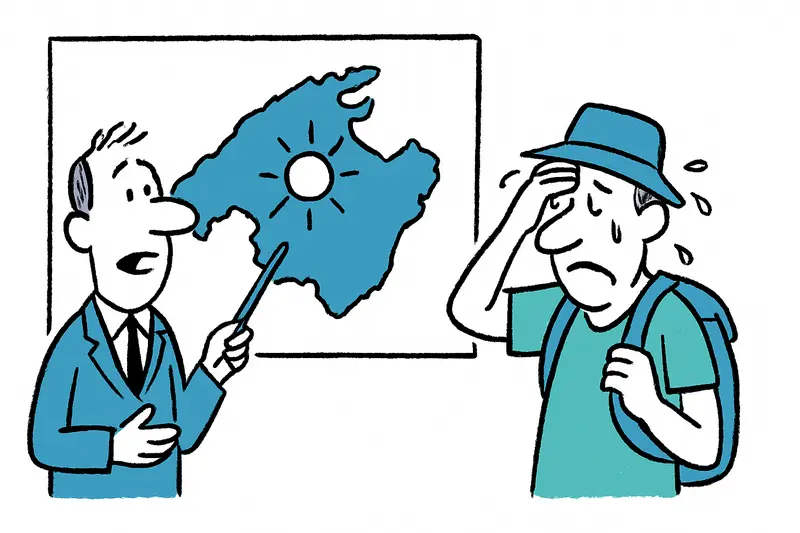
AEMET expects hotter summer on Mallorca – guiding questions for the island, tourism and daily life
AEMET expects hotter summer on Mallorca – guiding questions for the island, tourism and daily life
Meteorologists see above-average temperatures and more tropical nights between July and September. What does this mean concretely for water, health, tourism and the waters around the island?
AEMET expects hotter summer on Mallorca – guiding questions for the island, tourism and daily life
Guiding question
How should municipalities, hosts and households on Mallorca react when AEMET forecasts higher temperatures, more frequent tropical nights and several heat waves for July to September?
Critical analysis
The forecast sounds brief at first: warmer than usual. In practice, however, this means more than just a few extra hours of sunshine. Higher air temperatures increase the strain on elderly people and infants, the number of heat-related emergency interventions rises, energy consumption for cooling climbs, and agriculture experiences stress on harvests and irrigation. Heat waves that have pushed temperatures above 40 °C are a stress test for people, infrastructure and tourism, as described in Heatwave reaches 42 °C: How Mallorca should cope with the new temperature peak. On our streets—such as the Passeig Marítim in Palma or in the narrow lanes of Sóller—you notice the heat not only in full ice buckets in front of cafés, but in people who leave their homes earlier and only come out again in the cooler evening hours, as reported in Nearly 40 °C: Mallorca's Daily Life Under Heat Stress — How the Island Can Respond.
Another point: the average sea temperature. A warmer sea surface changes local weather dynamics. If a cool air mass moves in from the north in August, it can trigger intense thunderstorms because the temperature difference strongly stirs the air. Such storms can be locally severe—heavy rain, lightning and short-lived gale gusts. For port operations, beachgoers and boat rental businesses this means increased vigilance, as highlighted in Heat alert on Mallorca: How well is the island prepared for infernal heat days?.
What is missing in the public discourse
There is a lot of talk about beautiful days at the beach, and less about adaptation strategies, a concern analysed in When Mallorca Cooks: How Prepared Is the Island for the Next Heatwave?. Three points are often omitted: first, concrete recommendations for vulnerable groups (when to cool down, how to protect). Second, more transparent communication about water scarcity: which measures apply during prolonged heat? Third, a clear plan for handling heat-related power peaks so that clinics, supermarkets and cold chains are not put at risk.
An everyday scene from the island
Imagine an August morning in Cala Major: the fish market is not yet fully open, fishermen are tending their nets—the sea feels unusually warm, and the planks on the quay almost steam in the sun. In Port de Pollença retirees sit under awnings because the sun is already beating down on the promenade with full force. Schoolchildren who would usually be outside in the morning are brought indoors earlier. These scenes repeat across villages and towns; the heat changes how we structure the day.
Concrete solutions
It is not enough to simply warn. Here are some practical measures—short, local and feasible:
1) Expand municipal action plans: Cities should clearly designate cooling centres for heat-vulnerable people (e.g. community halls in Santanyí, libraries in Inca) and increase public drinking water points. Opening hours of public swimming pools can be flexibly extended.
2) Use water sparingly and selectively: Strictly regulate irrigation times for agriculture and public green spaces (early morning, late evening). Municipalities should publish transparent reports on groundwater levels and set priorities for drinking water.
3) Energy and cooling: Hospitals, care homes and food stores need prioritized emergency plans for power supply. In the short term, simple measures such as fans in waiting areas and adjusted shift schedules for night work in hotels help.
4) Inform tourism clearly: Hotels, hosts and organisers should proactively inform guests about risks (tropical nights, drinking recommendations, sun hours) and create flexible frameworks for activities (early starts, evening programmes).
5) Coastal and weather monitoring: Port authorities, lifeguards and boat rental operators need regular updates on sea temperature and thunderstorm probability. Digital warning chains via local channels (municipal WhatsApp groups, notices in harbours) are effective.
Conclusion — short and pointed
A warmer summer on Mallorca is more than a comfort issue. It concerns health, supply security and the question of how we reorganise days and nights. AEMET's forecast is a wake-up call: those who implement simple, local measures now reduce risks and ultimately save resources. It is time to face heat not only by experiencing it, but by being prepared.
Frequently asked questions
What kind of weather can you expect in Mallorca at the end of August?
Is it still warm enough to swim in Mallorca in late summer?
What should you pack for a late-August trip to Mallorca?
Is late August a good time to visit Mallorca if you want beach weather?
How hot does Palma de Mallorca usually feel in August?
Is Port de Pollença a good place to stay in Mallorca in late summer?
What is the weather usually like in Peguera in August?
Is it worth visiting Mallorca for a short trip in late August?
Similar News

More water than last year: Mallorca's reservoirs breathe easier
September rain refilled the Tramuntana's reserves: overall fill around 35 percent, Cúber at 40.42 percent, Gorg Blau at ...
Three Luxury Hotels in Banyalbufar: Lots of Money, Many Questions
A Danish investor plans three exclusive accommodations in Banyalbufar — including the historic Son Valentí. The announce...
2.1 tonnes of cocaine on sailing yacht off Spain's coast – a reality check for the coastguard
A 14-metre yacht was seized with 2.1 tonnes of cocaine. Who monitors the ports, how does the international hunt succeed ...
Heat Bonus in Mallorca: 100 Euros Extra for Outdoor Staff at MarSenses
MarSenses pays employees who worked outdoors in August an extra €100 as recognition. Lighter uniforms, reduced hours for...
Renovating in Mallorca: What You Really Can Do Without Neighbour Consent
Many think they can do whatever they want in their apartment. That's partly true — but only as long as structural elemen...
More to explore
Discover more interesting content

Can Cap de Bou

Townhouse Lleo 72
