
After the Motorcycle Accident: How Daniel Reorganized His Life in Mallorca
After the Motorcycle Accident: How Daniel Reorganized His Life in Mallorca
A 29‑year‑old Colombian lost his leg in an accident on the Inca–Sineu road. How he found a way back with amputation, a bipolar diagnosis and art.
After the Motorcycle Accident: How Daniel Reorganized His Life in Mallorca
A story of pain, therapy and artistic optimism
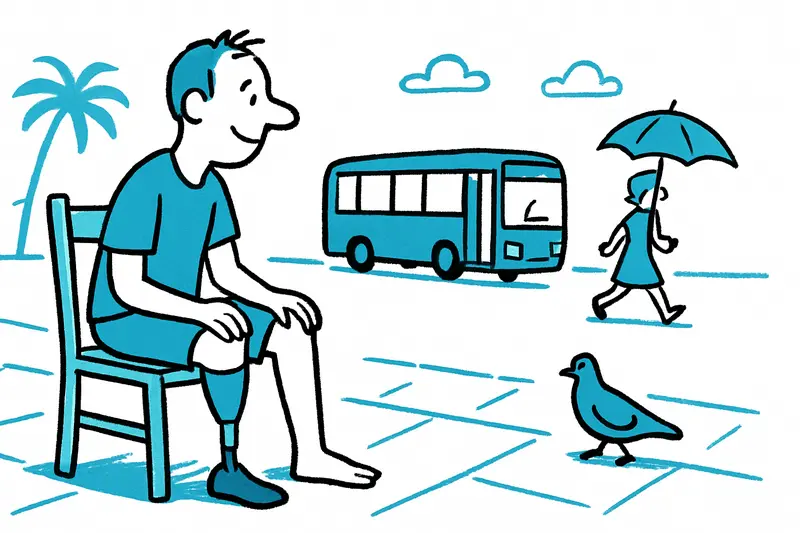
On the Passeig Mallorca, where in the mornings the TIB buses fill the air with diesel and cups clink outside Café Fischer, Daniel sits with a calm smile. You wouldn't immediately guess that a year earlier an entire life plan had been shaken: an accident on the country road between Inca and Sineu in September 2025 changed everything, as do reports such as Serious accident on Calle Aragón: A loud bang, many questions.
In the collision with an oncoming vehicle Daniel had to be resuscitated several times. He was in a coma for eight days and remained in treatment for almost five months, including at the Son Espases University Hospital. When he woke up, his left leg was gone — an amputation had been medically unavoidable. He also suffered severe pelvic injuries and strong phantom pain.
'At first it was surreal,' he says, tapping his foot on the ground as traffic moves by. The first steps in the hospital were only possible with the help of caregivers. Then came the small victories: the first half hour in a chair, the first round in the water. Today he swims again, jumps rope, drives a car and practices slalom on roller skates.
Daniel was born in Colombia and has lived on the island since he was four. He became a father at 18; later specialists diagnosed him with bipolar disorder. The mental illness was taboo for a long time, he says. He finally found support at the local self-help organization Gira‑Sol — there he learned to live with the diagnosis and bring structure back into his daily life.
Professionally he has already come a long way: vocational training, a business administration degree and positions at the transport company TIB and at the ITV inspection center. After the accident he decided to refocus his energy: art was to become a cornerstone of his life, while he also prepares for a position in the public service.
His drawings, which often deal with mental health, were recognized by the island council: he received a youth prize for his work. 'It helps to talk about it,' Daniel says. His images are not a cure but an impetus to speak openly — on the island, in neighborhoods, in schools.
The rehabilitation was and is demanding both physically and mentally. Phantom pain remains an issue. Still, he has set himself challenges: he completed a marathon, built a chicken coop with his son and keeps one question as his guiding principle: 'Can I do this?' Then he tries.
Why is this story good for Mallorca? Because it shows how after a serious accident medical care, social support and personal will work together. Hospitals like Son Espases, rehab services and local initiatives provide a safety net that can catch people. And because art and openness about mental illness here are not only personal help but also spark social discussion.
Everyday scenes like these — a man who, despite visible scars, walks along Passeig Mallorca, tourists hurrying with parasols, a pigeon skittering over the cobbles — are a reminder: the island is not just postcard idyll, it is community. When neighbors, social services and associations pitch in, opportunities for new beginnings arise.
Daniel continues to plan: more exhibitions, talks in schools, maybe a small shop to show his work. He does not say that everything is easy. But he has accepted that losing a limb does not necessarily mean losing dreams. 'Life is short, so take opportunities,' he says, waving to a passerby squinting into the sun coming from the sea.
His message is simple and concrete: talk, try, accept support. On Mallorca exactly these steps can lead people to new paths — and that's a message people here like to hear more often.
Frequently asked questions
When is the best time to visit Mallorca for swimming and beach life?
What should I pack for a Mallorca trip?
Is Mallorca suitable for family travel?
What’s the best way to get around Mallorca?
Is Mallorca safe for solo travelers?
What should I know about weather and seasons in Mallorca?
Can I visit Mallorca’s villages and nature spots without a tour?
Are there water-based activities I can book in Mallorca?
Similar News
Failed before the first flight: How Fischer Air's plans for Palma were ground down
Announced routes, repeated postponements and now apparent insolvency: Why the Fischer Air project for Mallorca is not me...
Seconds in the Water: 19-year-old Fights Her Way Out of Flooded Car in Palma
A 19-year-old managed to rescue herself from her half-submerged car after sliding under the Verge de Lluc underpass. Res...
Between Dream and Reality: Thorsten Legat and the Challenges of FC Germania Mallorca
The former Bundesliga pro has assembled a colorful squad in a short time. But how realistic is the grand plan for promot...
Arrest warrant at check-in: Why two travelers at Cologne/Bonn Airport suddenly had to pay
At Cologne/Bonn Airport, federal police in mid-September found two German passengers subject to enforcement measures. Bo...
Balearic Islands as a New Route: A Reality Check on Rising Boat Migration
For the first time the Balearic Islands are ahead of the Canary Islands in boat arrivals. What do the numbers really say...
More to explore
Discover more interesting content

Can Cap de Bou

Townhouse Lleo 72
