
After the crash: Jaime Anglada discharged – What the case reveals about road safety in Mallorca
Jaime Anglada has been discharged from Son Espases after weeks and will continue rehabilitation in Llucmajor. The accident raises questions about drunk driving, dangerous intersections and enforcement.
Jaime Anglada discharged — Relief, but also new questions
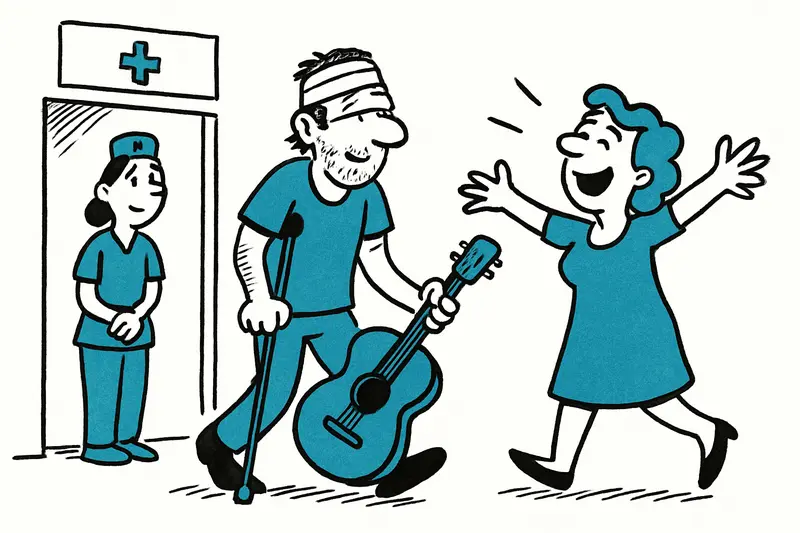
Relief was almost palpable that morning in Palma: after more than four weeks in hospital, singer Jaime Anglada (see Jaume Anglada after serious accident in Palma) left Son Espases and will continue his rehabilitation at a clinic in Llucmajor. Friends accompanied the small convoy, occasional passersby on the Passeig Marítim stopped, listened to the quiet engines and exchanged glances. In the cafés, the clink of espresso cups and the distant chirping of cicadas mixed with conversations about the accident, hit-and-run and responsibility.
How the crash happened — and why this is not just an isolated case
At the beginning of August Anglada was grazed by a car at an intersection in Palma; the driver fled the scene but was later caught with alcohol in his blood. Local reporting asked After accident with Jaume Anglada: How safe is Avenida Joan Miró?. Legal steps are still underway and the investigation continues. In the bars around Plaça Major and along the seafront the topic is being hotly debated: why do people still get behind the wheel after drinking? Why are certain intersections on the island repeatedly the scene of serious accidents?
The facts are known: hit-and-run, alcohol at the wheel, injured people. But behind the headlines there are questions that are often overlooked. It's not just about individual responsibility, but about infrastructure, prevention and how our control authorities behave. Son Espases has shown how quickly lives can be thrown off course — but also how crucial immediate medical care is. Almost three weeks in the intensive care unit, then slow progress: a smile, a hand that reached again for a glass. Images that sustain families and fans while the island continues to debate.
Rehab, patience and the quiet work of recovery
In Llucmajor the months-long routine of physiotherapy, speech therapy and plenty of rest now begins. For Anglada this means: no stage program this year, step by step. The rehabilitation is accompanied by specialists and small successes become milestones — a note articulated clearly again, a finger plucking a string. For his supporters they are the small gestures: messages on the smartphone, a guitar in the corner, the hope that the rough voice will return.
Critical questions for politicians and police
The case exposes weaknesses: are controls sufficient? Where are visible measures missing at dangerous intersections? Mallorca's city centers are full during the day — delivery traffic, tourists, residents finding their way through narrow streets. Redesigning intersections, better lighting, lower speed limits or even small roundabouts could ease the situation. Regular alcohol checks at peak times, a stronger Guardia Civil presence and targeted public information campaigns that do not only focus on criminal consequences but change social norms are also needed.
The discussion about bail and pretrial detention, as it has arisen in the case of the accused, as reported in Bail for Jaume Anglada's Accident Suspect: Too Much Trust in the Justice System?, also shows: law and public perception often stand in tension. On the promenades one often hears the equation "quick release = injustice", accompanied by a demand for more transparency in proceedings that directly affect victims and residents.
What could help — ideas instead of helplessness
Some realistic steps that could have an immediate effect on the island:
- More targeted checks: Breathalyser checks on weekends and during events can deter offenders.
- Calming dangerous intersections: Reduce speeds, improve sightlines, consider temporary bollards or roundabouts.
- Prevention campaigns: Local initiatives in schools, bars and with event organizers that do not moralize but offer alternatives (shuttles, taxi vouchers, dedicated ride services).
- Victim support and transparency: Information for those affected about procedures after accidents and clear communication on the status of investigations.
What remains — and why we should listen
The discharge of Jaime Anglada is good news in a dramatic chapter. It reminds us how fragile everyday life is: a moment of inattention, a decision under the influence of alcohol — and life is turned upside down. At the same time the case shows that hospitals, rehab teams and communities can achieve a lot. The quiet signs of solidarity — a greeting, a guitar in a corner, a message on a phone — are as important here as political responses.
If you have information that could be relevant to the investigation, please contact the local police station in Palma. For everyone else: look, speak up and think ahead — so that the promenades, squares and intersections in Mallorca become safer.
Frequently asked questions
What should drivers in Mallorca know about alcohol checks and road safety?
Why do some intersections in Mallorca keep appearing in accident reports?
How long does rehabilitation usually take after a serious accident in Mallorca?
What help do accident victims receive at hospitals like Son Espases in Mallorca?
What happens after a hit-and-run accident in Palma?
Why is Avenida Joan Miró in Palma sometimes discussed as a road-safety concern?
What is rehabilitation like in Llucmajor after a serious injury?
How can Mallorca reduce alcohol-related traffic accidents?
Similar News
Thief takes salon security — and even steals the camera
In Palma a man stole the tip jar and the surveillance camera from a massage salon. A neighbor filmed the act and handed ...
From Workshop to Luxury Villa: What a €19.5 Million House Reveals About Palma's Market
A historic town house on Carrer de la Pelleteria was converted into a 1,000-sq m residence and is on the market for €19....
FC Germania Mallorca: Why does the lead always slip away in stoppage time?
After the 1-2 at C.A. Pal ne da Tesa questions arise: are these coincidences, a shortage of personnel, or a deeper probl...
Hidden War Bunkers in Palma: Remember, Preserve, Reveal?
Beneath Palma's paving lie remnants of a forgotten shelter system from the Civil War. Consolidation, ethics and tourism ...
Death in the Gorge: Key Questions on the Safety of Rallies on the Ma-10
A Porsche plunged into a ravine during the 550 Challenge near Mortitx. Who bears responsibility, what safety gaps were r...
More to explore
Discover more interesting content

Can Cap de Bou

Townhouse Lleo 72
