
Red Flag, Dark Day: A Death off S'Espalmador — a Reality Check
Red Flag, Dark Day: A Death off S'Espalmador — a Reality Check
A US citizen jumped from an anchored boat into the sea while the red flag was flying to retrieve a toy for his daughter — he was later recovered lifeless. Why such accidents happen and what is missing on Formentera.
Red Flag, Dark Day: A Death off S'Espalmador — a Reality Check
Why do people jump into the sea despite warnings, and what needs to change?
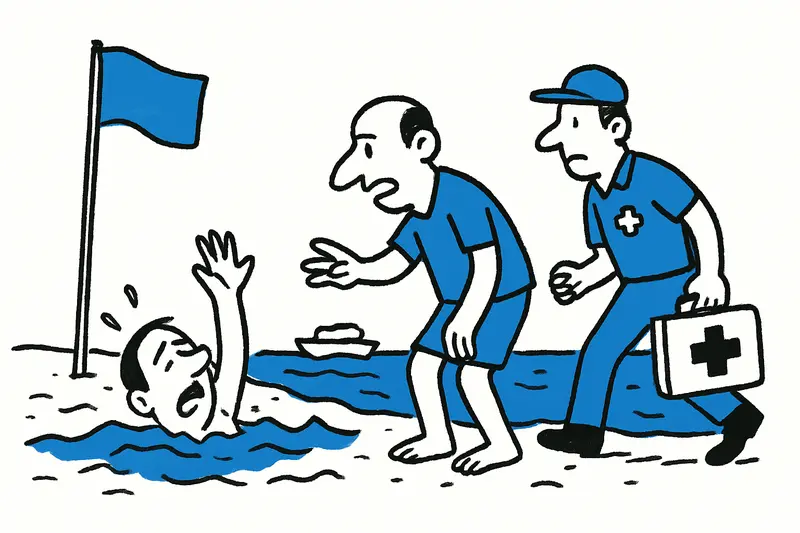
Late in the morning off the S'Espalmador headland, just before the small ferry and fishing bay of Sa Savina, what many locals fear happened: a man, reported by media as a US citizen, jumped from an anchored leisure boat into the water to retrieve an object that had slipped from his daughter, although the red flag was flying on the beach and along the coast. Shortly afterwards he was found drifting, pulled from the water and, despite resuscitation efforts, declared dead a short time later.
Key question: Why do people on holiday ignore warning signals that are meant for their own safety? Similar incidents, such as Red Flag in Talamanca, suggest this problem recurs across popular beaches.
Critical analysis: The red flag is clear, but not necessarily universally understood. Especially on open water, around uninhabited islets like S'Espalmador, life‑saving infrastructure is lacking: no permanent lifeguards, no dense rescue services as at busy beaches, difficult currents and often distant landing sites. Private boats cluster close together on many summer weekends; parents focus on sunshades, drinks and children — not always on currents or sudden waves.
What is missing in the public discourse: responsibility of boat operators and charter companies is rarely discussed. Incidents like Boat in Flames off La Savina show that recreational boating safety is part of the wider picture. Anyone who rents a boat or skippers a leisure vessel should know: anchoring near a red flag does not automatically mean you are safe. The question of whether boat briefings sufficiently warn about sea hazards hardly arises. Language is also underexposed: many tourists do not speak Spanish or Catalan; the words “red flag” or a red cloth on the beach are not a sufficient cue for some, especially if the mood on their own boat suggests otherwise.
Everyday scene from Formentera: On hot days I see the small pier of Sa Savina; engines hum, children run barefoot, vendors carry trays of ice cream. Boats lie like bees around the large sandbank, people laugh, someone plays music from a speaker, and the small police launch makes its rounds — but not continuously and not everywhere. A man jumps, a small object falls, the seconds stretch, and suddenly rescue teams are on their way. The sounds of the island — seagulls, diesel engines, the clatter of rigging — form the background of an emergency that quickly turns tragic.
Concrete solutions: 1) Multilingual, visible notices in harbours and at boat rental points: clearer pictograms alongside flags that indicate currents and explain the meaning of the red flag. 2) Mandatory short safety briefings at every boat handover: life‑saving basics, what to do when the red flag is flying, how to manage children on board. 3) Equipment requirements: life jackets for children and weak swimmers should be immediately available and accessible on board. 4) Expand AED availability (defibrillators) in harbours and busy anchoring spots and require CPR training for boat crews and charter companies. 5) More frequent presence of the Coast Guard/Guardia Civil during peak times at known problem areas; loudspeaker announcements over VHF on common channels when bathing bans apply. 6) Awareness campaigns by local authorities and boating associations in multiple languages — not just flags, but short onsite videos and information when chartering.
A few inconvenient realities must nevertheless be acknowledged: signs help little on open water. A parent's quick, emotional decision is impulsive — that cannot be prevented by pictograms alone. And there are people who consciously take the risk believing they can help; a fatal rescue attempt in Son Bauló illustrates the tragic outcome that can follow. Here a combination of prevention and available rescue technology is needed.
Conclusion: The red flag is justified. It is not an annoyance for sunseekers but a sign of real danger. The death off S'Espalmador is a warning: we must close the gap between warning and behaviour — through clear information in harbours, mandatory safety briefings when chartering boats, better equipment at landing places and a more consistent presence of rescue services. Small measures could save lives in the future. And no, a lost toy is not worth underestimating the waves.
Frequently asked questions
What does a red flag on Mallorca beaches mean for swimming and boating?
Why do people ignore warning flags on Mallorca's coast?
What safety improvements could reduce drownings near S'Espalmador and Sa Savina?
What responsibilities do boat rental operators have on Mallorca to prevent accidents?
How can families boat safely with kids around Mallorca's coast?
Is there reliable safety information available when chartering a boat in Mallorca?
What does this incident tell us about Mallorca’s sea conditions and safety gaps?
How can Mallorca communities reduce future sea-related tragedies?
Similar News
Failed before the first flight: How Fischer Air's plans for Palma were ground down
Announced routes, repeated postponements and now apparent insolvency: Why the Fischer Air project for Mallorca is not me...

Seconds in the Water: 19-year-old Fights Her Way Out of Flooded Car in Palma
A 19-year-old managed to rescue herself from her half-submerged car after sliding under the Verge de Lluc underpass. Res...

Between Dream and Reality: Thorsten Legat and the Challenges of FC Germania Mallorca
The former Bundesliga pro has assembled a colorful squad in a short time. But how realistic is the grand plan for promot...

Arrest warrant at check-in: Why two travelers at Cologne/Bonn Airport suddenly had to pay
At Cologne/Bonn Airport, federal police in mid-September found two German passengers subject to enforcement measures. Bo...
Balearic Islands as a New Route: A Reality Check on Rising Boat Migration
For the first time the Balearic Islands are ahead of the Canary Islands in boat arrivals. What do the numbers really say...
More to explore
Discover more interesting content

Can Cap de Bou

Townhouse Lleo 72
