
Red Flag in Talamanca: When Warnings Fade in the Wind
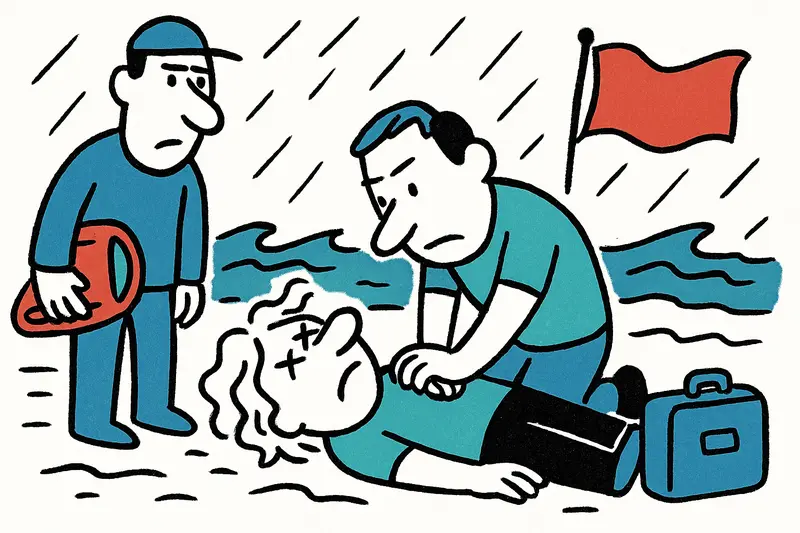
At Playa de Talamanca lifeguards pulled a woman from the sea after she apparently went into the water despite a red flag. A sobering case that raises the question: why are warnings so often ignored — and how can that be changed?
Red Flag in Talamanca: When Warnings Fade in the Wind
On Sunday afternoon, Playa de Talamanca turned into an emergency scene for several hours: rescuers pulled a 73‑year‑old woman who was resuscitated in Talamanca from the sea after she apparently ignored the red warning flag at the lifeguard station. The promenade had been combed by the wind, rain lashed fine drops against the palms, and the tires of emergency vehicles creaked on the wet sand. Phones glowed like little beacons in the hands of onlookers while paramedics began resuscitation.
The central question: Why do people ignore clear warning signs?
This is more than an isolated incident; a fatal rescue attempt in Son Bauló shows how quickly situations can turn tragic. The immediate question is simple, the answer complicated: is it carelessness, language barriers, or a misjudgment of the danger? Experts speak of an optimism bias — the feeling that bad things happen to others, not to oneself. In holiday mode risk assessments become even softer: a glass of sangría, familiar swimming routines or the expectation that lifeguards will intervene if something goes wrong.
A red flag is often not enough
Flags have been a means of beach communication for decades. But in a storm they hang flat against the pole, barely visible in the rain, and tourists read symbols less often than concrete sentences. Someone who does not speak Spanish and only notices the color briefly may underestimate the severity of the warning. Older people who rely on routine, or passengers from boats clinging to memories of calmer hours, add to the problem.
Operational pressure in autumn — an aspect discussed too little
Away from the tourist months the situation shifts: less staff, shorter shifts, seasonal workers who tire. When the weather turns and several operations are needed within hours, the system comes under pressure. Volunteers, temporary staff and crews like SAMU 061 do a lot — but capacities are finite. This leads to a sad truth: warnings are only as good as the system behind them.
What is often missing in the debate: responsibilities beyond the lifeguard service
It should not fall only on the rescuers. Hotels, landlords, boat operators, bars and tour operators have a duty to inform. A short information sheet at check‑in, a notice in German, English and Catalan at the reception, or an SMS in case of weather warnings could save lives. Many local businesses already inform guests, but there is a lack of a unified, mandatory regulation.
Practical approaches instead of well‑meaning advice
The island could increase the effectiveness of warnings with relatively simple measures: multilingual LED displays at busy points (Paseo Marítimo, harborfront), audible alerts for sudden deteriorations, and mobile pop‑ups in popular travel apps linking to real‑time wind and current data. Such technical solutions bridge the moments when a flag is barely noticeable in a storm.
Deterrence and education — two sides of the same coin
Controls and fines act as short‑term deterrents; the presence of beach police can keep people away from dangerous currents. More sustainable, however, is education: mandatory short information letters for guests, basic training for hotel staff, info cards in apartments and clear pictograms at beach entrances. Recent tragedies such as a dead tourist at Playa de Palma underline the need for better prevention. A culture of collective awareness does not arise overnight — but it can be fostered.
Innovations that could help
Some municipalities are already testing drones for rapid situational overviews to support rescuers and locate swimmers in distress faster. Dynamic guidance systems that send push notifications to all devices in a beach area would be another step. Such technologies cost money, but compared with the costs and suffering of an emergency they are investments in prevention.
What matters now — for authorities and beachgoers
In the short term: the red flag is not a recommendation, it signals life‑threatening danger. Ask the lifeguards, follow instructions and leave the coast during a storm. For authorities: improve staffing plans for transitional periods, install multilingual, visible warning systems and make cooperation with tourism providers mandatory. And for each individual: a little more attention never hurts — at the beach you not only hear the sea, sometimes you also hear the last warning.
Note: Out of respect for the person involved, this text omits personal details. We will report as soon as reliable information from the hospital or official sources is available.
Frequently asked questions
What does a red flag mean at beaches in Mallorca?
Is it safe to swim in Mallorca when the weather looks only a little rough?
Why do some people ignore warning flags at Mallorca beaches?
What should I pack or check before going to the beach in Mallorca during windy weather?
Is Playa de Talamanca in Mallorca safe for swimming when there is a red flag?
What should hotels and holiday rentals in Mallorca tell guests about beach safety?
What can I do if I see someone in trouble in the sea in Mallorca?
Are beach warnings in Mallorca only meant for tourists?
Similar News
The End of the Cheap Ride? Why Mallorca Is Hit Harder by the Fuel-Price Shock
Gasoline and diesel average close to two euros per liter. What this means for commuters, supply chains and renters in Ma...
Relaxed liquid rules in Munich: What Mallorca travelers will notice
At Munich Airport the 100-milliliter rule will be lifted at all checkpoint lanes — thanks to new CT scanners passengers ...

For 45 Years on Mallorca — and Then This: How a Market Visit in Santa Ponsa Became a Lesson
A woman who has lived on the island for decades lost money and important documents at the Mercat Setmanal in Santa Ponsa...
10 percent surcharge on the beach: How legal and transparent is the extra charge at Playa de Muro?
A German part-time resident noticed days after a restaurant visit in Playa de Muro that the bill included a flat ten per...

Body near the Llevant Market: What this death says about our city
A man was found dead on Sunday afternoon near the Llevant Market. Police say the death appears natural. The scene raises...
More to explore
Discover more interesting content

Can Cap de Bou

Townhouse Lleo 72
