
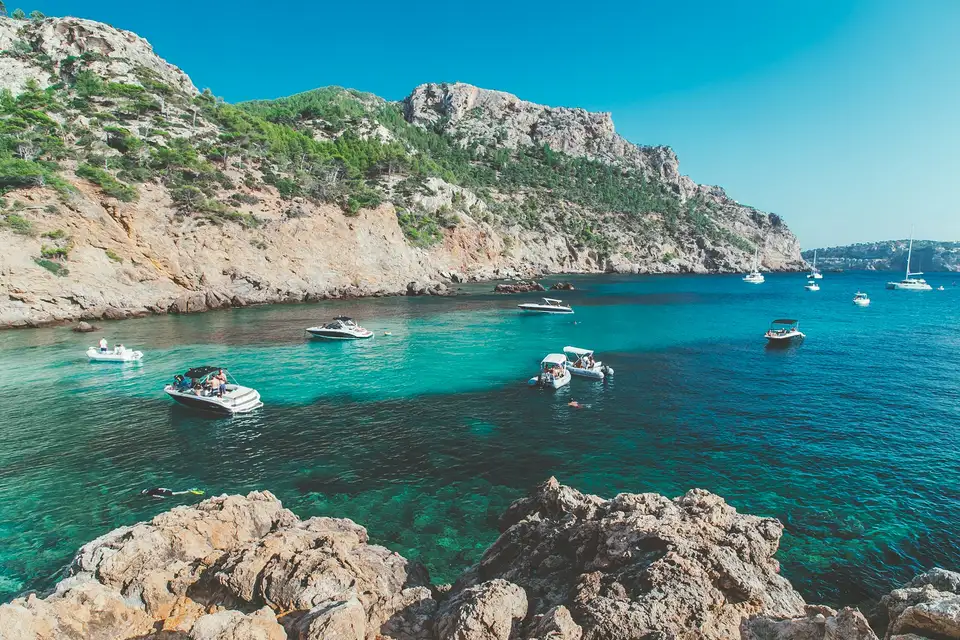
Almost 50 sperm whales north of Menorca: hope for a new breeding area
A Spanish research expedition recorded 48 sperm whales north of Menorca between July 17 and 30. Around one fifth were juveniles — a signal that has people on the island's shores paying attention.
Almost 50 sperm whales north of Menorca: hope for a new breeding area
More than four hundred miles, hydrophones and drones — and nearly one fifth juveniles
It smells of the sea, the paseo is warm and further out on the water unusual scenes played out in the last weeks of July. A research team detected 48 sperm whales north of Menorca during a two-week campaign. The expedition, which took place between July 17 and 30, covered around 1,100 nautical miles and produced a series of observations that turns heads: about 20 percent of the identified animals were juveniles.
How the researchers proceeded sounds tech‑loving and at the same time hands-on. Visual observations and acoustic detections via hydrophone provided the first clues. For individual identification, tail and fin patterns were photographed. Aerial images complemented the picture because they allow assessment of body condition and possible pregnancies. Additionally, the scientists stored the vibration patterns emitted by the whales in acoustic archives.
In total the teams recorded eleven encounters. In two of these there were only acoustic signals — one group of five animals and a second of two animals. The remaining nine encounters were both visually and acoustically confirmed: three solitary males and six groups with a total of 38 animals, including nine juveniles. The largest observed group consisted of seven sperm whales, three of which were not yet fully grown.
For people who live here or drink their coffee on the harbor promenade, that's a good sign. Young animals show that the region is not only a transit route, but apparently also used for rearing and feeding. That is not trivial in the western Mediterranean — food, calm and protection must be right.
What this specifically means for Mallorca: more presence of large marine mammals in the neighborhood can change how people view the sea. Fishermen, leisure skippers and excursion operators should take this respectfully. Small rules of conduct help: keep distance, throttle down engines and report sightings. Such measures harm no one and increase the chance that whales are not disturbed; community action around coastal rubbish is also important, as shown by Almost 6.5 Tons of Waste in July: Why Mallorca's Coasts Keep Struggling.
The research campaign was run under the project name "Moby Mummy" and is an example of how combinations of photo identification, acoustics and aerial images can provide a detailed picture. For the researchers the results open both questions and possibilities: do the animals come from this region permanently? Could this be designated as a protected area? The expedition's data provide starting points for follow-up projects.
In light of the observations, public involvement is also worthwhile. Boat operators, beachgoers or anyone scanning the sea from Cap de Favàritx can report sightings and thus contribute to the knowledge base. An ear open for acoustic signals is as useful as a photo of the fluke; volunteers and organised cleanups have made an impact, for example Who cleans up the sea? Almost eight tons of waste off the Balearic Islands — and the uncomfortable answers.
In the end a warm feeling remains: in a summer when people even ask whether they can safely swim in the sea around Mallorca, this discovery reminds us how lively the waters on our doorstep are. The numbers — 48 animals, about 20 percent juveniles, 11 encounters — are more than statistics. They are an invitation to look more closely and treat the ocean with a little more care.
Frequently asked questions
What is the best time of year to visit Mallorca for warm weather and fewer crowds?
Should I bring swimwear to Mallorca year-round?
What are popular outdoor activities to try in Mallorca?
What should I wear when visiting Mallorca?
Is Mallorca easy to get around without a car?
How safe are Mallorca’s beaches for swimming?
What should I know about Mallorca’s food and dining?
Are there protected natural areas I should visit on Mallorca?
Similar News
Failed before the first flight: How Fischer Air's plans for Palma were ground down
Announced routes, repeated postponements and now apparent insolvency: Why the Fischer Air project for Mallorca is not me...
Seconds in the Water: 19-year-old Fights Her Way Out of Flooded Car in Palma
A 19-year-old managed to rescue herself from her half-submerged car after sliding under the Verge de Lluc underpass. Res...

Between Dream and Reality: Thorsten Legat and the Challenges of FC Germania Mallorca
The former Bundesliga pro has assembled a colorful squad in a short time. But how realistic is the grand plan for promot...

Arrest warrant at check-in: Why two travelers at Cologne/Bonn Airport suddenly had to pay
At Cologne/Bonn Airport, federal police in mid-September found two German passengers subject to enforcement measures. Bo...
Balearic Islands as a New Route: A Reality Check on Rising Boat Migration
For the first time the Balearic Islands are ahead of the Canary Islands in boat arrivals. What do the numbers really say...
More to explore
Discover more interesting content

Can Cap de Bou

Townhouse Lleo 72
