
Too Many Dead Animals at the Roadside: Why Mallorca's Roads Are Becoming Death Traps
The number of wildlife collisions in the Balearic Islands is rising — Mallorca is especially affected. Why do so many run-overs occur, and what is being overlooked?
Too Many Dead Animals at the Roadside: Why Mallorca's Roads Are Becoming Death Traps
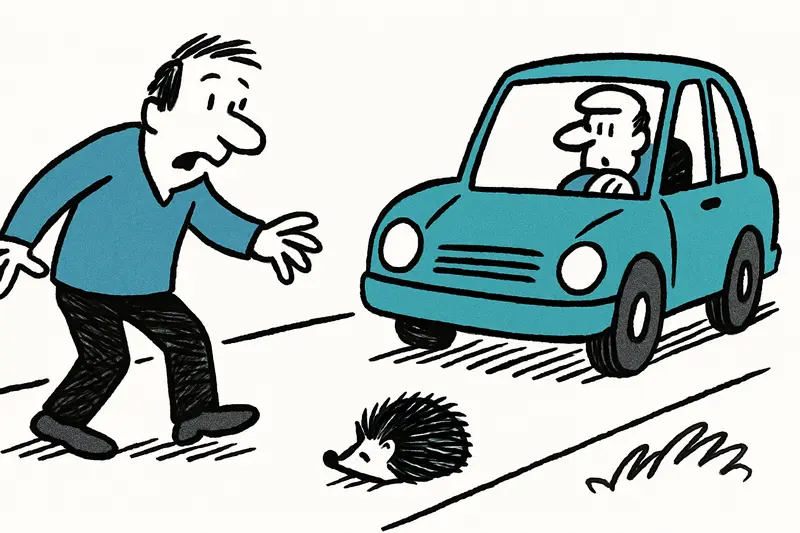
Last weekend, on the country road toward Sineu: cicadas chirping, a tractor rumbling in the distance, and on the hard shoulder another small curled-up creature — the headlights still visible in the rearview mirror. Scenes like this are no longer isolated incidents; they are part of the island's soundscape. But are there really more accidents — or are we just looking more closely?
The Numbers Behind the Feeling
The Observatori d’Atropellaments de Fauna a les Illes Balears (OAFIB) recorded 1,496 reported wildlife collisions in the Balearic Islands from January to September 2025, as documented in Tantos animales fueron atropellados en las carreteras de Mallorca en 2025. Since monitoring began in 2004, there have been about 5,242 documented run-overs in total. Notably: 171 cases were reported in September this year, of which 136 were on Mallorca. Some familiar suspects stand out: the porcupine with 76 reports, the stone marten (19) and the rabbit (12). Over the years the project has recorded 118 species overall.
Why More — Traffic, Animals or Reporting?
That is the central question: Is the increase due to more traffic and higher speeds, changes in wildlife populations, light and noise pollution, or because people are reporting incidents more often? The truth is: probably all of the above. In the evening hours, when the heat subsides and roads seem emptier, animals are active. Drivers going too fast have little reaction time. In addition, more main routes — such as the fast road toward Manacor, the Palma–Sa Pobla connection or the side roads around Sineu — have become real accident hotspots.
What Is Missing from the Public Debate
One aspect rarely mentioned is the habitat fragmentation. Roads are not only obstacles; they split territories, destroy migration corridors and force animals to take risky crossings. Another, less visible point: carcass removal and reporting routines. If carcasses are cleared quickly, the visibility of the problem decreases — that can lead to areas being less monitored and data gaps. Invasive species and new food sources near settlements also change the behavior of native animals; some species shift their movement patterns closer to roads.
More Reports Bring Knowledge, but Not Automatically Protection
Scientists emphasize that part of the increase is due to more people submitting observations: walkers, farmers, commuters and volunteers send photos and precise locations. That is good — it makes the problem visible. But visibility alone is not enough. Data must be translated into concrete measures: where should signs be placed, where should speed be reduced, where are wildlife crossings useful?
Concrete Steps — What Would Help Now
Short term: more local warning signs for evening hours, temporary speed reductions at known danger spots and awareness campaigns especially before dusk and in fog. Medium term requires investment in wildlife crossings and better road design: green bridges, underpasses, guardrails with passages for small animals. Not everything is expensive: targeted drainage, bushes along certain stretches or reflective markings can keep animals off the asphalt.
Who Is Responsible?
Responsibility does not rest solely with drivers; authorities, landowners and municipalities are also required to act. On Mallorca, where neighboring fincas, shepherds and weekend drivers shape the landscape, coordinated local solutions are needed. And you, dear reader: report sightings to OAFIB. A photo, a location — small effort, big impact for the next night drive.
Next time I will drive more slowly when the country road near Sineu narrows. Maybe then you'll hear the cicadas and see an animal safely slip away into the field instead of a carcass. It is possible — if we start not only counting but acting.
Frequently asked questions
Why are there so many dead animals on Mallorca's roads?
When is it most dangerous to drive on Mallorca if you want to avoid animals on the road?
What should I do if I see an injured or dead animal on a road in Mallorca?
Which roads in Mallorca are known for wildlife collisions?
Is the road near Sineu dangerous for animals and drivers?
What can be done to reduce wildlife roadkill in Mallorca?
Why do some Mallorca roadkill numbers depend on reporting?
What animals are most often hit on Mallorca’s roads?
Similar News
Who will clean up? Illegal rubbish heaps on the highway near Son Gual drive residents onto the streets
For months, construction debris and household waste have piled up along the highway between Palma and Manacor near Son G...

Amundi takes over Bikini Island & Mountain Port in Sóller – many questions remain open
The French asset manager Amundi has acquired the four-star Bikini Island & Mountain Port hotel in Sóller from an Austria...
Silvia was allowed to see the sea once more – a small farewell in Port de Soller
A team from the Balearic health service IB-Salut fulfilled a terminally ill woman's wish: one last trip to the water in ...
Magaluf: Imprisonment for Beach Club Employee after Theft of a Bag — What the Ruling Overlooks
A former dishwasher received a one-year prison sentence for stealing a Louis‑Vuitton bag. The appellate court upheld the...
Road collapse at Port de Valldemossa: Who will pay for the next wave of damage?
A section of the MA-1131 near Port de Valldemossa slipped after heavy rains from cold front "Adam". Residents are strand...
More to explore
Discover more interesting content

Can Cap de Bou

Townhouse Lleo 72
