
Attack on Soccer Pitch in Lloseta: How Did a Harmless Kick Escalate into a Hospital Case?
Attack on Soccer Pitch in Lloseta: How Did a Harmless Kick Escalate into a Hospital Case?
A casual game in Lloseta ended with a 12-year-old seriously injured and one arrest. A critical assessment: why do adults escalate, who protects children from such outbursts, and which measures help?
Attack on Soccer Pitch in Lloseta: How Did a Harmless Kick Escalate into a Hospital Case?
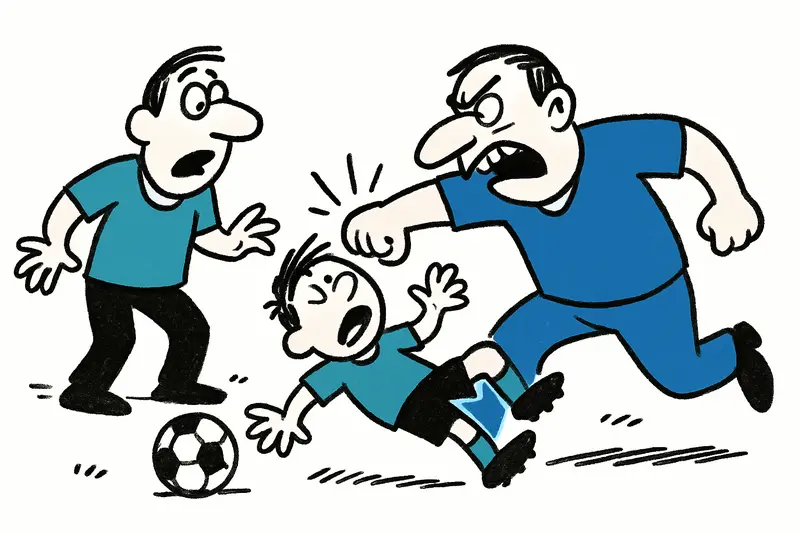
On Tuesday afternoon at the Camp Municipal Es Puig in Lloseta: a relaxed game, children calling to one another, the rattling of trainers on the pitch – and suddenly a man rushing onto the field and striking a 12-year-old boy hard on the head. The boy was taken to the regional hospital in Inca with a cranial injury. The Guardia Civil arrested a 46-year-old. What we know about the incident is sparse. What we urgently need to ask is much broader.
Key question
Why do adults escalate like this and how can we prevent children from seeing places to play as dangerous?
Critical analysis
The bare facts are simple: a recreational kickabout among neighborhood children, a clash in a tackle, a parent who becomes physical, a child with a head injury, officers making an arrest. Behind this, however, lie several fragile layers. First: the responsibility of adults who either ensure safety in public spaces or destroy it. In organized training there is supervision, rules, often a coach. In casual play these protective barriers are missing. Then: the question of control and impulsivity. An adult running onto the field and repeatedly hitting a child is not a spontaneous lapse but the expression of an escalation that should have been prevented—through de-escalation, but also through clear boundaries for parents who lose control, as other confrontations have shown in the region, such as Brawl at Playa de Palma: Why a verbal exchange could have ended fatally.
What is often missing in public debate
We quickly talk about “violence” and “arrest”, but rarely about prevention. Missing is a debate about: a) the role of the municipality in securing open play offers (see Serious Fall in Son Moix: Who Is Liable for the Safety Gaps?); b) programs that teach parents how to manage conflicts with children; c) simple protocols for bystanders so first responders do not just film but protect children. The psychological burden on those involved—the victim, witnesses, even the perpetrator—also receives little attention. The consequence: reactions after the incident instead of sustainable prevention beforehand.
An everyday scene from Mallorca
If you walk through Lloseta on an April afternoon, you see familiar scenes: older people sitting outside with coffee, a woman talking on the phone, children running from the school bus to the pitch. The square at Es Puig is a meeting place; you hear the thud of balls, the calling of parents, occasional laughter. This familiarity makes the incident so unsettling—because in a place that suggests normality and safety, something fragile was suddenly revealed.
Concrete solutions
1) Visible rules: Municipalities should post clearly visible codes of conduct at communal spaces—not as punishment, but as a reminder. 2) Presence instead of patrols: Volunteer play supervisors or municipal attendants at heavily used places during peak times can defuse conflicts early. 3) De-escalation courses for parents: Courses offered by schools or the municipality to teach strategies for keeping anger within bounds. 4) Emergency procedures: Parents, coaches and residents need simple workflows: who calls, who secures the child, who provides first aid until emergency services arrive. 5) Low-threshold counseling: Rapid and local psychological first aid for affected children and families after violent incidents. 6) Better witness care: Children as witnesses need child-appropriate interviews conducted by competent authorities, not improvised by parents or neighbors; similar concerns about proper post-incident handling have been raised elsewhere, for example in Fall at Son Moix: How could a fan fall seven meters? Initial relief — many questions remain.
What to do now
The investigations are ongoing. The most important task on site is to offer the affected boy and the traumatized children in the area professional help and not leave them to fend for themselves. At the same time, the municipal council and sports clubs should take the incident as an occasion to review concrete protective measures for recreational spaces. This is not bureaucratic luxury but protection for everyday life.
Conclusion
A casual kickabout must not become a place where adults vent their aggression. The incident in Lloseta is not just an isolated case but a wake-up call: we need clearer rules, more presence and low-threshold support services. Otherwise a Saturday afternoon game can quickly become an event that affects children for months. That is no consolation: it demands action from the municipality, clubs and all of us—so places like Camp Municipal Es Puig become safer again.
Frequently asked questions
What happened at the soccer pitch in Lloseta?
Why can casual football games in Mallorca become risky for children?
What should parents do if there is a conflict at a children's football game in Mallorca?
How can Mallorca municipalities make public sports areas safer?
What kind of help do children need after witnessing violence on a pitch in Mallorca?
Is Camp Municipal Es Puig in Lloseta usually a place for informal children's football?
What should you do if you see a child being attacked at a sports field in Mallorca?
Why is the Lloseta incident being seen as more than a one-off case?
Similar News
Ancient Piece Brought to Light: Guardia Civil Recovers Roman Anchor Fragment off North Coast of Mallorca
Divers from the Guardia Civil recovered a massive iron piece from Roman times off Mallorca's north coast. The roughly 35...

Who Benefits from the Half‑Hourly Flight on the Edge? Aena, Investments and the Island's Interests
Almost one billion euros is flowing into Son Sant Joan. The figures show the scale of investment and expected beneficiar...
Are the Balearic Islands the Southern Border of Europe? A Reality Check on Immigration
The Balearic Islands are again calling for EU aid after a sharp rise in arrivals by sea. Conflicting priorities between ...

"Expensive chaos" and many open questions: What clients can do when a lawyer suddenly stops responding
Several clients complain that a well-known German lawyer in Mallorca has been unreachable for months. Key question: What...
TV tip: 'The Last Problem' — Mallorca as the setting of a classic crime
A classic whodunit on Mallorca: A new miniseries set in spring 1959 brings storm, an isolated hotel and a dense web of s...
More to explore
Discover more interesting content

Can Cap de Bou

Townhouse Lleo 72
