
Axe threat in Palma: Chase on Avenida Gabriel Roca and what it says about our streets
Axe threat in Palma: Chase on Avenida Gabriel Roca and what it says about our streets
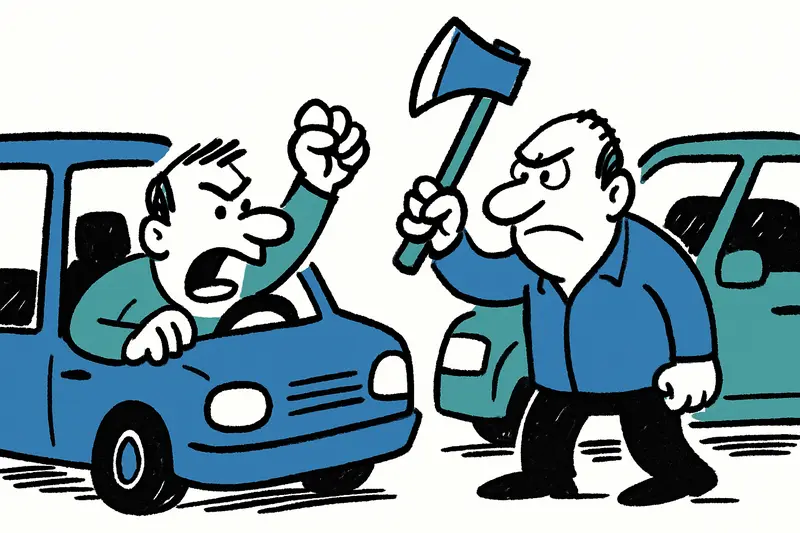
On Avenida Gabriel Roca a vehicle pursued another early Tuesday morning and a passenger threatened the other driver with an axe. Police intervened and arrested a man; more weapons were found in the car. One key question remains: how can we prevent escalations in traffic?
Axe threat in Palma: Chase on Avenida Gabriel Roca and what it says about our streets
Early on Tuesday morning on Avenida Gabriel Roca – a road associated locally with sea views and the smell of diesel – a traffic dispute escalated. According to the affected driver, another vehicle pressured his car for several kilometres, honking and flashing its lights. In a narrow side street the cars came to a stop; an occupant got out, fetched a large axe from the trunk and, according to witnesses, threatened: 'Get out or I'll smash your skull.'
The National Police intervened, arrested a Spanish citizen and secured, in addition to the axe, an air pistol, three magazines and a propane gas cylinder that were in the car. The threatened driver fled and alerted a passing patrol that was on preventive duty. An investigation for threats is ongoing, against the backdrop of other crimes such as the watch theft in Palma's Old Town that ended with an arrest in Barcelona.
Guiding question
How does an everyday annoyance in traffic turn into the use of a real weapon within minutes — and why are such objects still so commonly present in vehicles?
Critical analysis
The incident is symptomatic of two problem areas: first, the culture on our roads, where small provocations quickly turn into intimidation and escalation; second, the issue of access to dangerous objects. That someone has an axe ready in the trunk and is also carrying a firearm or weapon parts shows that possession and transport of such items are not always controlled; recent cases, including the arrest after a knife attack in Pere Garau, illustrate the pattern. The police were able to stop the man in time, but the outcome could easily have been deadly.
It is also noticeable that reporting and public discussion often stop at the deed itself: who is talking about prevention, secure storage, or controls at critical points like the harbour promenade? Who addresses the mental state of those involved or patterns of repeated provocation in road traffic?
What is missing from the public discourse
There is a lack of concrete focus on three levels: better control of illegal weapons and dangerous objects in vehicles; preventive measures against road rage (for example information campaigns, retrofits such as mobile cameras and visible police presence); and low-threshold support services for people who react impulsively in stress or anger. Without these points the discussion remains superficial – outrage today, forgetfulness tomorrow.
An everyday scene from Palma
Imagine the scene: heavy traffic, a grey morning mood, the Paseo Marítimo not yet fully awake, buses rolling along the sea, a taxi driver honking, two pedestrians shivering in their jackets. Suddenly loud honking, hand gestures behind steering wheels growing heated. This is how most of these cases begin – with noise, haste and the need to be right. It is precisely these small moments in which the island can turn in a dangerous direction.
Concrete solution approaches
1) Visible and regular police presence on main arteries like Avenida Gabriel Roca, especially during morning and evening rush hours. 2) Checks for illegal weapons and dangerous items in vehicles when there is suspicion – of course within the legal framework and with clear protocols. 3) Public campaigns against road rage: short spots at petrol stations, on bus routes and in car parks that call for de-escalation and give practical behavioural rules. 4) Promotion of dashcams and simple documentation options for victims, combined with clear advisory paths at the police. 5) Expansion of anger and emotion regulation programmes in community centres – prevention that also addresses mental health.
Conclusion
The incident on Avenida Gabriel Roca is a wake-up call: our streets can quickly become the scene of real violence when heated tempers meet easily available weapons. Mere criminal prosecution is not enough. We need visible prevention, clearer controls and a culture of de-escalation. Otherwise Palma will remain a place where the next honk can end in danger.
Frequently asked questions
How hot does traffic in Palma get before a simple argument turns dangerous?
What should I do if another driver in Mallorca starts following me aggressively?
Can police in Mallorca arrest someone for threatening another driver with a weapon?
What kind of weapons or dangerous objects can be found in cars in Palma?
Is Avenida Gabriel Roca in Palma a busy road for morning traffic?
What does the Palma axe threat say about road rage on Mallorca?
How can Mallorca reduce violent incidents linked to traffic disputes?
Why do some Palma incidents only become public after the arrest?
Similar News
Palma Gets a Welcoming Park: Tirador Goes Greener — and a Café Is Coming
A new green project in Es Fortí/Camí de Jesús will transform the old Voltadora into a city park with an experience fores...
Why the End of "Los Últimos Mohicanos" Is More Than the Closing of a Bar
With squealing tires and one last glass, an icon on the Palma–Manacor expressway closes. Why the demise of this German b...
Protest camp on Plaza España: Who asks for solutions to the right to housing?
Around 30 activists set up a tent camp on Palma's Plaza España to push for stronger tenant rights. Our analysis asks: Ar...
In the Name of a Gang: Alleged Extortion in El Molinar and What It Reveals About the Protection of Sex Workers
A man is accused of posing as a member of the Hells Angels and extorting two women at accommodation in El Molinar. The s...
When Chile Meets the Mediterranean: A New Flavor at Can Bordoy
At Can Bordoy in Palma's old town, Chilean chef Jhonatan Maldonado combines Patagonian seafood with Mediterranean island...
More to explore
Discover more interesting content

Can Cap de Bou

Townhouse Lleo 72
