
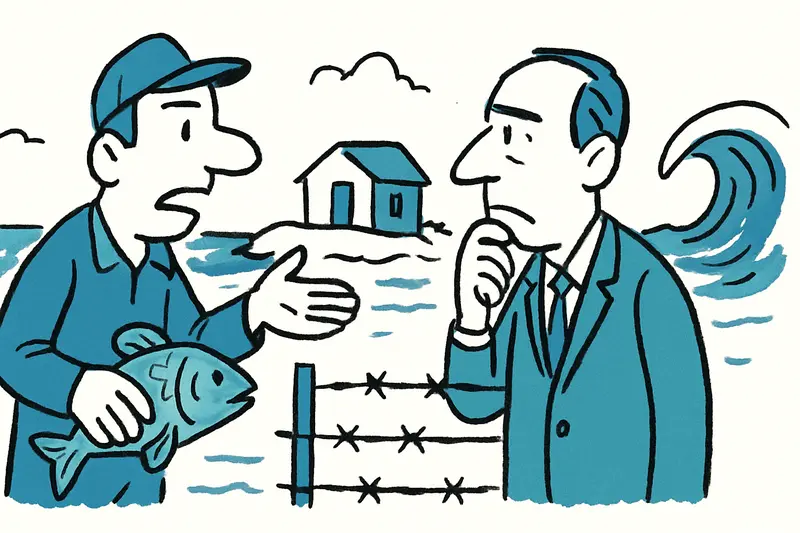
Balearic coastal protection: Who will save the fisher huts — and how?
Balearic coastal protection: Who will save the fisher huts — and how?
The new Balearic coastal law aims to protect hundreds of coastal buildings from demolition. A good idea — but who decides what stays, how will it be monitored and who will pay afterwards? A reality check with concrete proposals from Mallorca.
Balearic coastal protection: Who will save the fisher huts — and how?
The new law protects structures, but not their use — and leaves many practical questions unanswered.
The announcement sounds reassuring at first: on the Balearic Islands, hundreds of buildings on beaches and the coast are to be spared from demolition in future. Fisher huts, beach kiosks, small harbour buildings — everything that belongs to the local coastal culture should be preserved. But a closer look reveals a lot of uncertainty behind the sunny side.
Key question: Who actually decides which buildings are truly worth protecting — and who carries the costs and responsibility for their upkeep?
The draft hands decision-making authority to the respective island councils. At first glance sensible: the islands know their coasts best. In practice, however, this can be double-edged. Different priorities between Mallorca, Menorca, Ibiza and Formentera could lead to a patchwork: in one municipality the old beach bar stays, in the neighbouring municipality a similar building is razed. That creates uncertainty for owners and operators and opens the door to lawsuits and political disputes. Similar fragmentation showed up in recent debates over the building law that relaxed housing and farmland buffers.
Another detail: the law protects the physical fabric, not necessarily the use. A pesquero that has for decades been used to dry fishing nets could formally remain standing, yet be reopened as a restaurant or holiday rental. For residents and visitors little might change — but the identity of the place could.
Practically relevant is also the announced 10-knot speed limit for larger boats and jet skis near the coast. Good intention, but how is that to be enforced? Maritime rescue services and the coast guard are present, but to sanction speed violations across the board you need measuring points, patrols and clear sanctions. Without concrete monitoring plans the rule remains a nice sign on the beach. Recent incidents such as the Banyalbufar catamaran incident underline how hard enforcement can be.
What has so far barely appeared in the public debate is the financial and technical side of implementation. Who pays for securing, repairing and the long-term maintenance of the protected buildings? Many of the classic fisher huts are privately owned or belong to small cooperatives without large budgets, as the Son Bauló boathouse roof collapse showed. If protection becomes mandatory, unplanned costs may arise for owners and municipalities. Added to that is the question of adaptation to climate change: rising sea levels and stronger storms can damage small coastal structures more quickly. Without a plan, protection measures will remain symbolic.
On Mallorca the debate can be seen every day: early in the morning a fisherman motors out from Port de Sóller, in Cala Millor a shell seller opens her stall at nine, on the Passeig Marítim in Palma dog owners and tourists argue over beach access. Such scenes show how sensitive the balance between use, preservation and public interest is.
My reality check: the law has a chance to protect culture and landscape from reckless construction. But it must become concrete now. Here are six concrete proposals for how this can succeed:
1. Transparent protection register: A public, digital directory of all protected coastal buildings with clear reasons for selection. Owners, heritage category, technical defects and funding needs should be openly viewable.
2. Uniform selection criteria: Guidelines from the Balearic government that island councils must apply to avoid wild growth and unequal treatment. Criteria: historical significance, craft features, erosion risk and public benefit.
3. Funding program and tax relief: Grants for urgently needed repairs, tax incentives for owners who renovate in line with the protection goals instead of selling or changing use.
4. Climate adaptation: Mapping of endangered buildings including sea level projections (AEMET data) and prioritisation of measures where long-term preservation is realistic.
5. Enforcement and monitoring plan for the 10-knot rule: Mobile controls, clear fines, marked protection zones and information campaigns for boaters and rental companies, including operators of floating holiday rentals.
6. Local participation: Regular, moderated workshops in affected communities — from the pesquero owner to the beach vendor — so decisions remain actor-centred and practical.
It is also important to align the law with higher-level norms. Without legal clarity, proceedings may threaten to hollow out or delay the law. Measures at different scales — for example the planned Cabrera no‑take zone — show why alignment matters. And: who protects the cultural asset if nobody wants to bear the costs?
Conclusion: the idea of securing traditional coastal buildings is right. But protection without maps, funds and clear rules remains a piece of paper with good intentions. People who live by the water in Mallorca know: those who do not plan to the end often lose more than they save. The Balearic government now has the opportunity to deliver a practical package — or to create a new construction site on which we will bang our heads in a few years' time.
On the Paseo in Palma, when the ferries dock and the salt is in the air, you notice quickly: the coast is not a museum. It is a workplace, a place to stay and sometimes a building site. If we want to preserve it, we must plan smarter than before.
Frequently asked questions
What does Mallorca’s coastal protection law actually protect?
Who decides which coastal buildings in Mallorca should be protected?
Can a protected fisher hut in Mallorca be used for something else later?
How will Mallorca enforce the new 10-knot speed limit near the coast?
Who pays for repairing and maintaining protected coastal buildings in Mallorca?
Are Mallorca’s coastal huts and small beach buildings at risk from storms and sea level rise?
What is happening with the coastal buildings near Port de Sóller in Mallorca?
Why is Palma part of the debate about Mallorca’s coastal protection?
Similar News
Why the End of "Los Últimos Mohicanos" Is More Than the Closing of a Bar
With squealing tires and one last glass, an icon on the Palma–Manacor expressway closes. Why the demise of this German b...

Protest camp on Plaza España: Who asks for solutions to the right to housing?
Around 30 activists set up a tent camp on Palma's Plaza España to push for stronger tenant rights. Our analysis asks: Ar...

In the Name of a Gang: Alleged Extortion in El Molinar and What It Reveals About the Protection of Sex Workers
A man is accused of posing as a member of the Hells Angels and extorting two women at accommodation in El Molinar. The s...

When Chile Meets the Mediterranean: A New Flavor at Can Bordoy
At Can Bordoy in Palma's old town, Chilean chef Jhonatan Maldonado combines Patagonian seafood with Mediterranean island...
End of an Era on the Ma-15: Why the Biker Hangout at Son Gual Is More Than Just a Restaurant
"Los Últimos Mohicanos" closes unexpectedly. A meeting place for motorcyclists on the Palma–Algaida border is disappeari...
More to explore
Discover more interesting content

Can Cap de Bou

Townhouse Lleo 72
