
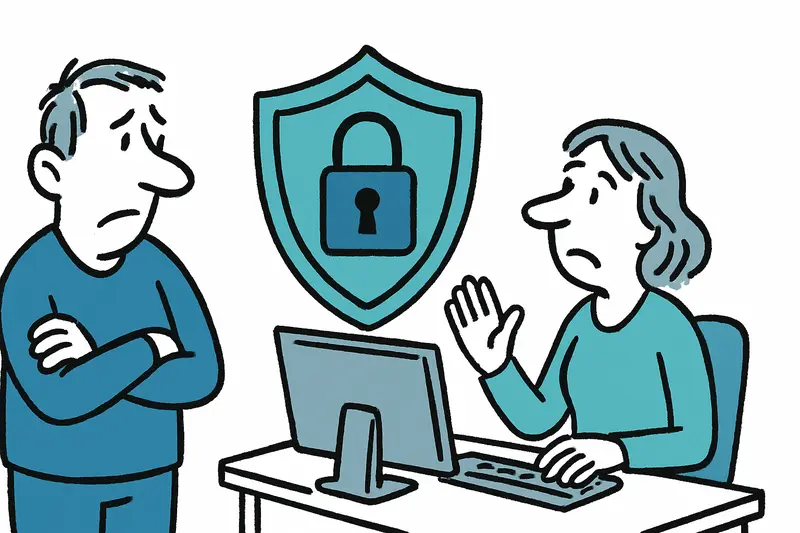
Balearic Islands turn to cyber protection — is it enough to really secure the administration?
Balearic Islands turn to cyber protection — is it enough to really secure the administration?
The Balearic Islands are investing around ten million euros in a new Cybersecurity Operations Center. A step — but are technology and money enough to protect some 8,000 administrative positions? A reality check from Mallorca.
Balearic Islands turn to cyber protection — is it enough to really secure the administration?
The government of the Balearic Islands has announced a new protection project: around ten million euros are to be spent on technology, organization and a Cybersecurity Operations Center (SOC). The goal is to monitor the IT systems of the public administration and protect the data of about 8,000 employees. On paper that sounds reassuring — in practice the question is whether that will be enough. Details were discussed in Digital Shield for the Balearic Islands: Is the Budget Enough Against Invisible Attackers?.
Key question
Are ten million euros and an SOC that monitors around the clock really enough to make the Balearic administration resilient to cyberattacks in the long term?
Critical analysis
Ten million euros is no small sum, but in the world of cybersecurity money disappears quickly: hardware, licenses, ongoing cloud services, security analysts, incident response teams, regular penetration tests and above all staff training. An SOC can detect attacks faster, but it is not an automatic guardian angel. Without clear operating procedures, personnel with sufficient experience and ongoing investments in testing and updates, it remains an expensive monitoring system that issues warnings but does not necessarily prevent attackers from already having gained access.
Moreover, the attack surface is large: offices and departments work with different legacy systems, specialized databases and sometimes unsecured third-party interfaces. The challenge is less a single center than the coordination across dozens of networks, administrative locations and external providers.
What is often missing in the public debate
Public discussion usually mentions the total sum and the new SOC, but rarely provides details: Who will operate the center? Which companies will supply the software? What does the timeline look like? Will independent audits and transparency reports be published? And very importantly: is there a strategy for employee awareness — because incidents often start with phishing against individual clerks at the counter or via email? This risk has been highlighted in Balearic Islands Under Attack by Crypto Scammers: A Reality Check for the Island.
The issue of recovery after an incident is also discussed too rarely. Backups, test recoveries and clear emergency plans are expensive and require practice — but they determine whether an outage lasts days or weeks.
Everyday scene from Mallorca
On a morning in Palma, walking from Passeig del Born toward Consolat de Mar, you see the mix: young IT workers with laptops in cafés, older civil servants shuffling papers at the counter, and suppliers carrying boxes down corridors. It is precisely there, between digital future and analog reality, that the gaps occur: an outdated computer, a shared password note on the desk, an unpatched form system. An SOC on the other side of the island may raise an alarm, but the root causes are often at that desk.
Concrete solution approaches
1. Personnel and processes: The SOC needs a permanent core team based in the Balearic Islands, not just external monitoring. Clear SLAs, daily handovers and routine incident playbooks are mandatory.
2. System inventory and segmentation: First it must be clear which systems exist. Then networks should be segmented so that a compromised workstation does not expose tax or health data of entire departments.
3. Backup and recovery exercises: Regular, documented test recoveries prevent nasty surprises. These exercises must be included in the budget and in the agenda of agency leadership.
4. On-site training: Short, regular training sessions in town halls, health centers and district offices. Phishing tests, password rules and secure device usage often help more than new firewall models.
5. Transparency and external review: Independent security audits and published metrics build trust and show where reinvestment is needed.
6. Cooperation with local educational institutions: The University of the Balearic Islands and technical schools can help train talent and foster research on practical solutions.
A few numbers that should matter
In addition to the one-time investment amount, annual operating costs, personnel costs for the SOC, license and support contracts, and a budget for training and recovery exercises should be specified. Without these follow-up figures the plan remains difficult to evaluate.
Concise conclusion
The announced SOC is a necessary step, but not a panacea. Those who work in Mallorca or use public services should expect that behind the buzzwords there are concrete operating rules, transparent audits and sustained budgets. Otherwise the promised protective wall will remain more decorative than functional and may not hold up in a serious attack. The Balearic Islands must now prove that they not only promise money but also create structures that deliver practical security in everyday life.
Frequently asked questions
Is Mallorca's public administration becoming safer against cyberattacks?
What is a Cybersecurity Operations Center and why does Mallorca need one?
Why can cyberattacks still happen even after new security spending in Mallorca?
What should public employees in Mallorca do to reduce cyber risk?
Are backups and recovery plans important for Mallorca's administration?
Which parts of Mallorca's public administration are most exposed to cyber risks?
Will the Balearic Islands publish audits or reports on the new cyber project?
Can Mallorca help train more cybersecurity staff for the public sector?
Similar News

When Housing Becomes a Matter of Survival: Mallorca Between Rental Frenzy and Everyday Life
The case of 87-year-old Maricarmen showed that on Mallorca many people's lives are poised between affordable and uninhab...

Autumn in Mallorca: When Melancholy Gets a Window
Why autumn quietly tightens here — and how to make use of the mood: walks, culture, candles and the light from Palma to ...

Near-miss on Lanzarote: Landing Ryanair Jet and Iberia Takeoff — what really went wrong
On Lanzarote there was a dangerous incident: A Ryanair flight (FR5910) from Dublin landed on runway 03 while an Iberia E...

Eurowings introduces new Premium Business seats on Mallorca routes
From December 1, selected Eurowings flights to Palma and other destinations will feature eight particularly generous sea...

Car on MA-13 near Inca in flames – a safety check for the island
A vehicle caught fire on the MA-13 towards Alcúdia on Tuesday afternoon. The driver was uninjured, the car was destroyed...
More to explore
Discover more interesting content

Can Cap de Bou

Townhouse Lleo 72
