
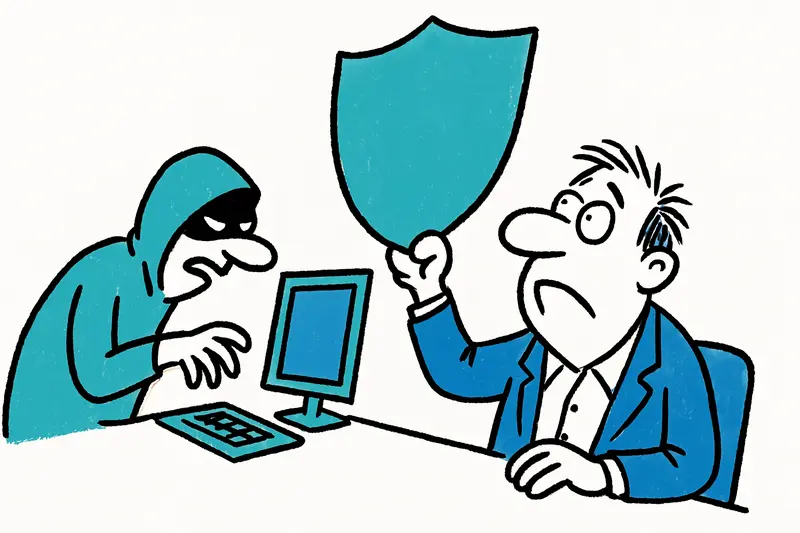
Digital Shield for the Balearic Islands: Is the Budget Enough Against Invisible Attackers?
Digital Shield for the Balearic Islands: Is the Budget Enough Against Invisible Attackers?
Almost ten million euros for a Cyber Operations Center — a solid safeguard or a fair‑weather plan? A reality check with a view of Mallorca.
Digital Shield for the Balearic Islands: Is the Budget Enough Against Invisible Attackers?
First question: Can a pot of almost €9.8 million really protect the rooms, data and services of an entire regional administration on a lasting basis? That is the guiding question that floats around Palma's cafés just as much as the desks of small town halls on the island, as discussed in Balearic Islands are investing around ten million euros in a new Cybersecurity Operations Center.
What has been done so far
The Balearic Islands are investing in a permanent Cyber Operations Center (COC), a technical office for standards and risk management, and in immediate measures meant to take effect quickly. Known elements include the nationwide rollout of two‑factor authentication and strengthened defenses against ransomware. Around 8,000 employees are to be better protected; state‑of‑the‑art detection software and AI‑supported analyses should make attacks visible earlier. All of this makes sense — and is long overdue.
Critical analysis
But: security architecture is not a one‑off order of technology. €9.8 million sounds like a lot, but money alone does not equal resilience. Some questions have so far received too little attention: How will ongoing financing be secured after the setup phase? Who independently verifies that the systems deployed do not themselves introduce new vulnerabilities? Can small municipalities with few IT staff permanently implement the recommended measures? And how transparent are incidents for citizens? These concerns are echoed in local coverage such as Las Baleares apuestan por la ciberprotección — ¿suficiente para que la administración sea realmente segura?.
What is missing in the public discourse
The debate often revolves around technology and sums, and less around personnel, training and processes. There is a lack of an honest cost‑benefit calculation for further training, regular emergency drills and simple things like physical backups stored outside the online infrastructure. Also rare are binding requirements for supply‑chain checks with external providers and protection against outages caused by misconfigured AI monitoring.
A typical everyday scene in Mallorca
Early in the morning, when the shadows over Passeig Mallorca are still long, a clerk sits in a small municipal office in front of two monitors. He applies for grants, sends documents by e‑mail, opens links from citizens — and hopes the technology holds up. No one there is a cyber expert; most learn on the job. This daily reality must not disappear behind the big buzzwords.
Concrete, quickly implementable proposals
1) Split the budget: one third for technology, one third for personnel and one third for ongoing training, audits and emergency exercises. 2) Mandatory, practical training for all employees, at least twice a year, with realistic phishing and incident drills. 3) Independent third‑party audits: external audits of all critical systems and summarized, published audit reports. 4) A regional incident‑share board: anonymous incident reports and lessons learned so that small town halls do not have to reinvent the wheel after every attack. 5) Physically segregate emergency backups and test restoration at least semi‑annually.
Technology policy and procurement
Procurement processes must be assessed for security implications. Lock‑in effects with large vendors, a lack of open‑source alternatives and insufficient control over updates are real risks. A smart roadmap: open interfaces, mandatory security clauses in contracts and local cooperation with universities to train talent.
Data protection and citizen trust
Citizens expect authorities to manage their data securely. Every report of a successful attack undermines that trust; recent warnings about rising fraud illustrate the risk, such as Balearic Islands Under Attack by Crypto Scammers: A Reality Check for the Island. Therefore, incident reporting obligations, clear communication guidelines and a transparent recovery plan should become standard — not just for Palma, but for all municipalities.
Pithy conclusion
The project is a necessary step, but not yet a protection that works automatically. Investing in technology is right, but without sustained funding, personnel development, independent audits and realistic tests, the system remains fragile. The Balearic Islands can play a pioneering role — if they now learn to protect not only servers but also people, processes and the everyday offices around the Plaça Major.
Frequently asked questions
Is Mallorca’s public administration becoming safer against cyberattacks?
What does two-factor authentication mean for Mallorca government services?
How big is the cybersecurity risk for small town halls in Mallorca?
What should employees in Mallorca’s public offices learn to avoid cyberattacks?
Will €9.8 million be enough for cybersecurity in the Balearic Islands?
Why are cyber audits important for Mallorca’s public systems?
How can Mallorca protect government data after a cyberattack?
What role do Palma and other Mallorca offices play in the new cybersecurity plan?
Similar News

Maribel: Five Decades of Service – Housekeeper from Peguera Celebrated with a Special Honor
Over 50 years in the hotel business: María Isabel “Maribel” Molinos was honored in Palma at the Nit del Turisme by Unive...

Orange Alert over Parts of Mallorca: Are We Prepared?
Dark clouds and an announced wet spell have triggered an Orange alert in parts of Mallorca. A reality check: what's miss...

Sundair & Co.: Sale speculation and what it could mean for Mallorca
Rumors about a possible sale of the airlines Sundair and Fly Air 41, which belong to Schauinsland-Reisen — and whether b...
Anne Wünsche in Mallorca: A job offer with a catch — who fits the role of personal assistant?
Influencer Anne Wünsche has left Berlin and is urgently looking for a full-time personal assistant in Mallorca. Why the ...

Daily from New York: Palma Between Boom and Strain
United will increase the Newark–Palma route to daily flights in 2027 using Boeing aircraft (231 seats). What does the in...
More to explore
Discover more interesting content

Can Cap de Bou

Townhouse Lleo 72
