
Baluard del Príncep: Why an almost finished cultural project was put on ice for six years
Baluard del Príncep: Why an almost finished cultural project was put on ice for six years
The renovation of the Baluard del Príncep in Palma is inching forward after years of interruption. Central question: How could an almost completed project be blocked for so long — and what needs to change?
Baluard del Príncep: Why an almost finished cultural project was put on ice for six years
Key question: How could an almost completed restoration project in Palma stand still for years — and who is responsible?
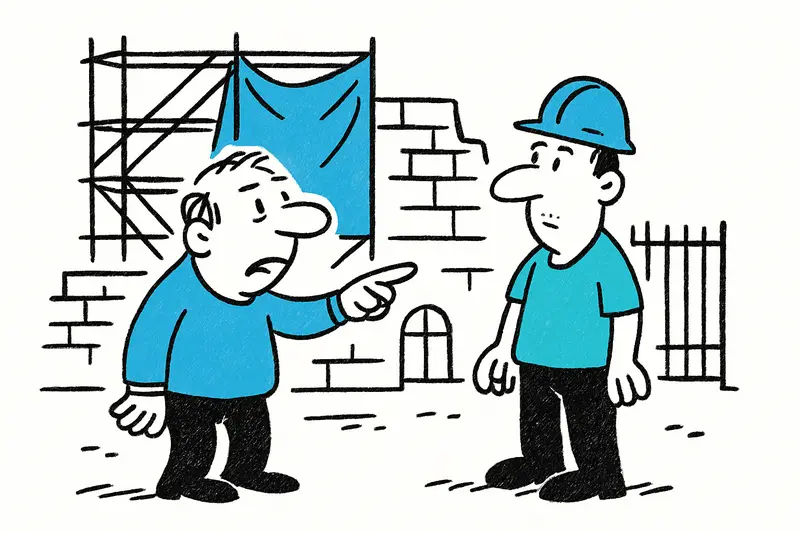
Those walking along Palma's city wall these days hear the typical mix of motorcycle noise, pizza boxes and tourists comparing photos. Right at the Porta des Camp the eye falls on the Baluard del Príncep: visibly renovated, but not entirely finished. The city administration reports 93 percent of the work completed; 7 percent, it says, remains. On paper that's a completion, in reality it's a construction site that is allowed to last longer than any passerby would suspect.
Brief chronology: Work began years ago, with several million euros from state funds, then the interruption came. A construction company went bankrupt, contracts were retendered and languished in administrative loops. Currently a company has offered to carry out the remaining work and has been given twelve months to finish the final phases — the restoration of the moat and the bridge Puente de la Porta des Camp, a connecting staircase to the Plaza Porta des Camp and the reception building. Around €1.59 million are budgeted for these remaining works; the target is spring 2027. More details are in The Housing Ministry releases €1.6 million to finish work at the Baluard del Príncep.
Asked critically: Why did it take so long? Formally one can cite bankruptcies, tender procedures and budget audits. But such reasons are often not the whole answer. In Palma's everyday life I see the consequences: craftsmen waiting for visibly necessary tasks, residents enduring noise for months, and shopkeepers struggling with half-empty pedestrian zones when access points remain closed. Institutions appear periodically overwhelmed — especially where engineering, heritage conservation and administration meet.
What is mostly missing from public discourse is a concrete debate about responsibility and prevention. It is not enough to complain about delays; questions must be asked about contract terms, controls during execution, and mechanisms to secure quality and timetables. Also rarely discussed is how cultural promotion and maintenance can be financed permanently, without every hurdle blocking the entire project.
An everyday scene: In the morning on Passeig Mallorca, an older couple from Palma stops, points at the covered scaffolding and says: "You could sit here and enjoy the peace before. Now everything is half finished." Nearby a young architect with dust on his shoes explains that the bridge is technically demanding and needs time — which is true — but he notes that clear milestones and leaner communication would reduce frustration.
What concrete solutions do we propose? First: milestone-based payments and clear termination clauses in tenders. If payments are strictly tied to verified work packages, the risk that projects stall due to a contractor's financial problems decreases. Second: an independent monitoring committee with heritage conservators, engineers and a city representative that reviews progress every three months and reports publicly. Third: a digital progress tracker for citizens — not legal forms, but an easy-to-read dashboard with photos and dates. Transparency builds trust.
Fourth: consultation hours for residents and businesses during construction. Small measures, like time-coordinated delivery zones or temporary accesses, prevent shops and neighborhoods from suffering unnecessarily. Fifth: agreements on reuse — the reception building could permanently serve as an information center for the city wall, with space for rotating exhibitions by local restorers and workshops for craftsmen. This increases societal benefit, making the structure not just a conserved relic but a living place.
Legally, one could also consider a binding "rapid arbitration": a standard procedure that resolves disputes between client and contractor within a few weeks. While it would not prevent bankruptcies, it could stop leftover works from being neglected for years.
Another often-missing element: a public cost-benefit calculation for cultural projects. Not every euro can be measured monetarily, but if the city transparently calculates expected visitor numbers, educational offers or usage times for a restored fortification, acceptance increases — and oversight becomes stricter.
Conclusion: The resumption of works at the Baluard del Príncep is good news. But it must not be the last lesson from the case. If Palma wants to continue investing in historic sites, the administration must turn the current delay into rules that prevent future standstills. Otherwise the next construction site risks being governed by the bureaucracy’s timelines — not by those of the people who live and work here. For wider context on issues affecting Palma's walls see Collapse at Palma's City Wall: What Needs to Happen Now.
Frequently asked questions
Why has the Baluard del Príncep in Palma been unfinished for so long?
What still needs to be finished at the Baluard del Príncep in Palma?
When is the Baluard del Príncep in Palma expected to be completed?
How much will it cost to finish the Baluard del Príncep in Palma?
What makes the Baluard del Príncep important for Palma?
How can Palma avoid long delays in future restoration projects?
Can visitors still see the Baluard del Príncep in Palma?
What impact did the stalled works have around Porta des Camp in Palma?
Similar News
Ancient Piece Brought to Light: Guardia Civil Recovers Roman Anchor Fragment off North Coast of Mallorca
Divers from the Guardia Civil recovered a massive iron piece from Roman times off Mallorca's north coast. The roughly 35...

Who Benefits from the Half‑Hourly Flight on the Edge? Aena, Investments and the Island's Interests
Almost one billion euros is flowing into Son Sant Joan. The figures show the scale of investment and expected beneficiar...

Are the Balearic Islands the Southern Border of Europe? A Reality Check on Immigration
The Balearic Islands are again calling for EU aid after a sharp rise in arrivals by sea. Conflicting priorities between ...

"Expensive chaos" and many open questions: What clients can do when a lawyer suddenly stops responding
Several clients complain that a well-known German lawyer in Mallorca has been unreachable for months. Key question: What...

TV tip: 'The Last Problem' — Mallorca as the setting of a classic crime
A classic whodunit on Mallorca: A new miniseries set in spring 1959 brings storm, an isolated hotel and a dense web of s...
More to explore
Discover more interesting content

Can Cap de Bou

Townhouse Lleo 72
