
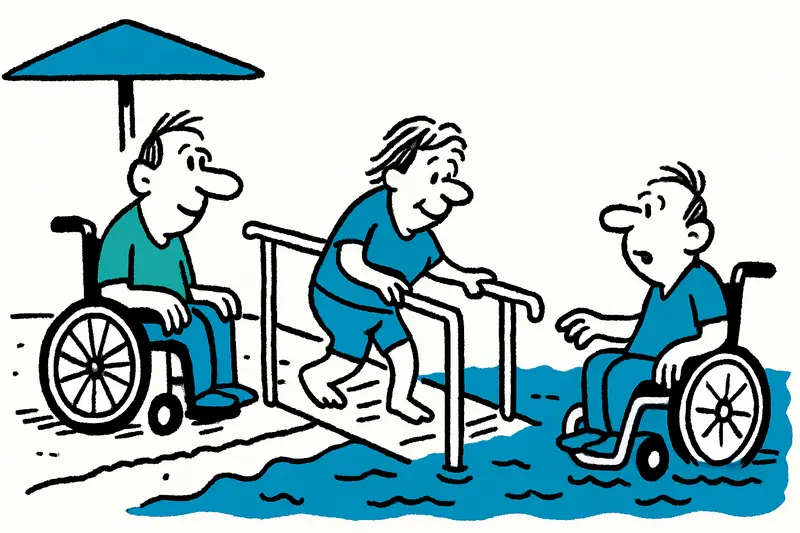
New Accessible Bathing Area in Cala Estància – Pilot with Open Questions
Palma is planning a dedicated bathing area at Cala Estància for people with limited mobility. A good idea — but who will pay, who will maintain it, and how safe is it in storms?
More space by the water – more access, but who ensures sustainability?
On Palma's eastern shore, where the promenade still smells of oven-warm bread and strong coffee in the mornings, a small but important project is about to start: the city has submitted an application for a specially equipped bathing area in Cala Estància Palma plans accessible bathing area in Cala Estància – good start, many questions. No media spectacle, no large constructions – rather a practical solution: a cordoned-off water area, fixed jetties, handrails and 24 covered seats directly at the water's edge. The central question remains, however: is this enough to guarantee lasting accessibility?
Why Cala Estància? And what is often overlooked?
The choice of the small, sheltered bay is understandable. The water stays calm, the promenade is nearby, and the neighborhood is already used to seeing older people with rollators, parents with strollers and users of beach wheelchairs. During a walk I saw fishermen mending their nets, youngsters with surfboards and a couple playing cards — a quiet corner, no loud beach bar, ideal for a discreet, safe zone.
What barely appears in the initial sketch, however, are the hard everyday questions: who cleans and repairs the jetties after autumn storms? Who is liable if a mechanical element fails? What standards apply to ramp angles, non-slip surfaces or the connection to the promenade and public transport? These aspects decide whether the facility becomes a real service or a seasonal makeshift.
The planned elements — sensible, but not complete
The plans envision floating or firmly anchored jetties with non-slip surfaces, additional handrails, shallow access points and 24 covered seats. There are connections for possible portable bathing chairs (beach wheelchairs) and space for rescue personnel. All of this can make it easier for people with reduced mobility to enter the sea. But accessibility does not end at the water's edge: access from the street, paved paths, accessible toilets, designated parking spaces and secure storage for aids must also be taken into account — see Purobeach and the parking lot at Cala Estancia: Who has priority at the water?.
Another point that is rarely said out loud is the social component. Many users need not only structural aids but also accompaniment, information and encouragement to use the offer. Without targeted public outreach, cooperation with care homes and physiotherapists, the zone may remain underused.
Critical questions — and pragmatic solutions
The initiative comes from city hall and is supported by local disability organizations. As a pilot project the idea is forward-looking. But three questions are now crucial: financing, maintenance and operational responsibility. Here are some concrete proposals:
Financing: Partial funding from the municipal budget, supplemented by funds from the tourism contribution, EU or regional programs for inclusion and accessibility. Smaller sponsors from the neighborhood or local craft businesses could contribute materials or work hours — this increases acceptance.
Maintenance: An annual maintenance contract with local firms (carpenters, divers, cleaning services) ensures quick repairs after storms. Additionally: volunteer neighborhood days after severe autumn storms, organized by the association, to sweep sand, check handrails and renew protective covers.
Operation and safety: Clear division of responsibilities between the coastal authority, the city and rescue services; fixed inspection intervals; simple reservation options for bathing chairs; and training for lifeguards and rescue personnel on assisting people with disabilities.
Scaling and transparency
If Cala Estància works as a pilot, the city should decide which beaches follow based on clear criteria. Criteria could include: accessibility, protection from wave action, proximity to social facilities and the need in different districts. Transparent communication about costs, usage figures and maintenance reports builds trust. A small public dashboard with monthly usage numbers would be helpful here — and I don't mean a large IT project, but a simple page on the city hall website.
My impression remains positive, but pragmatic: the quiet mornings at Estància, the sound of the waves and the clink of fishing hooks make it clear: here a low-key, genuine solution could emerge. But without clear financial responsibility, maintenance plans and a bit of social work, a good start risks becoming a short-term project.
The coastal authority's decision is still pending. If it is positive, the coming summer would be a good test. And if all goes well: small, well-maintained island spots in Palma where mobility is no longer a barrier. That would be more than a beach access — it would be a part of the city that does not exclude its people.
Frequently asked questions
Is Cala Estància in Palma a good beach for people with reduced mobility?
What will the new accessible bathing area in Cala Estància include?
When could the accessible bathing area in Cala Estància open?
What makes a beach truly accessible in Mallorca?
Who is responsible for maintaining an accessible bathing area in Palma?
Why was Cala Estància chosen for an accessible bathing area in Palma?
Will the new bathing area in Cala Estància be enough on its own?
How can Mallorca make accessible beaches work better in the long run?
Similar News

The End of the Cheap Ride? Why Mallorca Is Hit Harder by the Fuel-Price Shock
Gasoline and diesel average close to two euros per liter. What this means for commuters, supply chains and renters in Ma...
Relaxed liquid rules in Munich: What Mallorca travelers will notice
At Munich Airport the 100-milliliter rule will be lifted at all checkpoint lanes — thanks to new CT scanners passengers ...

For 45 Years on Mallorca — and Then This: How a Market Visit in Santa Ponsa Became a Lesson
A woman who has lived on the island for decades lost money and important documents at the Mercat Setmanal in Santa Ponsa...
10 percent surcharge on the beach: How legal and transparent is the extra charge at Playa de Muro?
A German part-time resident noticed days after a restaurant visit in Playa de Muro that the bill included a flat ten per...

Body near the Llevant Market: What this death says about our city
A man was found dead on Sunday afternoon near the Llevant Market. Police say the death appears natural. The scene raises...
More to explore
Discover more interesting content

Can Cap de Bou

Townhouse Lleo 72
