
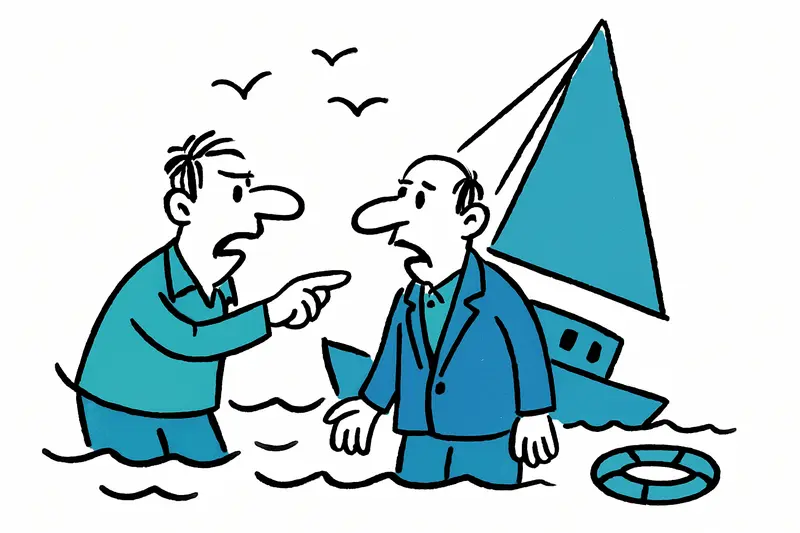
Bayesian: Who is to blame for the sinking? A reality check from Palma
Bayesian: Who is to blame for the sinking? A reality check from Palma
New expert reports from Italy question the storm explanation and focus on possible errors on board. Why a captain from Palma is now at the center and what the island must learn from it.
Bayesian: Who is to blame for the sinking? A reality check from Palma
Guiding question: Can a single natural event capsize a seaworthy ship within minutes — or were avoidable errors on board responsible?
In the morning on the Passeig del Born, the market seller clears his lemon crates, the voices from cafés mix with the screech of the seagulls: such scenes are everyday life in Palma. Yet over the past months a different conversation topic crept into breaks there — the Bayesian, which capsized off Porticello in August 2024 and cost seven people their lives and was covered in Boat tragedy off Mallorca: Between grief, legal battles and the question of a Plan B. The island's connection is not abstract: the captain, James Cutfield, has lived with his wife in Palma for years, and the yacht was regularly seen in Club de Mar and Port Adriano. Now not only memories but criminal investigations are on the table.
The expert reports published so far paint a contradictory picture. An initial report saw an extreme gust and a subsequent power failure as the cause. New Italian assessments consider that incomplete: they point to decisions made on board, safety systems not activated, and possible faults in maintenance or operation. That shifts the question from mere bad luck to responsibility and negligence.
Critical analysis: Technically and legally the case is complex. A 56-meter sailing yacht with a large aluminum mast and modern systems should not capsize within minutes if all safety standards function. If generators fail during critical maneuvers, that is a warning sign — but context is decisive: Were emergency procedures practiced? Were automated stability systems correctly calibrated and switched on? Did crew and captain interpret warning signals in time? Here the Italian reports reveal operational weaknesses that go beyond "weather misfortune."
What is often missing in the public debate is a view of routine and culture on board. In Palma's harbor you often see shiny hulls and perfectly styled decks, but behind that façade lies the working reality: changing crew members, contracted maintenance companies, time pressure before charter operations. These factors are hard to grasp, but investigators repeatedly cite them as risk factors. Also relevant is the shipyard's role: a vessel considered particularly stable in design — if it then sinks quickly — requires separate and honest checks of construction, maintenance and operation.
An everyday scene in Port Adriano or Club de Mar makes this tangible: an engine mechanic who is just checking a generator hears the clinking of coffee cups on the pier and phone calls about upcoming handovers. Such small distractions and the pressure to deliver yachts on time are not sensational stories, but they create susceptibility to error. Added to that is the closeness of the scene: reputation matters, and silence too — those who speak risk their jobs. That shifts responsibility into a gray zone.
Concrete proposals that should now be on the table: 1) Mandatory, complete maintenance documentation with independent verification; 2) compulsory emergency and evacuation drills on board, documented and periodically audited; 3) mandatory tests of electrical systems/generators before departures when difficult seas are expected; 4) installation and legal evaluation of "black box" systems on superyachts so that technical and human decisions shortly before accidents can be reconstructed; 5) clear reporting and rest obligations for captains and officers to reduce fatigue; 6) stricter approval checks for changes made on board after shipyard work.
At the international level, better cooperation is needed in investigations: when construction, operation and accident are connected to different places — Palma, an Italian shipyard, British investigation bodies — this must not lead to gaps in responsibility; similar tragedies, such as Shipwreck at Cala Millor: One Dead, Many Questions — How Can We Better Protect People?, underline the human cost. For the island this means: port authorities, charter companies and shipyards must better interlock their control mechanisms so that the shiny surface does not conceal real risks, as shown by Wrecks in the Bay of Pollenca: Municipality pays – but who bears responsibility?.
Concise conclusion: The Bayesian case is more than an accident report. If it is confirmed that decisions and systems on board did not function, then it is not only about individual fates — but about structures in an industry that produces luxury and vulnerability at once. For Palma this means: look instead of turning away. Repairs are needed not only to a yacht's hull, but to processes, controls and the willingness to demand transparency. Only then can the sad scene off Porticello be prevented from repeating.
Frequently asked questions
What is the weather usually like in Mallorca in spring?
Can you swim in Mallorca outside the summer months?
What should I pack for a trip to Mallorca in spring?
Is Mallorca a good place to visit if you want outdoor activities in spring?
What is Port de Sóller like for a day trip in Mallorca?
Is Palma de Mallorca worth visiting for a short stay?
What is the weather usually like in Mallorca in autumn?
Which Mallorca beaches are best for a quiet visit?
Similar News
Rescue operation at Tolleric: Why nighttime cliff parties become dangerous
A British holidaymaker fell about ten meters at the cliffs of Tolleric during the night, later climbed back up and was r...
Car accident on the MA-1: Mother and daughter on a bicycle struck by a fellow countryman – Who protects cyclists here?
On the MA-1 between Portopí and the Cala Major exit, a mother and her daughter on a bicycle were struck by a car. A para...
Smoke over the UIB: Who is responsible for the fire on the roof?
On Saturday afternoon a fire broke out on the roof of the Arxiduc Lluís Salvador building at the University of the Balea...
Short Getaway with Sea View: Inmood Aucanada among Spain's Top Hotels for Dinner Breaks
A small hotel on the coast of Alcúdia was highlighted by a Spanish experience platform as particularly suitable for shor...
Cala Pi crowned Mallorca's most beautiful beach: A morning at the rocky cove
The travel portal Holidaycheck praises Cala Pi as Mallorca's most beautiful beach: a narrow, romantic cove, clear water,...
More to explore
Discover more interesting content

Can Cap de Bou

Townhouse Lleo 72
