
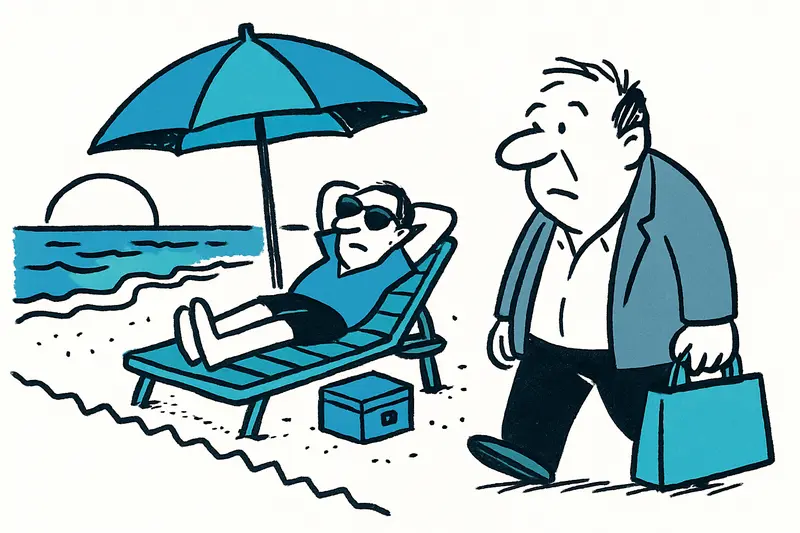
Beaches as Luxury: Who Owns Mallorca's Coasts?
Beaches as Luxury: Who Owns Mallorca's Coasts?
Rising concession requirements, higher prices and shrinking sand areas: who benefits, who is left out? A reality check on the future of the island's beaches.
Beaches as Luxury: Who Owns Mallorca's Coasts?
Guiding Question
Are Mallorca's beaches being turned piece by piece into zones accessible only to well-off visitors — while locals, walkers and families are pushed to the margins?
Critical Analysis
In the most recent tenders for beach concessions, two developments are visible at once: formal criteria have been sharply tightened, and official charges for loungers, umbrellas and additional services have risen considerably. At Playa de Palma, for example (see Money for sand: Who profits from Palma's beaches — and who gets left behind?), sun umbrellas and standard loungers are to cost ten euros each in future (previously: six), safes at the umbrellas five instead of one euro, and premium loungers are priced at 45 euros instead of the previous 30. Concessions typically run for four years; municipalities in some cases demand sums in the millions from operators (see Who Owns Palma's Coast? Six Million Euros, New Sports Areas and Who Pays the Price). That makes beach operations a cutthroat business — and creates pressure to optimize returns: more premium areas, fewer free zones, higher prices.
The logic behind this is understandable: municipalities want revenue, hotels and hoteliers rely on "quality tourism", and providers respond with upgraded offers (see When the Beach Stays Empty: How Mallorca's Sunbed Renters and Chiringuitos Are Fighting to Survive). But there are clear collision points: public accessibility, transparency in awarding contracts, and the question whether rising fees are compatible with the claim to keep coasts open as commons.
What Is Mostly Missing from Public Discourse
Discussion usually focuses on prices and design, less often on distributional questions: Who can afford premium loungers? What rules ensure that residents can still go to the beach every day without paying? Equally rarely is the long-term effect on the coast itself discussed: when beach widths shrink due to erosion or changed currents — observers report decreases in some stretches from around twelve to four meters (see Palma must cut sun loungers: beach areas shrinking – who pays the price?) — the tension between public space and commercial use becomes painfully visible.
A Scene in the Morning
Early morning on the Passeig Marítim: an older couple with shopping bags passes by, a worker drives the beach-cleaning machine, somewhere a child laughs while building sandcastles. Further back, rows of new premium loungers mark a zone with freshly oiled wooden loungers and small covers. The older woman stops, looks and says: "It used to be different here, we could always sit here for free." The sound of the sea mixes with the drone of the machine — an ordinary morning, yet a cross-section of the debate to come.
Concrete Solutions
1) Transparency requirements in tenders: full disclosure of evaluation and pricing formulas, binding social clauses and auditability by independent inspectors.
2) Reserved public areas: at least a clearly defined share of each beach zone must be guaranteed for free use by residents and day visitors; this can be achieved through spatial marking and controls.
3) Tiered pricing and resident discounts: resident passes or time-limited free use, for example in the mornings, can create balance.
4) Ecological requirements and adaptive planning: coastal replenishment and protection measures must require ecological assessments and long-term monitoring plans; where beaches shrink significantly, alternative protection concepts (dune restoration, vegetative stabilization) should be considered instead of purely technical solutions.
5) Longer lead times and continuity clauses: tenders should be scheduled so that operational transitions do not occur at the last minute. Contract clauses must prescribe minimum standards for operation, cleaning and rescue safety and allow sanctions in case of non-compliance.
Conclusion
Upgrading some beaches can make sense — clean showers, better rescue services, and decent infrastructure are needed. The problem begins when upgrading leads to exclusion. The coast is not a luxury item for display. If politics and administration want to reconcile tax revenue, tourism interests and the common good, they must set rules now: visible, comprehensible and with protection for daily use by the people who live on this island.
Frequently asked questions
Are Mallorca beaches becoming more expensive to use?
Can you still go to Mallorca beaches for free?
What should I know before renting a sunbed on a Mallorca beach?
Why are Mallorca beach concessions such a big issue?
Is Playa de Palma getting more expensive for beachgoers?
What happens when Mallorca beaches get narrower because of erosion?
Are there rules in Mallorca that protect public beach access?
What is the best time of day to use a Mallorca beach without paying for extras?
Similar News

More water than last year: Mallorca's reservoirs breathe easier
September rain refilled the Tramuntana's reserves: overall fill around 35 percent, Cúber at 40.42 percent, Gorg Blau at ...
Three Luxury Hotels in Banyalbufar: Lots of Money, Many Questions
A Danish investor plans three exclusive accommodations in Banyalbufar — including the historic Son Valentí. The announce...
2.1 tonnes of cocaine on sailing yacht off Spain's coast – a reality check for the coastguard
A 14-metre yacht was seized with 2.1 tonnes of cocaine. Who monitors the ports, how does the international hunt succeed ...

Heat Bonus in Mallorca: 100 Euros Extra for Outdoor Staff at MarSenses
MarSenses pays employees who worked outdoors in August an extra €100 as recognition. Lighter uniforms, reduced hours for...
Renovating in Mallorca: What You Really Can Do Without Neighbour Consent
Many think they can do whatever they want in their apartment. That's partly true — but only as long as structural elemen...
More to explore
Discover more interesting content

Can Cap de Bou

Townhouse Lleo 72
