
Why Palma's forgotten master builder belongs back in the cityscape
Why Palma's forgotten master builder belongs back in the cityscape
Can Ribas on the Paseo Borne turns 100 years old. The house at number 16 bears the signature of Gaspar Bennazar, yet celebration and protection are lacking. An assessment between gleaming shop windows, dusty plaques and a forgotten drinking fountain.
Why Palma's forgotten master builder belongs back in the cityscape
Key question: Why does Palma hardly remember Gaspar Bennazar, even though his architectural hand shapes the city — and what would happen if the municipality finally took the legacy seriously?
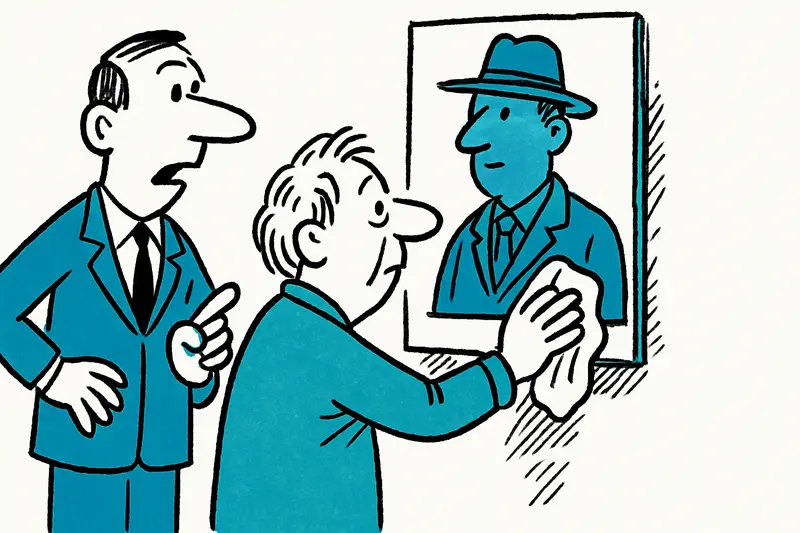
If you stroll along the plane trees of the Paseo Borne on a cold January afternoon, the wind rattles the bare branches and shop window lights cast bright strips on the pavement. People stop in front of house number 16, looking at eye level into Bulgari's jewellery displays and the elegant shopfront of the fashion boutique. Only a few glance up to the upper floor, where the name of the architect sits on a stone-grey plaque: Gaspar Bennazar.
Bennazar (1869–1933) was for a long time the official architect of Palma's city administration. His style ranged between representative facades and pragmatic solutions for urban life. Can Ribas on the Borne, completed in 1925, is an example of his work: a town house that combines commercial activity on the ground floor with representative apartments above. Exactly one hundred years later, it is striking how little public attention this jubilee has received.
This is not harmless neglect. Cultural stewardship is not just occasional cleanings of marble plaques. On a corner not far from the Borne, also a work from 1925, stands a drinking fountain that was once intended as a service to the neighbourhood. Today it is broken, weathered and hardly maintained. A ceramic plaque from 2011 commemorates the modernization of the water supply — small testimonies that show Bennazar's work was more than facade decoration.
Another chapter of the lack of care: in the 2000s an Art Nouveau bridge near the train station was demolished — rebuilt after protests, but the incident shows how fragile heritage protection can be here (Demolition in Palma: When Reconstruction Replaces the Original). And at Can Ribas a marble plaque from the 1940s still recalls former street names; the inscription that once contained a dedication is now hardly legible after a cleaning. A symbol that memory often remains superficial.
Critical analysis: The city does have monumental buildings, but it mostly lacks systematic interest in the middle-range works of its urban architectural heritage. Named problem: missing inventory, poor maintenance of small monuments, no regular restoration budget for elements like drinking fountains and plaques. Result: memory is random — dependent on engaged grandchildren, isolated school projects or loud citizen protests (see Demolition halted in Palma: What Gaspar Bennazar’s house teaches us about heritage protection).
What is missing in the public discourse: clear responsibility. Who takes care of the plaques, who ensures functioning restoration of small monuments? In addition, architecture is often regarded only as a backdrop for commerce and events, not as an identity-forming part of everyday life. Easily accessible information is lacking: digital directories, clearly visible explanatory panels, regular guided city tours with a local focus.
A scene from everyday life: Tuesday afternoon, market stall noise from Carrer de la Llotja drifts over, an older Mallorcan woman with a shopping bag stops, glances at Bennazar's stone plaque and murmurs, 'Ah, my grandfather worked on the other side of the city.' She shrugs and moves on. This small encounter shows that knowledge could be present — if only it were collected and made visible.
Concrete solutions: 1) Create a definitive inventory of all of Bennazar's buildings, publicly accessible and with a priority list for conservation. 2) A small restoration programme for minor monuments (fountains, plaques, metal railings) with annually awarded grants. 3) Visible information: new, weatherproof explanatory panels in multiple languages and a shared digital map with walking tours. 4) School programmes: architecture passports for students so young people actively research buildings. 5) Cooperation with residents and shop owners on the Borne so maintenance measures do not depend solely on municipal offices. 6) A six-month exhibition in a municipal space showcasing Bennazar's life and work — not an academic study room, but photos, plans and neighbourhood anecdotes.
Some of these steps cost little, others require political will and continuity. But it is not just about technical heritage protection: it is about identity. If facades become mere scenery, the streets lose their stories.
Pointed conclusion: Palma has in Gaspar Bennazar a designer whose traces are visible in everyday life. That the centenary of Can Ribas passed without civic recognition is not an insignificant truism — it is a warning sign. Whoever perceives history only as an event risks hollowing out their own city. A city that wants to remember starts with the drinking fountain and the stone plaque — and ends with long-term protection concepts.
Frequently asked questions
Why is Gaspar Bennazar important in Palma’s cityscape?
What kind of buildings did Gaspar Bennazar design in Mallorca?
Is Can Ribas in Palma worth paying attention to?
Why are small monuments like fountains and plaques important in Palma?
What is the main problem with heritage protection in Palma?
What happened to the Art Nouveau bridge near Palma’s train station?
What would help people notice Gaspar Bennazar’s work in Palma?
Why does the condition of plaques and fountains matter in Palma?
Similar News
By Boat Instead of the Road: Palma's Water Bus — a Reality Check
The 'Bus Nàutic' launches in two stages — but questions remain over interim operations, fares and environmental requirem...
Several Days of Rain Approaching: How Well Is Mallorca Prepared?
Aemet says: rain from Thursday until at least Tuesday, especially heavy on Monday. Temperatures remain mild. A reality c...
Nervous Reaction at a Traffic Stop: Why Campos Is Not Just a Sniffer-Dog Problem
At a traffic stop in Campos a 37-year-old German was arrested with a bag full of drugs. Our reality check explains why s...

Cameras Against Illegal Dumping: Porto Cristo Monitors Problem Areas – a Reality Check
Manacor has installed four surveillance cameras at particularly problematic waste spots in Porto Cristo. A local check a...
Reality check: Palma's "white" torrent — harmless salt or neglected warning sign?
White crusts on the Torrent de Sa Riera are causing a stir. Emaya describes them as salt deposits. Our reality check: wh...
More to explore
Discover more interesting content

Can Cap de Bou

Townhouse Lleo 72
