
Bike lane in Palma: Blanquerna loses section — who pays the price for more safety?
The city is relocating the bike lane from Calle Blanquerna to Calle 31 de Diciembre. 15–20 parking spaces will be lost, costs around €300,000. Safety yes — but what compromises remain?
Bike lane changes streets — in the middle of everyday life in Palma
On a morning on Calle Blanquerna it sounds as usual: the clinking of cups on the terraces, conversations in different dialects, a bicycle bell weaving through the alley. Soon this mix of sounds could change. The city of Palma has decided to remove the bike lane from Blanquerna and instead relocate it to Calle 31 de Diciembre. A simple line on the map — but for residents and business owners a noticeable intrusion into daily life.
The central question
Does more safety automatically mean winners, or does the neighborhood pay with lost parking spaces and complicated delivery routes? That's the question so far missing from official announcements.
What is planned — the facts
The new bike lane will be marked on the carriageway, not on the pavement. The aim is to reduce conflicts between pedestrians, outdoor dining and cyclists. According to the city, an estimated 15 to 20 parking spaces will be lost, and the redesign will cost around €300,000. An early start of construction is announced for next spring; it will include not just paint but better signage and targeted changes at intersections.
Local coverage has also examined related costs and services: Who pays for the pink bike? BiciPalma raises prices and removes youth fares.
Who benefits — and who loses?
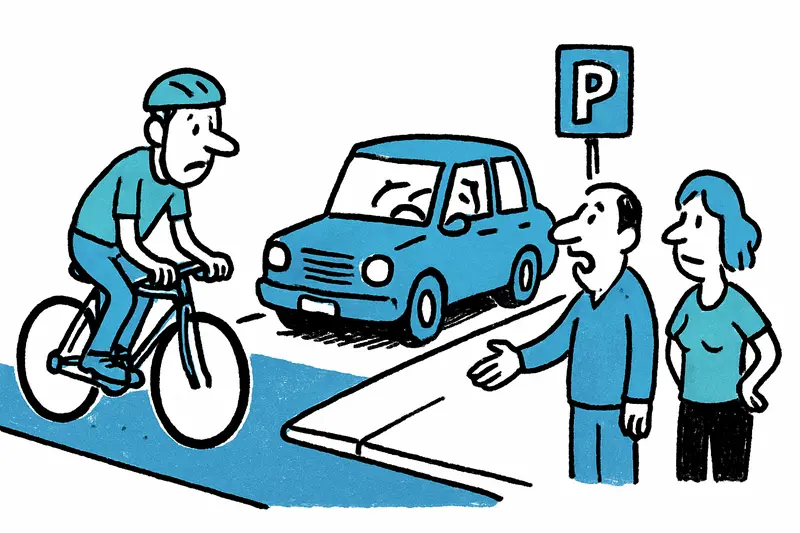
Commuter cyclists like Tomás are clearly in favor: “On the street I can ride more evenly. No opening car doors, no tables in the way.” For pedestrians and café owners like Catalina the idea is ambivalent. Catalina says: “Six bikes side by side, people have to dodge — that's annoying. Safer is good as long as the guests don't suffer.”
The loudest opposition comes from people like Mr. Gómez, who has parked there for decades: “Where do I park my car to buy bread?”, he asks. These questions are not just nostalgia; they affect elderly residents, people with reduced mobility and small businesses with daily delivery needs.
What often gets overlooked
Public debates often focus on the relation between cyclists and pedestrians. Less considered are aspects such as delivery logistics, accessibility and how the bike network connects. Similar routing decisions appear in reporting on nearby projects: New bypass for s'Alqueria Blanca: Less noise, more space for cycling.
Another point: continuity of the bike network. A segment of safe bike lane that ends at an unprotected intersection offers less benefit than a continuous connection. The planned expenditure of around €300,000 must therefore be linked to the question: will the project lead to a real improvement of daily routes or is it a cosmetic measure? The broader debate about parking and shared micromobility is covered in Palma's balancing act: More parking — more e-bikes — can they coexist?.
Constructive solutions that should be discussed
Instead of only removing parking spaces, short-term and long-term measures could be combined:
- Replacement parking: targeted reclassification of side streets, time-limited parking zones for residents or the creation of small but efficient parking areas behind the main road.
- Loading zones and delivery windows: time-limited stopping zones for deliveries, especially in the early morning or late at night, so that the hospitality sector does not suffer. Policy examples on managing deliveries and loading zones are discussed by the European Commission on urban logistics: Urban logistics initiatives.
- Pilot phase with flexible measures: first mark the lane and test with mobile bollards, then decide whether to follow with permanent protective structures.
- Accessible solutions: raise or designate pavements at critical points so that older people and wheelchair users are not disadvantaged.
- Participation and transparency: a binding plan that involves residents, business owners and cycling associations in detailed planning, instead of creating facts first.
Conclusion: bring order to the small chaos — but how?
Relocating the bike lane is an attempt to better organize the daily chaos between waiters with trays, hurried cyclists and delivery workers. That is laudable. But ends and means must be in the right balance. Who benefits in the long run, who loses only temporarily? The city has given figures — costs, number of parking spaces, a rough timetable. What is missing is a clear answer to the question of compensatory measures and transition rules.
Next time you walk along Blanquerna in the morning, don't just hear a bicycle bell. You will also hear the voices affected by the changes: the cafés, the suppliers, the elderly with their parking ticket. A proper little chaos then — with good chances to improve if the city thinks the right concepts through to the end.
Frequently asked questions
Why is Palma moving the bike lane from Blanquerna to Calle 31 de Diciembre?
Will the new bike lane in Palma mean fewer parking spaces?
When will the bike lane changes in Palma start?
How much will Palma spend on the Blanquerna bike lane redesign?
Is cycling in Palma safer on the road or on the pavement?
What does the Palma bike lane change mean for cafés and deliveries on Blanquerna?
What are the main concerns for older residents in Palma’s Blanquerna area?
What solutions is Palma considering to balance bike safety and local access?
Similar News
First Day, First Consequences: What Palma's Rent Freeze Really Means
A new decree stops a planned eviction in Palma — but what really changes for tenants and landlords? A reality check with...
When Housing Becomes a Matter of Survival: Mallorca Between Rental Frenzy and Everyday Life
The case of 87-year-old Maricarmen showed that on Mallorca many people's lives are poised between affordable and uninhab...
Autumn in Mallorca: When Melancholy Gets a Window
Why autumn quietly tightens here — and how to make use of the mood: walks, culture, candles and the light from Palma to ...
Near-miss on Lanzarote: Landing Ryanair Jet and Iberia Takeoff — what really went wrong
On Lanzarote there was a dangerous incident: A Ryanair flight (FR5910) from Dublin landed on runway 03 while an Iberia E...
Eurowings introduces new Premium Business seats on Mallorca routes
From December 1, selected Eurowings flights to Palma and other destinations will feature eight particularly generous sea...
More to explore
Discover more interesting content

Can Cap de Bou

Townhouse Lleo 72
