
South Coast at the Limit: When Boats and Plastic Overwhelm Communities
Landings of small boats are increasing on Mallorca's south coast. Ses Salines, Santanyí and Campos handle first aid, salvage and disposal — often without clear agreements and at high cost.
South Coast at the Limit: Boats, Plastic and Exhausted Teams
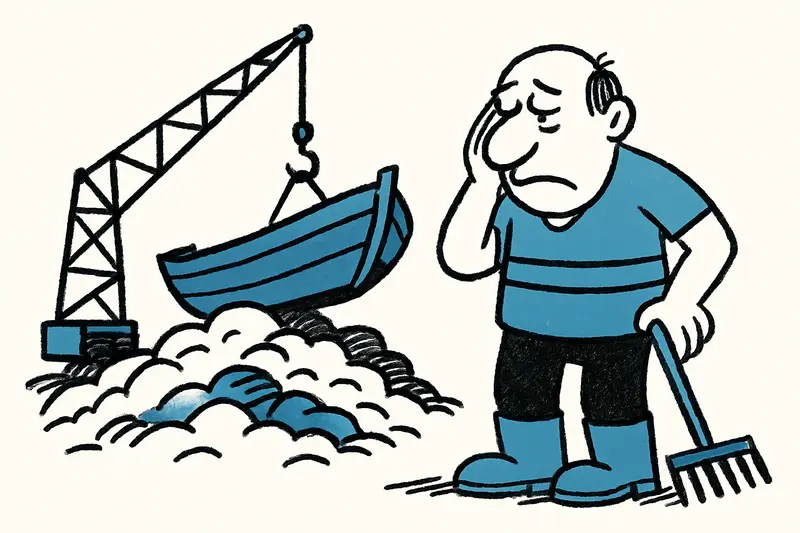
In the early morning, even before the bakeries on the MA-19 tuck the first ensaimadas into paper bags, you can hear the steady honking of trucks and the distant clatter of cranes. In the coves between Ses Salines, Santanyí and Campos, municipal workers now have a new routine: recover boat wrecks, care for people, clean the beach. What used to be an exception now feels like the new normal.
The Question No One Likes to Hear
How long can small municipalities carry this burden? That is the central question city halls are asking. First measures are carried out routinely: emergency services, police, medical care. But the logistical follow-up — cranes, trucks, interim storage, disposal — almost always falls on the municipalities. While many imagine Mallorca as sun and tourism, administrative staff now deal with paperwork and collection orders related to private boat rentals in Mallorca.
What Happens on Site
As soon as an inflatable boat washes ashore, local teams are the first on scene. They rescue people, secure the site and clean up. In Ses Salines about ten hulls are now stored at the recycling yard, in Santanyí just under a dozen, and in Campos several. The wrecks are not only an eyesore: residues of oil and petrol, worn-out outboard motors and fiberglass-reinforced plastics remain as pollutants. At Cap de Ses Salines some wrecks still rest on the rocks — recovering them there is dangerous and incurs additional costs. These arrivals are part of a wider trend of boat arrivals in the Balearic Islands.
Who Pays the Bill?
Financially, this is a hole in already scarce municipal budgets. Personnel costs, machine hours, towing and disposal fees — it all adds up. The state delegation often takes over the boats later, they say, but until then the municipalities bear the immediate costs. This has consequences: less money for the maintenance of coastal paths, parks or cultural offerings.
Environmental Hazards That Are Hardly Visible
Boat fragments contain fiberglass-reinforced plastics that remain in the sand and seabed and decompose only slowly. Oil films, fuel residues and small plastic pieces can damage the beach ecology in the long term. A safety officer in Santanyí sums it up: “This is not a postcard, this is long-term pollution.” Wind and waves also distribute lighter plastic parts into the dunes — a constant cycle of picking them up begins, as documented by a diver removing plastic from Portet d'es Salinar.
Aspects Often Overlooked
The public debate frequently lacks a clear cost accounting and the question of responsibility. The psychological strain on local helpers — exhaustion after night operations, the image of helplessness — is rarely discussed. There is also a practical problem: many wrecks are technically contaminated so they cannot simply be recycled. Specialized companies are expensive but often the only option.
Concrete Opportunities and Solutions
More than appeals are needed. Concrete ideas include:
1. Coordinated rapid-response teams: A central unit at national or European level that can send salvage and disposal teams quickly when landings occur, instead of leaving all tasks to the municipalities.
2. Clear cost-sharing: A fund, financed from state resources and EU aid, that covers disposal costs and gives municipalities financial planning security.
3. On-site equipment: Oil absorbents, protective suits, mobile containment containers and training for municipal teams could reduce damage and speed up processes.
4. Data and transparency: Uniform recording of all landings, costs and environmental impacts. Only those who measure can prioritize and justify funding.
5. Preventive cooperation: Coordination with neighboring islands, the fishing community and the coast guard to plan responses early and minimize risks.
Why Madrid Must React
Municipalities emphasize: they are small but responsible. Without clear responsibilities, the situation risks becoming permanent, undermining both human rights and environmental protection. Central coordination would not only reduce costs but also improve safety and dignity for those arriving.
What Residents and Visitors Can Do
Every helping hand counts locally — but must be used correctly. If you see something unusual, inform the police or Spanish Maritime Rescue and do not go into the sea yourself. Reports via emergency number or local hotlines help direct operations. Volunteers can support local collection efforts but must not replace professional cleaning.
In the villages you can hear the crows in the morning, the creak of the dump trucks and sometimes a tired laugh from workers who have cleared another obstacle. Until Madrid and Brussels provide viable solutions, there will be cranes on the beach, plastic in the dunes and teams getting up early — out of duty and because it is their neighborhood.
Behind every recovered hull there is a human story and a logistical problem. Both deserve more visibility and a better response.
Frequently asked questions
Why are boat wrecks becoming a problem on Mallorca’s south coast?
What should I do if I find a washed-up boat or debris on a beach in Mallorca?
Is it safe to swim near boat wrecks and fuel residue in Mallorca?
Why do small towns in Mallorca struggle to deal with these coastal cleanups?
What environmental damage can plastic boats cause on Mallorca’s beaches?
What happens to wrecked boats after they are recovered in Mallorca?
Why are Ses Salines, Santanyí and Campos often mentioned in connection with beach debris?
How can Mallorca improve the response to washed-up boats and coastal pollution?
Similar News
Masked Images, Real Panic: When Social Media Aesthetics Alarm Neighbors
Five German content creators filmed on a recently vacated detention site using deceptively realistic props. The result: ...
Why the Striped Breams in Cala Pí Should Be a Wake-up Call
Once again bathers in Cala Pí were surrounded while swimming by small, nippy fish — some wounds bled. Time for clear rul...

Daily from New York: How Palma's Air Traffic Is Growing — and What Must Change
United will increase the Newark–Palma service to daily flights in 2027 (Boeing, 231 seats). Strong tourist numbers clash...

When Love Ends in Shards: Destruction in Son Vida and the Questions That Remain
In Son Vida a relationship dispute escalated: a woman destroyed furniture in a luxury villa, later pressed a panic butto...

Who Bears the Burden? Mallorca Between Tenant Protection and Landlord Fears
Madrid's new housing decrees strengthen tenant rights — but on Mallorca concern is growing: will the law drive small lan...
More to explore
Discover more interesting content

Can Cap de Bou

Townhouse Lleo 72
