
125 euros for two sunbeds: When beach comfort displaces the commons
125 euros for two sunbeds: When beach comfort displaces the commons
At Cala Major beach, new premium prices — 125 euros per day for two sunbeds and an umbrella — are causing discontent. Who pays, who is left out, and what rules actually apply?
125 euros for two sunbeds: When beach comfort displaces the commons
Guiding question: Can a piece of public beach become a luxury good — and who decides?
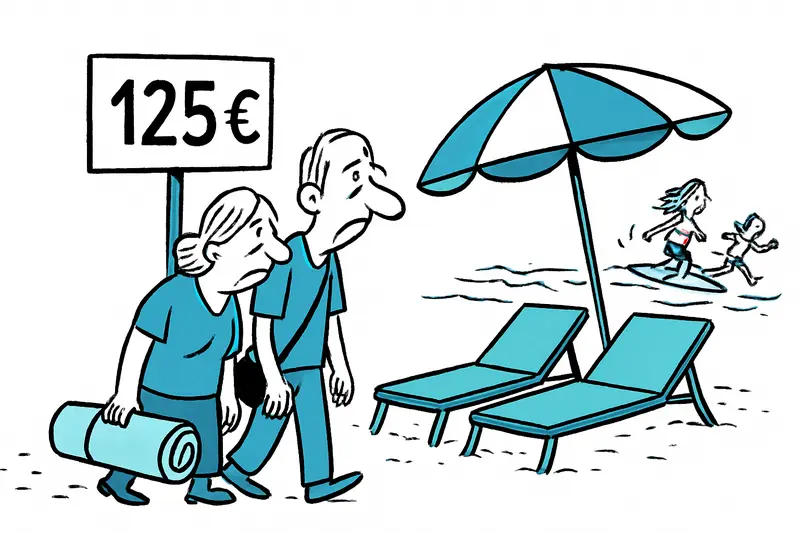
In the morning at Cala Major the air smells of sea salt and fried fish; bus line 4 drops off a group, an older couple spreads two towels, children run toward the water. At the same time, a sign on a post states that two sunbeds and a parasol in the premium area cost 125 euros on some days. The number gets stuck in the throat. For many locals it feels like an own goal: a public beach is gradually becoming a paid stage.
The facts are clear: for the prime spots the operator charges 125 euros per day for two deckchairs and a parasol this summer; two years ago it was reported that it was around €70. Regular sunbeds have also become more expensive: from about 19 euros to currently 35 euros per day. At the same time, the total number of umbrellas at Cala Major fell from about 150 last year to around 116 this summer; the premium share shrank from a little over 35 to roughly 16.
The first critical question is: who owns the beach? In practice, many coastal stretches are regulated through concessions, but public access means more than formal availability. The higher the prices, the more likely the social use shifts: families with limited budgets, older residents or teenagers who don’t want to buy a spot are pushed to the margins — often literally, onto the narrow strips between the water and private space.
From an economic point of view, operators may argue that higher revenues finance services, cleaning and security. But the accounting in public debate remains incomplete: how are the costs composed? What investments were actually made? And more importantly: how much public space remains freely available? This gap leads to speculation and to tangible anger among the people who live here, as illustrated by reporting of a GOB complaint.
What has been scarcely discussed so far is the role of municipal conditions. The approval of a concession should clearly regulate how much area must remain free, how many umbrellas may be offered in premium categories at most, and how revenues are funneled back into beach maintenance. Such rules exist in some places — in Cala Major the details are not yet easily accessible to the public; see coverage of ownership and regulatory chaos in Cala Major. Transparency is not a luxury but a prerequisite for maintaining balance.
Another blind spot is seasonality. Prices that apply on high-season days feel particularly sharp when communicated as permanent rates. A model that treats peak days differently from quiet months would be fairer — yet it is rarely publicly discussed. Also seldom on the table are tiered prices for residents, morning discounts for families or a share of free sunbeds allocated locally.
Back in the scene: on a Saturday you see strollers along the shore, youngsters carrying surfboards across the waves, and people simply spreading a towel. The signs with luxury prices act like a barrier. Two years ago the neighborhood complained similarly. This year the number of premium umbrellas has been reduced, apparently in response to protests and space shortages, and the issue has attracted wider attention in coverage of the premium-sunbed controversy. That is a step — but part of the way is still missing.
Concretely, I propose: first, full publication of the concession terms by the city, including financial figures on rents, maintenance and required services. Second, a mandatory minimum zone along the shoreline that remains free of paid facilities — for example a continuous five-meter-wide strip along the water. Third, a cap on premium spots: a maximum of ten percent of all beach places should be allowed in the VIP category. Fourth, a trial for discounted times (mornings/evenings) and a limited contingent of free spots for residents and families. Fifth, regular local citizen forums in the middle of the season so complaints can be addressed quickly and transparently.
These proposals are pragmatic: they do not eliminate the possibility of earning money with beach services, but they prevent the gradual exclusion of people who see the beach as a place to be, not as a stage for consumption. When people stroll along Palma’s promenade in the morning, they hear conversations about prices; when they sit by the sea they feel the tension between commercial interests and the common good.
Conclusion: Cala Major is not a private garden. The 125 euros show how quickly a stretch of coast can turn from an everyday place into a luxury product. We need clarity instead of rumors, rules instead of sellouts, and space for everyone instead of only well-heeled guests. If the city does not act soon, people will have no choice but to make more noise — or to leave the beach alone. Both would be a shame for a place that lives from its mix: neighbors with shopping bags, children with wet hair and the dull hum of bus line 4 that brings daily life to the shore.
Frequently asked questions
What is the best time of year to visit Mallorca for pleasant weather and fewer crowds?
Is it safe to swim in Mallorca’s sea and what should I look out for?
Is Sóller worth a day trip from Palma, and what’s there to see?
What should I know before visiting Cap de Formentor on Mallorca?
What should I pack for a trip to Mallorca from spring through autumn?
Are there good hiking options in Mallorca for beginners and experienced hikers?
What’s the best way to get around Mallorca without renting a car?
How do beach conditions vary across Mallorca, and what should I expect from popular beaches?
Similar News
Eviction in El Arenal: Who protects neighbors — and who protects the homeless?
A vacant hotel on Carrer Girona was cleared and secured. The neighborhood breathes a sigh of relief. But the action trea...
'La Tapita' loses its home: Who will protect Palma's last affordable meeting places?
The bar 'La Tapita' on Simó-Ballester Street will close at the end of December. For neighbors, police officers and small...
Million Heist at Bulgari: Who Is Responsible for Palma's Security Gaps?
Three men stole jewelry worth around one million euros – the crime series began at the end of September and was likely c...

Who pays the bill? Tourists, prices and the reality in Mallorca
Rising costs are felt by travelers and locals alike. A walking observation through Palma's old town shows how tourists e...

Phone robbery at Playa de Palma: Two juveniles arrested — a reality check
On Monday morning three young women were attacked at Playa de Palma; two youths snatched a phone from one of them. The N...
More to explore
Discover more interesting content

Can Cap de Bou

Townhouse Lleo 72
