
Cala Major: €70 for a "Premium" Sunbed – Who Pays for the Gold Signs?
On the promenade of Cala Major a double price sign has caused confusion: normally €6 per sunbed, suddenly €70 for a "premium" combo. An environmental association filed a complaint and now the coastal authority is investigating. What does this mean for locals and tourists?
Between the promenade and the water – who decides, who pays?
The central question in Cala Major: €70 for a "Premium" Sunbed – Who Pays for the Gold Signs? right now is: Can beach operators simply invent a gold tariff while the same sunbeds are officially labeled at six euros? Anyone walking the paseo in the late afternoon hears the sea, the gulls and, in between, the soft tick of debates — tourists taking photos, locals shaking their heads.
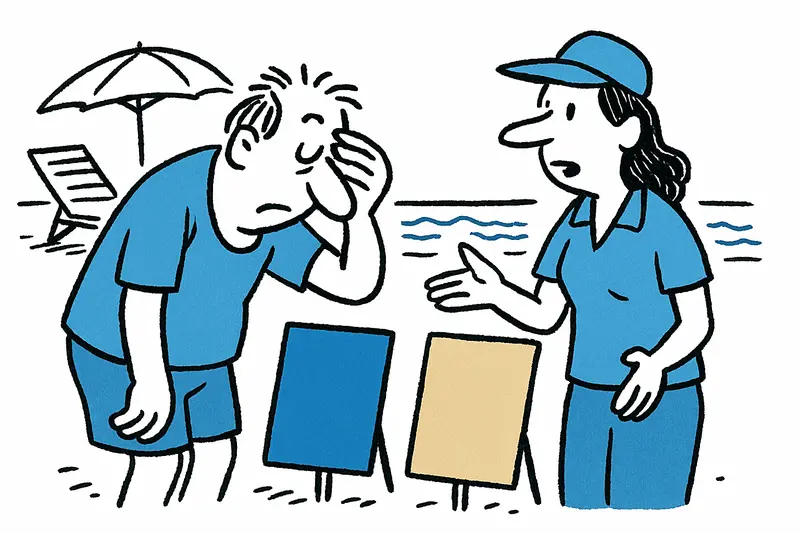
The image is simple and unsettling at once: two signs stand side by side, blue and golden. On the blue sign: six euros per sunbed and umbrella – so 18 euros for two sunbeds and one umbrella. Next to it the golden sign: a "Premium" combination for 70 euros. A surcharge that is not a cosmetic detail but a leap into a different financial world.
What the complaint says and why it goes further
A local environmental association has therefore filed a report with the Dirección General de Costas. The allegations go beyond a mere price sign: the environmentalists in particular complain that around one hundred of these so-called "premium" sunbeds are appearing on the beach and that two temporary kiosks are placed closer together than regulations require – the prescribed 100-meter distance apparently is not being observed. This complaint is covered in Cala Major: Between Premium Sunbeds and Regulatory Chaos – Who Owns the Beach?.
The problem is twofold. First: transparency and permits. Permit documents do not contain their own categories like "Premium" with a corresponding surcharge – at least not in the publicly accessible documents. Second: spatial planning and equal treatment. If public beach space is increasingly divided by price levels, there is a risk of a de-facto privatization of better spots, even if the sand formally remains public.
The quiet consequences for everyday life and image
Beyond fines and threats, there are subtle effects: a café owner on the promenade, espresso half-full, says: "Things used to be clearer." This small link between pub talk and administration paperwork shows how quickly confusion and mistrust grow – especially in high season, when the promenade pulses with people and every uncertainty adds friction.
For tourists it means uncertainty. An older couple, who struggle to read the fine differences between signs, may end up paying the higher price because the seller answers vaguely: "Better location, bigger umbrella." For residents it means: less accessibility, more commerce at their doorsteps.
What often gets overlooked in the public debate
People usually talk about fines and administrative procedures – but there are other, less visible aspects:
1) Signal effect: If operators can enforce high "premium" rates, an incentive system arises: more profit through artificial differentiation instead of better services or environmental protection.
2) Usage rights versus comfort: Permits regulate areas and equipment, but rarely how informal price hierarchies emerge and influence customers.
3) Enforceability: The coastal authority is responsible, but inspections cost staff. Without regular checks, violations often remain symbolic affairs.
Concrete opportunities and solutions
There are ways to make the practice clearer and fairer – with relatively small, practical steps:
1) Uniform, mandatory signage: Standardized signs that only display officially approved prices and are color-coded would minimize confusion. Anything else would be unlawful and could be removed immediately.
2) Public register: An online directory of all authorized beach areas, with photos and exact criteria (number of sunbeds, distances between kiosks, special facilities). This would make checks easier for authorities, media and citizens.
3) Short-term controls during high season: Mobile teams performing spot checks on prices and distances would have a deterrent effect.
4) Strengthen citizen participation: Appeal offices and a simple reporting function (via app or phone) could collect and prioritize complaints faster.
What could happen next — and what we're hearing
The Directorate General for the Coast has taken over the report and is investigating. If it turns out that the gold prices are unlawful, fines or conditions may follow; in the worst case signs must be removed and sunbeds relabeled. Similar cases and the pressure on local authorities are discussed in Premium sunbeds in Cala Major: Palma under pressure — who protects the beach from commercial greed?. If operators cooperate, there could be a quick clarification and more transparency. But if profit overrides compromise, the conflict could end up in administrative courts – with long delays and dissatisfied beachgoers.
Practical advice: Before you pay: take a photo of the sign, note the price and, if in doubt, ask the nearest shop or the tourist office. In Cala Major the sand is wide and the view to the sea is open – but the rules for its use should be just as clear.
The coming weeks will show whether the administration, operators and neighborhood can find a solution that preserves the beach as a public space – without golden confusion.
Frequently asked questions
Can beach bars in Mallorca charge different prices for the same sunbeds?
Why is Cala Major being investigated over premium sunbeds?
How can I tell if a sunbed price on a Mallorca beach is legitimate?
What should I do if a beach sign in Mallorca shows two different prices?
Are Mallorca beaches still public if some sunbeds are sold as premium?
What beach rule problems have been reported in Cala Major, Mallorca?
When is the best time to check sunbed prices on a Mallorca beach?
How can residents report beach pricing complaints in Mallorca?
Similar News
Why so many people in Mallorca are losing their homes — and what needs to happen now
The Balearic Islands top Spain's statistics for evictions. Numbers show contradictions: fewer enforced evictions but man...

Sunday in Palma: Marathon shuts down the Passeig and Old Town – what residents and drivers need to know
On October 18, professional and amateur runners will take part in the Tui Palma Marathon in Palma. Many streets, includi...
Construction by the Sea: Why the New Mega Beach Club in Cala Mendia Has Residents So Angry
Residents of Cala Mendia are suing the building permit for a large beach club with around 220 outdoor parking spaces. Sh...

Just before landing: Fight on Ryanair plane — a safety issue on board?
On a flight from London Stansted to Ibiza on October 5 a dispute escalated when a passenger stood up despite the illumin...

Afterwiesn at Pinos: MM invites to two Bavarian-Mallorcan evenings
Two evenings, Bavarian verve and Mallorcan hospitality: On October 16 and 17 the Pinos restaurant in Sol de Mallorca wil...
More to explore
Discover more interesting content

Can Cap de Bou

Townhouse Lleo 72
