
Concern in Cala Major: Who Owns the Empty Houses?
Concern in Cala Major: Who Owns the Empty Houses?
In Cala Major, fear of squatting is growing. A dilapidated building on Avenida Joan Miró and reports of attempted occupations in Marivent are making residents nervous. A reality check with everyday scenes, analysis and practical solutions.
Concern in Cala Major: Who Owns the Empty Houses?
Key question: Who protects neighborhoods from rapid displacement — the authorities or the community?
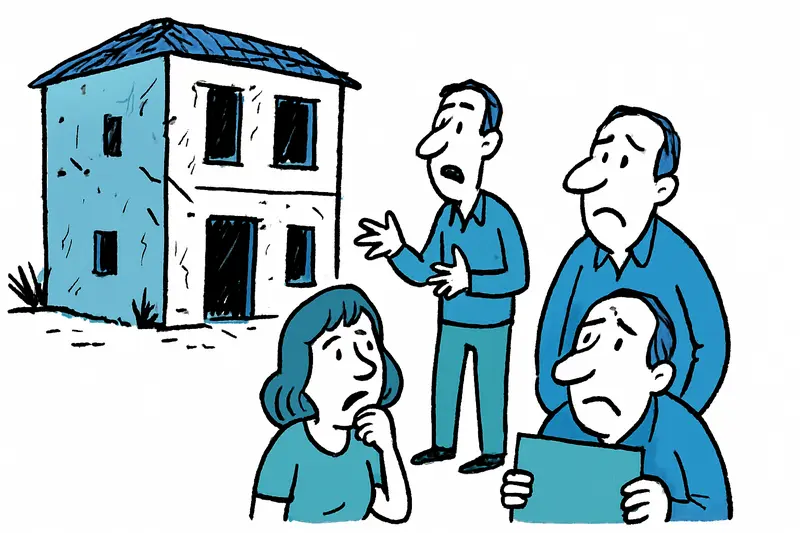
On Avenida Joan Miró there is a building with shattered windowpanes and crumbling plaster. Residents from the side streets now regularly see people coming and going. These are not well-organized camps but rather scattered groups; according to neighbors there are about a dozen people. The mood on this late morning is tense: delivery vans rumble by, a garbage collector whistles, a cafe owner wipes the terrace. The fear of quiet occupations hangs in the air like the faint salty smell from the sea.
The reports from Cala Major and neighboring Marivent about attempted house occupations are not an abstract issue for residents. It is about safety, property rights and the feeling that vacant buildings slide into a grey area: not fully private, not fully public. Some construction sites in the area have since been upgraded — alarm systems, additional doors, protective measures — a clear sign that owners and construction companies are taking the situation seriously, as shown in Acute Danger in Cala Major: Six Shops Cordoned Off — Who Bears Responsibility?.
Critical analysis: Why the situation is volatile
The situation ignites on several points at once. First: dilapidated houses are an open invitation. When a house stands empty for months or years, the inhibition threshold for different uses decreases. Second: responsibility is often unclear. Who maintains the properties? Who reports tips? Third: legal hurdles slow down solutions. Quick evictions after an illegal occupation are possible, but complex and costly — time that owners and neighbors lack to sort out the situation; past incidents such as Risk of Collapse in Cala Major: Six Venues Temporarily Closed — What Needs to Happen Now illustrate how urgent infrastructure issues can complicate responses.
Politics and administration have tools — from fines to forced renovations — but in everyday practice many cases fall through the cracks. On the street you hear: "We call, three days later someone is there again." Such experiences show that pure reporting mechanisms are not enough.
What is missing in the public discourse
Two perspectives are missing: rapid, local prevention and the social component. Public debates often revolve around buzzwords like "crime" or "property rights." Less heard is: how can vacant buildings be secured in the short term without having to involve police and courts every time? And: what social services exist for people who resort to such buildings out of necessity? Without these perspectives the discussion remains a zero-sum game between owners and residents.
Moreover, the role of the neighborhood is underestimated. In Palma there are many districts with active neighborhood networks — but these structures are not strong enough everywhere to detect and report warning signs early; local problems such as Cala Major: Parking lot turns into a litter and problem zone – who will clean up? underline how neglect can escalate.
Everyday scene from Cala Major
On a Wednesday afternoon an elderly woman carries her shopping bags up the ramp, a boy kicks a ball against the house wall, and a small grocery shop on the corner warms up pa amb oli. In between there are construction fences and a new sign: "Construction site — no entry." Such images stay imprinted: the coexistence of normal life and the latent mistrust that every stranger, every open door triggers.
Concrete approaches to solutions
1) Short-term securing: A quick option are standardized securing packages for vacant properties — screw-on doors, temporary window coverings, inspections by municipal building authorities. Pre-made measures could be implemented within days.
2) Strengthen local reporting centers: Instead of relying solely on the general emergency number, neighborhood apps or direct contact points at the district council could speed up coordination. A fast, documented reporting mechanism raises the barrier for occupiers.
3) Transparency of ownership: An accessible, up-to-date list of vacant registered properties (with data protection concerns addressed) would clarify responsibilities and increase pressure on owners to act.
4) Mobile response teams: A small team made up of building inspectors, civil protection and social workers could appear at short notice to combine technical securing and social assessment — this often allows for de-escalating and efficient action.
5) Preventive neighborhood work: Training for caretakers, small grants for safety measures at construction sites and a simple information leaflet for landlords could sustainably improve the situation.
Conclusion
The reports from Cala Major are more than a local nuisance. They show an interface between vacant properties, administrative gaps and social need. Those who talk the problems away waste time — and space. Those who want to solve them purely by police risk unnecessary escalation. A better approach is a mix: quick technical securing, clear responsibilities, local reporting channels and a minimum of social support. That way Avenida Joan Miró can remain a place where early morning coffees and children's laughter are louder than the fear of the unknown.
Frequently asked questions
Why are empty houses in Cala Major such a concern for residents?
What should I do if I notice a possible house occupation in Mallorca?
How can vacant properties in Mallorca be protected more effectively?
Is it legal to occupy an empty house in Mallorca?
What makes Cala Major especially sensitive to vacant-house problems?
What role do neighbours play in preventing occupations in Mallorca?
Who is responsible for maintaining empty buildings in Palma?
What practical steps can reduce tension around empty houses in Mallorca?
Similar News

When the Water Taps Run Dry: Why Tankers Are Not the Solution
In villages like Deià, Valldemossa or on Menorca, municipalities are limiting water use because of drought. Who decides,...

Ryanair Flight Diverted to Barcelona: An In-Flight Emergency and the Questions That Follow
A Ryanair jet from Pisa to Málaga landed in Barcelona after a passenger became acutely ill. Why these cases need more at...
Alarm in Port de Pollença: What now for the polluted bay?
Hundreds of people protested on the beach of Port de Pollença. The environmental organization Arrels Marines demands a p...

Micaela Schäfer: Between Playa de Palma and a Berlin Law Firm — New Calm, an Old Tomcat and Solid Finances
The party artist from the Ballermann scene appears surprisingly down-to-earth: a new relationship with a Berlin lawyer, ...
At Playa de Palma: Fire in Residential Building – six people rescued on the roof, what is missing in prevention?
In the evening a fire broke out on the first floor of a five‑storey building on Calle Trasimé. Six residents fled to the...
More to explore
Discover more interesting content

Boat Tour with BBQ along Es Trenc Beach

Private transfer from Mallorca Airport (PMI) to Pollensa
