
Drones for the Local Police in Calvià: More Security or Creeping Surveillance?
Drones for the Local Police in Calvià: More Security or Creeping Surveillance?
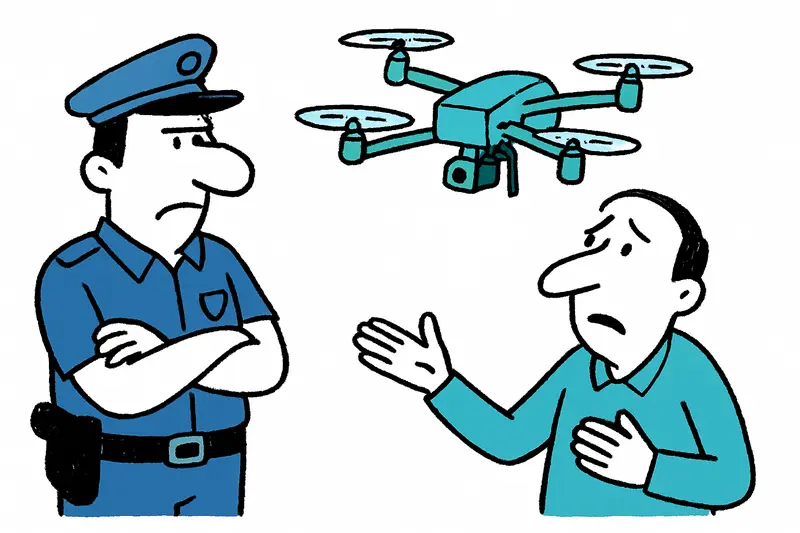
Calvià is setting up a drone unit: the aircraft and systems cost €82,000. They are intended to monitor traffic, crowds and beaches. How much protection do they provide — and what rules and transparency are missing?
Drones for the Local Police in Calvià: More Security or Creeping Surveillance?
Key question: Can drones save lives without turning normal life on the beach and promenade into constant surveillance?
This summer a visibly silent camera aircraft will hover over the coast in Calvià: the municipality is setting up a drone unit, starting operations in the high season and later year-round. The bill: €82,000, of which €60,000 comes from the island council fund. The stated purposes are brief but clearly defined: traffic monitoring, situational awareness at major events, searching for missing persons and providing assistance at beaches and coves — for example, to detect dangerous situations or suspicious boats more quickly. Similar local proposals have been reported elsewhere, for example Palma steps up: More cameras, drones and the big question of privacy.
At first glance this sounds like modern hazard prevention. On Platja de Magaluf, where music pounds and sunbeds line up in July, a quick aerial view can locate a swimmer in distress faster. The same applies to the small cove at Portals Vells, where hide-and-seek by boats and swimmers among the rocks can become dangerous. Such everyday scenes — children building sandcastles, parking lots filling up, buses taking corners — illustrate how public safety is tied to rapid information.
But: is information synonymous with the right to be observed? The dry figure €82,000 hides a second price: the cost to privacy and trust. Drones over crowds, promenades or parking lots create a new feeling of being watched. When are recordings stored? Who is allowed to view them? How long are images kept, and are faces automatically analysed? In the public debate these questions have so far only been mentioned on the margins; local coverage of incidents like Drone over Palma Airport: Guardia Civil Investigates – How Safe Is Our Airspace? has raised similar concerns.
A critical analysis reveals several gaps. First: rules and oversight. The operation of unmanned aircraft in Spain is subject to concrete rules from the aviation authority (AESA) and data protection law. But there is often an implementation gap between permission to fly and practices on the ground: mission protocols, data-retention periods and access rights to raw footage are missing or not transparent. Second: technology vs. humans. Cameras provide images, not decisions. Who decides whether a live feed leads to a search or whether footage is shared with third parties — and based on which criteria? Third: public acceptance. Without information efforts, the softly buzzing propellers sow mistrust instead of safety.
So what is missing from the public discourse? Concrete answers: a clear privacy policy from the municipality, a publicly accessible operational plan for missions, details on how long recordings are kept, protocols for deletion and for sharing material with police authorities or the judiciary. Also missing is an independent body that can review missions retrospectively, and training for operators that goes beyond flying to include data protection and de-escalation.
Concrete solutions can be sketched without great effort. Calvià should launch an information campaign before the first rotor deployment: notices at beach access points, flyers at tourist information centres, and an easy-to-understand FAQ on the Ayuntamiento website; local reporting such as Digital Eyes on Mallorca's Beaches: Protection or Surveillance? highlights the importance of clear communication at beach access points. Technically sensible measures include geofencing rules (no recording of private properties), automatic blurring of people in stored clips and a maximum retention period of, for example, 30 days after which footage is automatically deleted. Legally necessary are transparent cooperation rules with the National Police and the Guardia Civil, recorded in a publicly accessible protocol.
A practical building block: a citizen-friendly oversight committee with representatives from the municipal council, data protection experts, the tourism sector and resident associations. This committee can spot-check missions and enforce reporting obligations to the public. At the same time, mission indicators should be defined: under which concrete threat conditions are drones activated? Only in confirmed incidents or already on suspicion? Such rules reduce arbitrariness and build trust.
In the end it is not about a categorical "for" or "against" drones. It is about room for design: the technology can reduce rescue times and make police resources more efficient. But it can also create spaces in which people feel observed. If Calvià wants the drones to protect more than they provoke mistrust, the deployment must start not in the air but on the ground — with clear communication, strict data protection rules and independent oversight.
Conclusion: drones are not a panacea, but they are an opportunity — if the municipality sets the rules now, before the rotors start. Otherwise necessary prevention risks turning into permanent surveillance that neither holidaymakers nor residents need.
Frequently asked questions
Why is Calvià using drones for local police work?
Are drones in Mallorca beaches used for rescue and safety, or just for surveillance?
What should visitors in Mallorca know if they see a drone over the beach?
What privacy rules should apply to police drones in Calvià?
Will police drones in Mallorca be used all year or only in summer?
How much is Calvià spending on its police drone unit?
Why are Portals Vells and other Mallorca coves harder to monitor?
What would make police drone use in Mallorca more acceptable to residents?
Similar News

When the Wallet Becomes a Danger: Attack in Peguera and Lessons for Mallorca
In Peguera, two women are said to have stolen the wallet from a 75-year-old German couple. When the victim intervened, t...
Plata stays Plata: Young people take over, Llonguets remain
A small bar on Carrer de l'Argenteria will continue: Tolo Serra hands the place over to young Mallorcans at the end of t...
Unnoticed in the Luggage Compartment: How a Boy Traveled More Than 100 Kilometers in a Team Bus
A minor traveled in the undercarriage of a team bus for more than 100 kilometers until his cries for help were heard. A ...

Cap Vermell Grand: Second Michelin Key – a Gift for the East
The Cap Vermell Grand in Capdepera has been awarded its second Michelin key. For the region this elevates the luxury off...
Eurowings lets four aircraft carry names – a friendly idea that also reaches Mallorca
Eurowings is launching a campaign: four Airbus A320s are to carry the first names of people who help others in everyday ...
More to explore
Discover more interesting content

Can Cap de Bou

Townhouse Lleo 72
