
Calvià introduces fees at municipal EV charging stations: What drivers need to know
Calvià introduces fees at municipal EV charging stations: What drivers need to know
From 2 February, Calvià will charge €0.25 per kWh at municipal charging stations; parking is free for four hours, then €3 per hour. A reality check: Who benefits, who pays?
Calvià introduces fees at municipal EV charging stations: What drivers need to know
From 2 February 2026: €0.25/kWh, four hours free parking, activation via the app
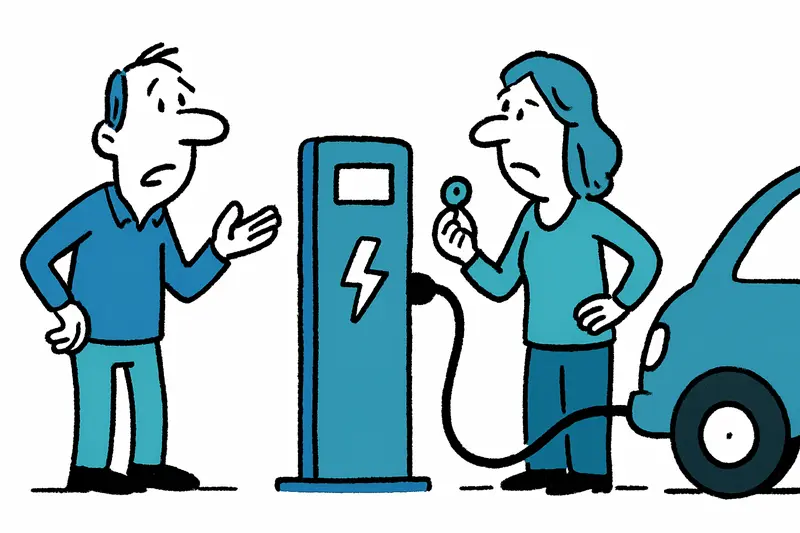
From February, a new rule will affect the daily routine of EV drivers in Calvià. The municipality will charge a usage fee of €0.25 per kilowatt-hour at its municipal charging stations from 2 February 2026. Parking at the charging points remains free for up to four hours; after that the municipality charges €3 per started hour. Payment and activation will be handled via the MELIB 2025 app. Revenues are intended to go into maintenance and expansion of the infrastructure – locations named include Paguera, Santa Ponsa and Costa d'en Blanes, which are referenced in Calvià launches €25 million infrastructure program – opportunities, risks and unanswered questions.
The facts are simple. The background is not. On Mallorca, where many cars carry island plates and rental cars are common, municipal decisions quickly meet tourist reality: on the Paguera promenade in the morning, when joggers, dog walkers and delivery vans pass each other, the question will soon be who claims the parking spots at the charging posts – and for how long.
Key question: Does the fee regulate usage and secure expansion – or does it create new problems for locals and visitors?
Critical analysis: A flat fee of €0.25/kWh is not an outlier in Europe, but it sits at a level that noticeably affects occasional chargers as well as commuters. Four hours of free parking sounds generous, but in practice: those who plug in for short trips between supermarket, beach and tapas bar can occupy charging points longer than necessary. On the other hand, details are missing: Will peak charging be more expensive? Are there special conditions for residents, businesses or for slow "forced" charging overnight? And how fast are the chargers – 3.7 kW, 11 kW, 22 kW or fast chargers? Without this information it remains unclear whether €0.25/kWh is attractive or off-putting.
What is often missing from public debate: the tourist perspective and the technical reality. Many holidaymakers arrive without the MELIB app, holding rental car papers and expecting a simple payment option. If activation only works via the app, rental companies need clear rules – or an alternative like NFC/card payment. Technically, it is important to know whether the charging stations are publicly visible on Driving around Mallorca in an electric car: Map shows all charging stations — and how easy driving really is and open-data portals and whether the charging capacities are clearly indicated. Otherwise frustration arises: car plugged in, charger occupied, and nobody knows whether the battery will help in an hour.
Everyday scene from Calvià: A taxi driver in Santa Ponsa who starts his shift early sits at the promenade, connects his car to the charger and notices that the app only opens in Spanish. An older island resident in Costa d'en Blanes fears that the new fees will raise the cost of daily shopping. On a windy afternoon in Magaluf a queue forms in front of a fast-charging station – Mallorca is a holiday destination, but not a parking paradise.
Concrete solutions:
- Clear information: Each station should display visible details about charging power, prices and recommended maximum stay. Multilingual information (Spanish, Catalan, English, German) will make charging easier for tourists and local support schemes such as Calvià launches voucher campaign Calvià lo Vale for residents could help offset costs for some residents.
- Flexible tariffs: Night or resident rates, short-term surcharges for fast chargers and cheaper rates for slow charging over longer parking periods. A marked "short-charge" zone could reduce blocking.
- More payment methods: App, NFC card, credit card terminals and partnerships with rental companies so visitors do not need to install an app first.
- Earmarking and transparency of revenue: Public reports on how much is spent on maintenance and new stations build trust. Solar canopies over parking and battery storage could reduce operating costs in the long term.
Punchy conclusion: Calvià's step is understandable – infrastructure costs money. Still, the introduction feels like a trial run without all necessary accompanying measures. If the municipality does not now provide clear rules and practical payment options, a patchwork of blocked chargers, annoyed residents and confused tourists is likely. On the positive side: with good organisation the revenues can be used to actually install more and better charging points where fishermen land in the morning and nightlife beats in the evening.
For the coming weeks: keep an eye on parking at the stations in Paguera, Santa Ponsa and Costa d'en Blanes – and install the app before your navigation system sends you there.
Frequently asked questions
When do the new fees for Calvià’s municipal EV charging stations start?
How much will it cost to charge an electric car in Calvià’s municipal stations?
Do you have to pay for parking while charging in Calvià?
How do you activate and pay at Calvià’s municipal EV chargers?
Are there EV charging stations in Paguera, Santa Ponsa and Costa d'en Blanes?
Is the Calvià EV charging app useful for tourists and rental car drivers in Mallorca?
Why is Calvià charging for municipal EV charging points now?
What should drivers in Mallorca check before using an EV charger in Calvià?
Similar News

Palma Gets a Welcoming Park: Tirador Goes Greener — and a Café Is Coming
A new green project in Es Fortí/Camí de Jesús will transform the old Voltadora into a city park with an experience fores...
Why the End of "Los Últimos Mohicanos" Is More Than the Closing of a Bar
With squealing tires and one last glass, an icon on the Palma–Manacor expressway closes. Why the demise of this German b...

Protest camp on Plaza España: Who asks for solutions to the right to housing?
Around 30 activists set up a tent camp on Palma's Plaza España to push for stronger tenant rights. Our analysis asks: Ar...

In the Name of a Gang: Alleged Extortion in El Molinar and What It Reveals About the Protection of Sex Workers
A man is accused of posing as a member of the Hells Angels and extorting two women at accommodation in El Molinar. The s...

When Chile Meets the Mediterranean: A New Flavor at Can Bordoy
At Can Bordoy in Palma's old town, Chilean chef Jhonatan Maldonado combines Patagonian seafood with Mediterranean island...
More to explore
Discover more interesting content

Can Cap de Bou

Townhouse Lleo 72
