
Calvià Cleans Up: Demolition Instead of Holiday Hotels — Green Spaces for Paguera and Magaluf?
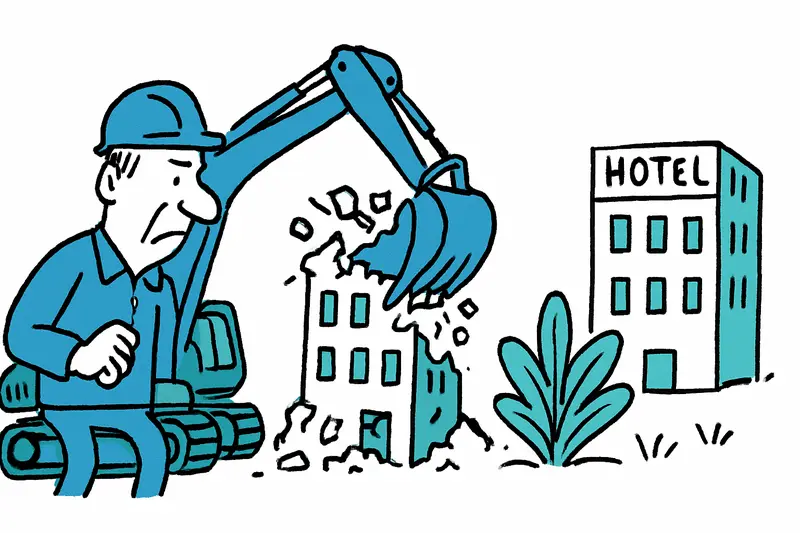
Two abandoned hotels in Paguera and Magaluf are being demolished. Calvià's plan: more green, fewer ruins. A chance — but also open questions about implementation.
Dust, excavators and the quiet question about the future
In the early morning one could hear the familiar sounds: jackhammers, the crunch of gravel under the tracks of an excavator, and the scent of freshly brewed café con leche drifting through the streets of Paguera and Magaluf. Two long-empty buildings — the former Hostal Colón and the Hotel Teix — are currently being demolished. For many residents these interventions are long overdue. For others, they mark the start of a period of uncertainty (Vacancy turns green? Calvià plans demolition of two hotels – opportunities and risks for Paguera and Magaluf).
What is happening exactly?
The municipality of Calvià is having the two plots of around 600 square meters cleared. According to the official statement, around €1.5 million from European Next Generation funds (European Commission page on NextGenerationEU) will flow into the project. Fences, security personnel and small groups of curious neighbors have been standing by since the first excavator movements. The plan: to turn ruins into public green spaces with trees, playgrounds and benches — not new widespread building.
The central question
Will removing dilapidated buildings really make Paguera and Magaluf quieter, greener and more sustainable — or is it just a cosmetic measure with limited effect? This question is not merely rhetorical. It touches on financing, maintenance, tourism pressure and the way local politics makes planning decisions, as in Calvià plans demolition of eleven vacant shops in Magaluf.
What is often left unsaid
In the public discourse it is sometimes overlooked what comes after the demolition: Who will pay for the maintenance of the new green space in ten years? Are sustainable irrigation systems and robust planting that can cope with Mallorca's summers planned? What conditions are tied to the EU funds — and how flexible is the municipality if needs change? Such details decide whether a pretty visualization becomes a lively place or another neglected corner.
Voices from the neighborhood — and what they mean
"Finally some green instead of a ruin," says an older resident from Paguera who walks the Passeig early in the morning and takes her dog out. A young restaurateur in Magaluf, whose bar is two streets away, is cautiously optimistic: "If the construction work is well organized, it can help the neighborhood. But the transition period will be dusty." Such voices show: the local economy and everyday life are sensitive. Construction sites affect delivery times, seating areas, and sometimes regulars who prefer not to walk through the noise.
Risks not to forget
A demolition is always an intervention in the urban fabric. Possible risks: inappropriate planting that requires a lot of water; sterile squares without shade; or areas that are public in name but for which no one feels truly responsible. And not least the gentrification question: does new green create attractive spaces that then invite higher investment and rising prices?
Concrete opportunities — if they are used
The measure brings real opportunities: urban heat islands can be reduced, residents' quality of life can increase, children get space to play and small shops gain attractiveness. If Calvià thinks ahead now — and aligns with broader projects such as Calvià invests 25 million: paving, the Finca, Paguera — smart planning or just patchwork? — the new areas could be more than just lawns: urban nature with native shrubs, shade-giving trees, water-saving technology and spaces for local activities.
Pragmatic suggestions for implementation
To prevent the demolition from being a flash in the pan, the following steps could help: transparent schedules and communication during construction; a dedicated maintenance fund for care and irrigation; planting with native, drought-tolerant species; barrier-free paths and robust seating areas; involvement of residents in the design — for example through workshops or tree sponsorships. Solar lighting and permeable surfaces can additionally increase sustainability and the quality of stay.
How will the character of the places change?
Some changes happen quietly: a new tree, a small playground, a couple sitting on a bench. Others are visible: fewer broken facades, better footpaths. Whether Paguera and Magaluf become "quieter" in the long term depends less on the demolition itself than on political long-term commitment: maintenance contracts, the inclusion of local businesses and clear standards for future plots.
Conclusion — an opportunity with conditions
The demolition of the two hotels is a necessary first step. It can bring sustainable improvements — if Calvià plans the next steps prudently and allocates resources for care and upkeep. Otherwise, an apparent gain could turn into another construction site, this time of missing responsibility. Until the first benches and trees are visible, the mornings at the sites remain dusty, the café smells stronger, and many neighbors watch closely. And that is a good thing: public scrutiny is the best guarantee that a project not only looks green but stays green.
We remain on site, listen and will report further when the first trees are planted.
Frequently asked questions
What is happening to the old Hostal Colón and Hotel Teix in Calvià?
Will the demolition in Paguera and Magaluf make the area greener?
How is the demolition in Calvià being funded?
What kind of public space is planned for the former hotel sites in Calvià?
Why are residents in Paguera and Magaluf watching the demolition closely?
What are the main risks of turning old hotel plots into green spaces in Mallorca?
Will the demolition in Magaluf affect nearby shops and restaurants?
What should a green space in Mallorca include to work well in summer?
Similar News

When coercive fines aren't enough: Could holiday rental owners soon face prosecution?
The island administration is stepping up action against unauthorized holiday rentals: high daily coercive fines up to €5...

Palma Airport on an Expansion Course — Who Decides How Much Growth the Island Needs?
Aena and Madrid are planning multi-million euro investments for Son Sant Joan and project higher capacities. Concern is ...
Who Gets Left Out? Why Overbookings Will Hit Many Mallorca Travelers This Summer
On hot check-in days at Son Sant Joan, frustrated travelers pile up. New figures from Reclamador.es show that a large sh...
When the Handyman Came: How an Engagement Ring Disappeared in Mallorca and What It Says About Trust
During a repair in Andratx a highly personal engagement ring went missing — a case that calls not only for punishment bu...

How Burglars Test Fincas in Mallorca — and What You Can Do About It
The Spanish National Police warn of a simple but effective trick: small markings on doors reveal whether a finca is occu...
More to explore
Discover more interesting content

Can Cap de Bou

Townhouse Lleo 72
