
Cameras on the Ma-10: More Safety or Silent Surveillance?
The island council plans around 40 cameras along the Ma-10 — a step against nighttime street racing, but data protection, effectiveness and side effects remain unclear. What is missing are clear success criteria, independent audits and a concrete Plan B.
Cameras on the Ma-10: More Safety or Silent Surveillance?
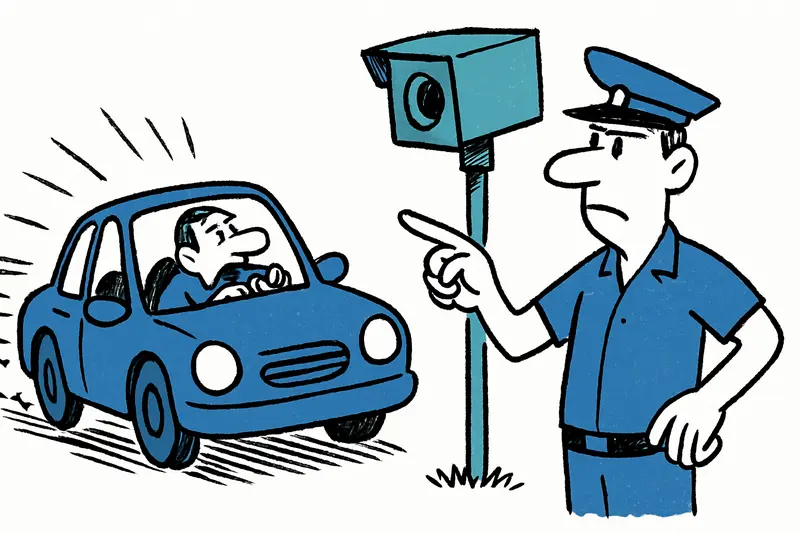
On clear autumn evenings the Tramuntana sits like a watching giant above the coast: engine roars mix with the clink of glasses on terraces, headlights cut white lines on the stone walls and from Valldemossa or Deià you can occasionally hear neighbours hoping for fresh air. It is precisely here, on the Ma-10, that the island council now wants to act: around 40 cameras along the mountain road, with a price tag of just under €1.2 million, as reported in Cámaras en la Ma-10: ¿Más seguridad o vigilancia silenciosa?. Parts of the system are to include automatic number plate recognition (ANPR) and noise measurement devices.
The key question that has so far been overlooked
It is too simple to ask: “Are cameras coming?” More important is the guiding question that is often overlooked: will cameras really solve the problem without creating new ones? In the short term the idea sounds reassuring: less night-time noise, faster intervention. In the long term, however, effects threaten to arise that are barely discussed — for example the displacement of races to smaller side roads, technical failures in strong winds in the Tramuntana, or a later repurposing of the systems.
What is rarely discussed
The public debate usually revolves around deterrence and sanctions. Less considered are the side effects: how does the presence of cameras influence driving behaviour on alternative routes? What are the consequences of a total failure at a windy pass? And who checks whether the noise meters reliably distinguish between normal cornering and deliberate revving in practice? Such technical and spatial shifts can very well simply shift the problems instead of solving them.
Privacy, access and procedural security
ANPR systems and video recordings touch sensitive civil rights. Who is allowed to view the data? How long are licence plates stored? Are false positives systematically checked? According to the island council only clearly documented offences should be passed on — that is the absolute minimum requirement. A more appropriate approach would be a transparent data management system with defined deletion periods, audit logs and external oversight, for example by an independent local data protection task force that reports publicly on a regular basis.
Technology is not enough — road design matters
Cameras can see, but they do not heal the cause. What is often missing is the connection of technology with structural and visible measures: narrowing of lanes, conspicuous bollards in critical bends, fixed speed displays and targeted closures on high-risk nights. Experience also shows: visible presence of the Guardia Civil and targeted controls at weekends are deterrent. An integrated mix of measures produces demonstrably better results than mere surveillance.
A pragmatic timetable: pilot instead of permanent surveillance
It would be sensible to start the project as a pilot: only a few carefully selected locations, clearly limited operating hours (mainly at night and on weekends) and visible notices for road users. This should include a two-year period with a binding evaluation and an exit strategy if the target values are not met. This way the step remains reversible and controllable — and protects against a creeping expansion of surveillance; local coverage such as Ma-10 sin cámaras: ¿Por qué dura tanto la espera en la Tramuntana? underscores why a pilot is preferable.
Concrete proposals for the tender
What should be included in the tender and follow-up documents: precise data deletion deadlines, independent auditing of detection algorithms, mandatory citizen participation (a panel made up of residents, drivers and legal experts), and a maintenance budget for calibrations and quality controls. Visible signs and an information campaign would be simple preventive measures. And: it is better to start with a few well-placed measurement points than to install 40 devices along the entire route immediately.
Conclusion
The planned cameras are a step in the right direction — but not a panacea. What will be decisive is how transparent the planning and use are, who has access to the data and whether the technology becomes part of a comprehensive package of measures. Otherwise the quiet realisation remains: the engines may have become a little quieter, but residents' trust in fair and limited control is still missing.
Frequently asked questions
What are the planned cameras on the Ma-10 in Mallorca for?
Will the new Ma-10 cameras in Mallorca stop noisy driving?
How could Ma-10 cameras in Mallorca affect privacy?
Are there concerns that Ma-10 cameras will simply move the problem to other roads in Mallorca?
What is the best way to control noisy driving on Mallorca’s Ma-10?
Why is the Ma-10 in the Tramuntana especially difficult to monitor with cameras?
Would a pilot project make sense for Ma-10 cameras in Mallorca?
Which parts of Valldemossa and Deià are most affected by Ma-10 traffic?
Similar News

Release after bloody attack in Palma: Why the court's decision raises questions
An 18-year-old who allegedly inflicted a serious neck injury on a man at Plaza Gomila using a wristwatch wrapped around ...
Kidnappings in Inca: Three young men forced into car trunks and abused in the forest – a reality check
In Inca, three 18-year-old men were forced into car trunks by masked assailants at the Plaça des Bestiar, taken to a for...
Spreading Massification: The Brake That Still Has Much Work to Do
Marga Prohens announces limits on volume tourism. The measures sound harsh — but are they enough to save everyday life, ...

Through the Keyhole onto the Party Yacht: How Daniela Katzenberger Is Planning Her 40th on Mallorca
Daniela Katzenberger turns 40 and wants to celebrate it on the island — likely with a boat, cake and her mother. A relax...
By Boat Instead of the Road: Palma's Water Bus — a Reality Check
The 'Bus Nàutic' launches in two stages — but questions remain over interim operations, fares and environmental requirem...
More to explore
Discover more interesting content

Can Cap de Bou

Townhouse Lleo 72
