
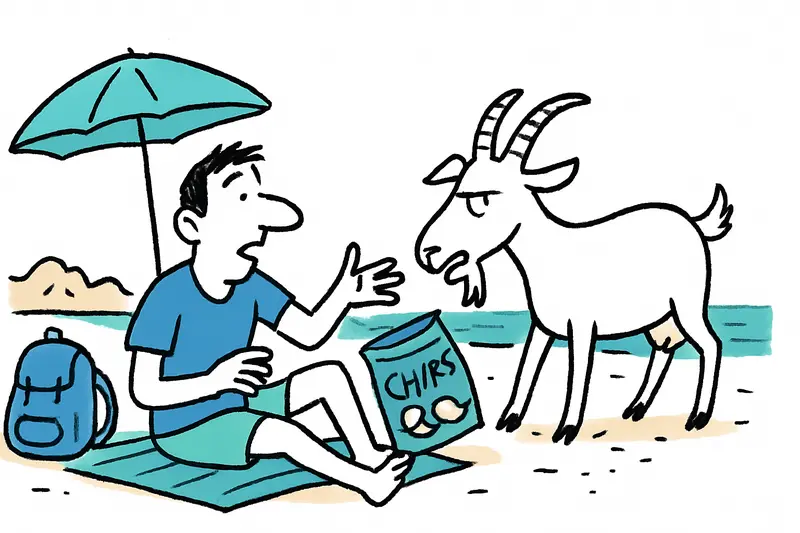
When the Goat Wants the Chips: Beach Visit in Cala Sant Vicenç and a Bigger Problem
A wild goat strolls along the beach of Cala Sant Vicenç between coolers and beach bags and steals a bag of chips. The scene seems harmless — but it stands for a growing conflict between humans and nature on Mallorca.
When the Goat Wants the Chips: Beach Visit in Cala Sant Vicenç and a Bigger Problem
How much trouble can be in a bag of chips?
On a hot morning in Cala Sant Vicenç, the sea shimmering in the sun, children shouting and the coolers smelling of grilled sausages and sunscreen, a wild goat wandered among towels, backpacks and picnic blankets. It tore a bag of potato chips out of a bag, the owner grabbed it back, and the goat moved on in search of something edible. The scene prompted some laughter, others shrugged. In short: a typical summer moment with an unexpected animal guest.
But the trifle is only a symptom. The question is: how do we deal with the fact that more and more wild goats from the Tramuntana and the southwest of the island are coming into settlements, gardens and onto beaches?
The reasons are well known: hot, dry summers reduce food and water availability in the mountains. On Mallorca wild goats have hardly any natural predators and their numbers have risen over the long term. Where people are, treats are often quickly found, whether held out intentionally or stored unsecured. A herd of around 30 goats and 20 kids caused a stir last year in Cala Llamp; such incidents repeat at different locations.
There has already been a political response: in November 2025 the island council banned feeding the animals at particularly affected sites. That is right, but it is not enough. Bans without enforcement and without alternative offers remain paper tigers.
From the perspective of environment and everyday life several building blocks are missing in the debate: first, systematic monitoring — we only know the peak events. How many goats are permanently active near settlements? Second, practical on-site communication is often lacking: multilingual signs, flyers at beach stations, notices at waste containers. Third: concrete measures against the causes, not just the symptoms.
An ordinary Sunday on the coast shows where things fail: beach kiosks with open supplies, tourists leaving food unattended, and bins without lids — an invitation for curious four-legged visitors. In villages gardeners complain about dug-up beds, farmers about eaten crops. On the road goats can create traffic hazards. This is neither just a tourist anecdote nor purely a conservation issue. It affects people in their everyday life.
So what to do? Concrete, sensible approaches can be tackled without panicking or endless debate:
1. Block access rather than try to train animals: More secure waste containers on beaches and in residential areas, lockable coolers at kiosks, storage instructions for picnics. If the treat is gone, visitors rarely return.
2. Visible, multilingual education: Boards at access roads, notices at tourist offices and beach posts, short videos on municipalities social channels: feeding prohibited must explain why — for tourists as well as locals.
3. Research and monitoring: Recording population trends, mapping hotspots, data on damage to agriculture and vegetation. Only with reliable figures can long-term measures be planned.
4. Ecological compensation measures: Reforestation and water provision in higher areas, where possible temporarily limited watering points in the uplands that can keep the animals away. Such measures need scientific supervision so they do not create new problems.
5. Local coordination: Municipalities, island council, conservation groups and agriculture need to reach out — joint action plans can link short-term emergency help and long-term strategies.
Some of these points are unpopular, others simple and immediately implementable. The most important ingredient is attitude: whoever gives a goat something to eat once exchanges behavior patterns that are not easily reversed. The ban on feeding is a good start, but the rest is needed — practical solutions, controls and information.
Back on the beach: the goat finally returned to the cliffs as shadows lengthened and the smell of salt called it back. The bag of chips remained almost symbolically behind — a small sacrifice, a big problem. If we do not begin to act systematically, these are only the first episodes of a longer series.
Conclusion: The animal excursion to Cala Sant Vicenç is a nice story to tell. Behind it, however, lies a supply, protection and administrative problem that Mallorca must take seriously. Practical measures, clear communication and local cooperation can prevent the next goat from confidently heading straight for the sun lounger.
Frequently asked questions
What is the best time to visit Mallorca for weather and swimming?
Do I need a car to explore Mallorca, or are there good public transport options?
What are the top activities for a first visit to Mallorca?
How should I pack for a Mallorca trip?
Is swimming safe in Mallorca's waters, and which beaches are best for swimming?
Are there family-friendly options or activities in Mallorca?
How can I travel responsibly and respect Mallorca's nature and local communities?
What are good day trips from Palma to experience Mallorca?
Similar News
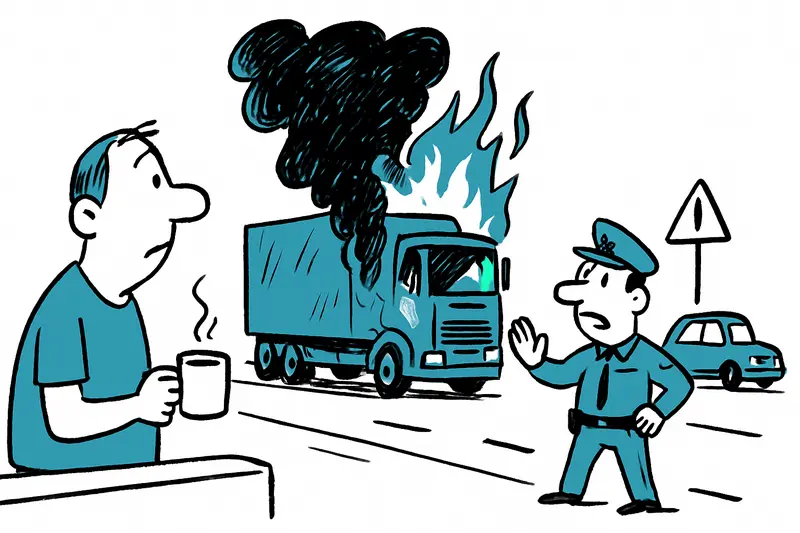
Fire on the MA-1 near Magaluf: Why a burning truck raises more questions than it answers
A truck caught fire on the MA-1 near the Magaluf exit on Monday morning. No injuries — but the incident reveals weakness...

Artificial Lake in Sa Pedrera: Luxury Show Despite Water Shortage
An organizer filled an artificial lake in Sa Pedrera for a solar eclipse party. How much water was actually used — and w...
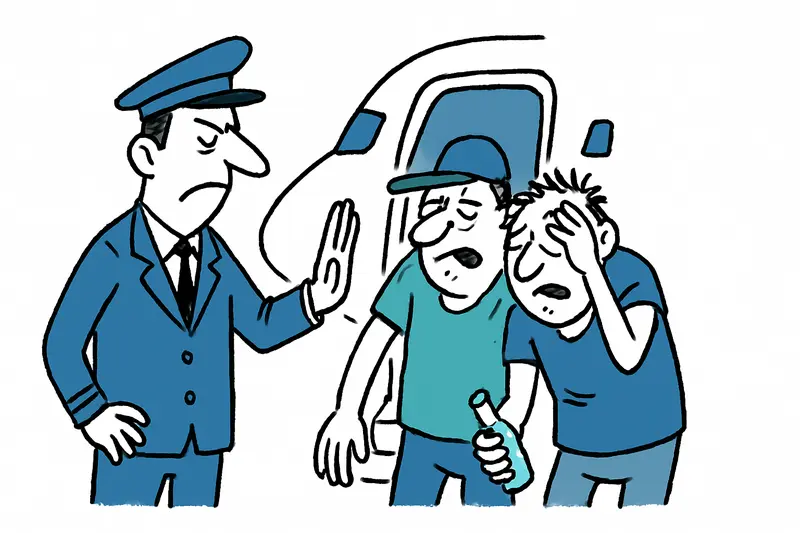
Pilot denies two drunk men boarding – Why a bachelor party en route to Mallorca got out of hand
In Klagenfurt a pilot stopped two heavily intoxicated men from boarding en route to Mallorca. Two police interventions, ...

Nine months of construction at the airport: Three kilometres of sewage pipeline to be replaced
Palma Airport is getting a new, roughly three-kilometre-long sewage pipeline. The works will last nine months and may cr...
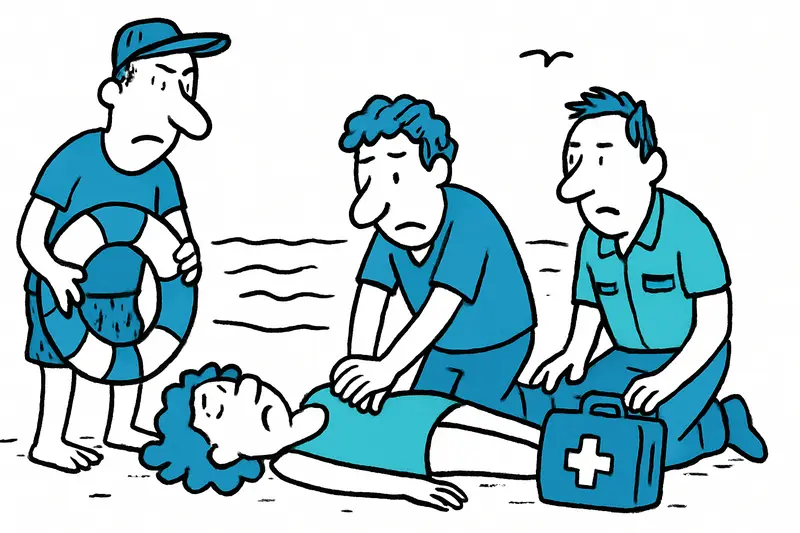
Beach Emergency in Portals Nous: Why Seconds Can Decide Life or Death
A visitor from Asturias suffered a cardiac arrest on Friday afternoon off Portals Nous and was brought ashore after prol...
More to explore
Discover more interesting content

Boat Tour with BBQ along Es Trenc Beach

Private transfer from Mallorca Airport (PMI) to Pollensa
