
Beach Emergency in Portals Nous: Why Seconds Can Decide Life or Death
Beach Emergency in Portals Nous: Why Seconds Can Decide Life or Death
A visitor from Asturias suffered a cardiac arrest on Friday afternoon off Portals Nous and was brought ashore after prolonged resuscitation. Why do rescue measures take so long, and what is missing on our beaches?
Beach Emergency in Portals Nous: Why Seconds Can Decide Life or Death
Key question: Would the outcome have been different if more people and equipment had intervened immediately on site?
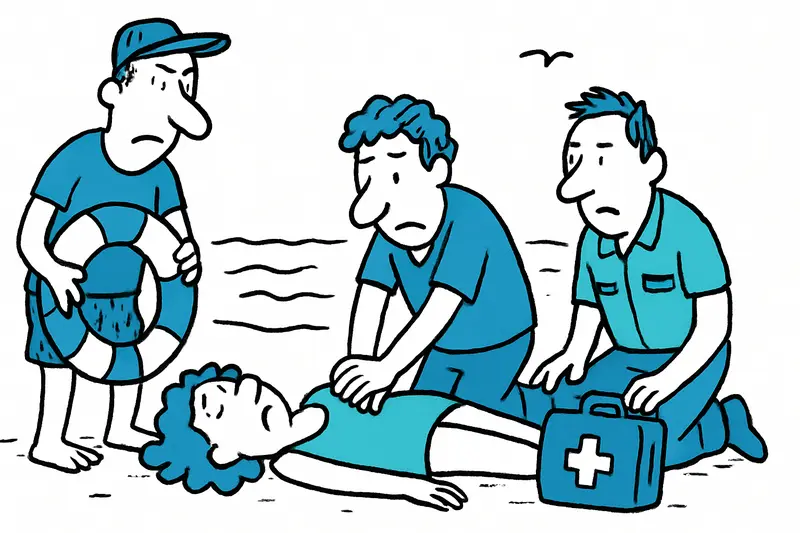
Late on Friday afternoon, around 5:40 pm, the normally lively beach of Portals Nous turned into a scene of focused work. Emergency crews recovered a woman in her around 60s from the water. According to reports, she suffered a cardiac arrest on land. Helpers began resuscitation measures immediately; it is said the resuscitation lasted at least an hour, and the rescue teams continued advanced measures after additional units arrived – including an ambulance from SAMU 061, a logistics vehicle “Lima”, the command vehicle “Delta” and patrols of the Calvià local police. The woman is said to be from mainland Spain and was visiting her daughter in Mallorca.
Critical analysis: chain of rescue, time and visibility
This situation makes two things clear: time is the decisive factor. A cardiac arrest requires rapid action in the first minutes, not hours. Reports indicate that professionals on site maintained the resuscitation for a long time – admirable, but also alarming: Why was there no automated external defibrillator (AED) immediately available on site? Why was a logistics vehicle alerted instead of the rescue chain continuing seamlessly on the beach? I do not mean to make accusations, but to question procedures: How long does it take for additional, specialized help from hospitals to become available, and what role do walkers, beachgoers and tour guides play in the first minute?
What is missing in the public debate
In discussions about bathing accidents, the conversation often turns to “more rescue boats” or “stricter zones for yachts.” This obscures the simple, practical question: Do enough people on the beach know the basic rules of resuscitation? Where are the AEDs located, and are they accessible around the clock, as tragic incidents such as the death while swimming in Colònia de Sant Pere show. Barriers that ambulances face at promenade or parking access points – narrow streets, parked cars, tourists blocking passages – are rarely discussed. The responsibility of private beach operators and boat rental companies is also seldom addressed.
A typical scene from Portals Nous
Anyone who walks along the Paseo Marítimo on a Sunday knows the picture: cafés, children’s laughter, the hum of air conditioners and the distant engines of yachts in the harbor. People carry shopping bags, dogs pull on leashes, cyclists look for gaps. This very jumble can help – if people know how to intervene – or it can hinder, if an ambulance cannot reach the narrow path quickly enough. I see families every day at small beach access points; many of them do not know where the nearest AED is, let alone whether someone at the facility could operate it.
Concrete solutions
There are practical steps that can be implemented relatively quickly and would significantly increase the chances for those affected: 1) AED network on main beaches: clearly marked, easily accessible cabinets that are publicly available 24/7. 2) Visible signage and QR codes at every beach access point with emergency numbers, the location of the nearest AED and short instructions in several languages. 3) Regular public basic trainings in municipalities and hotels: 30-minute CPR briefings significantly reduce hesitation. 4) Better coordination of access routes: enforce parking rules and no-stopping zones at beach entrances so ambulances have clear passage. 5) Boat controls: clear marking of bathing zones and increased patrols so boats do not endanger swimmers. 6) An audible or guiding system for rescue services on the beach: short sirens or optical signals that unambiguously give priority to emergency personnel.
Practical implementation and obstacles
Purchasing AEDs is not complicated, but it requires maintenance and staff training. QR signs cost almost nothing but provide transparency for guests who do not speak Mallorquin. Political debates about responsibilities – municipality versus island government – are often the reason such measures are delayed. Coastal life is not an administrative matter; these are people who can be better protected if responsibilities are clearly defined and resources are used purposefully.
Pointed conclusion
The incident in Portals Nous is not a one-off in the summer chronicle; similar events have included the tourist who died after a cardiac arrest in Can Picafort, the successful resuscitation in Peguera, a case where a holidaymaker's rapid action at Playa de Muro saved a life, and a tourist resuscitated at Port d'Andratx. On an island that lives from tourism and where the sea is part of everyday life, preventive measures must become as commonplace as lifebuoys and sunshades. If we do not want seconds to lead to dramatic outcomes, we must start with simple, concrete actions: AEDs, accessibility, brief training efforts and clear parking and boating management. That would save lives. And in the end it would also help those who tried to save a life that Friday afternoon – on site, often improvising and giving their all.
Frequently asked questions
When is the best time to visit Mallorca for warm weather and lighter crowds?
Should I rent a car in Mallorca or rely on public transport?
What should I pack for a Mallorca trip?
Is it safe to swim at Mallorca's beaches?
What outdoor activities should I try in Mallorca?
Which towns or areas on Mallorca are worth visiting?
How does Mallorca’s weather change through the year and what should I wear?
Is Mallorca good for families with kids?
Similar News
Arrest in Son Sant Joan: Tourist attacks taxi driver — what the incident reveals about the island
A dispute over a pedestrian crossing escalated at Palma Airport: a British tourist struck two taxi drivers and damaged a...
Rain in Sight – Will the Water Be Enough for Mallorca by the End of the Week?
Aemet predicts showers at the end of the week. But a few drops and a slight temperature drop are not enough to ease the ...
Community at Sea: A Sailing Club in Port d'Andratx Opens Its Hatches
In the harbor of Port d'Andratx, residents share a 13-metre sailing yacht, organize trips themselves and thus keep a sma...
28 Dead on the Way to Mallorca: What This Shipwreck Says About Rescue in the Mediterranean
A boat traveling from Algeria to the Balearic Islands capsizes, 28 people die and only four survive. Who is responsible,...
Graffiti on the Ma-10: "Mallorca is not Germany" – What's behind it, what to do?
On the Ma-10 between Estellencs and Andratx the German sentence "Mallorca ist nicht Deutschland" appeared on several roa...
More to explore
Discover more interesting content

Boat Tour with BBQ along Es Trenc Beach

Private transfer from Mallorca Airport (PMI) to Pollensa
