
Pilot denies two drunk men boarding – Why a bachelor party en route to Mallorca got out of hand
In Klagenfurt a pilot stopped two heavily intoxicated men from boarding en route to Mallorca. Two police interventions, injuries and multiple arrests followed. A simple security decision exposed deeper gaps — and questions we should be asking in Mallorca.
Pilot denies two drunk men boarding – Why a bachelor party en route to Mallorca got out of hand
Key question: Is the responsibility of crew and police sufficient to protect flights and passengers?
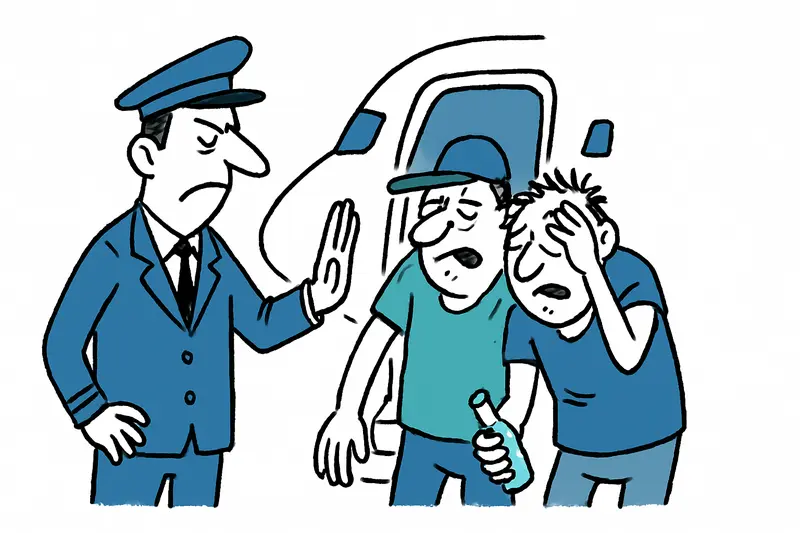
Late on Friday evening before a flight to Mallorca, cabin crew in Klagenfurt stopped two men who were clearly drunk. They were part of a group of eight people who were apparently celebrating a bachelor party. When the pilot refused the duo access to the aircraft, the situation escalated to the point that the police had to intervene twice. Four people were temporarily detained, another was reported for an administrative offense, and one officer suffered minor injuries. The aircraft departed about an hour late.
Such reports quickly lead to finger-pointing: some praise the crew, others mock overreacting security staff, and some see a party culture problem. The sober question remains: What obligations do airlines, airports and local police have — and how well do the protective mechanisms work together?
Critical analysis: The pilot’s decision not to allow intoxicated passengers on board is legally justified and practically sensible. Aircraft doors cannot simply be reopened, and an unpredictable person on board jeopardizes operations and crew. But the responsibility does not end at the gate. That is where gaps appear.
First: prevention in the airport environment. If bars, duty-free shops or event offerings near the gate openly promote alcoholic options before boarding, the risk that people arrive at the gate heavily intoxicated increases. Second: staff training. Airport and airline personnel need clear protocols for handling drunk groups without escalating the situation. Third: police resources. In small regional airports like Klagenfurt, the availability of officers is limited; delays and repeat interventions consume time and increase the strain on officers and travellers.
What is often missing in public debate is the perspective of residents and destinations. In Mallorca, a delayed or canceled flight does not only mean irritated holidaymakers but also logistical headaches for landlords, shuttle services and the hospitality industry. Entire holidays can be derailed between arriving at Son Sant Joan airport and the first sunset. There is also little discussion about how tour operators, hotels and event planners could proactively contribute to prevention at bachelor parties.
Local perspective from Mallorca: Early in the morning in front of the Palma terminal you can hear the monotone beeping of access barriers, taxi drivers waving with outstretched arms, and a group of young people buying last bottles of water at the kiosk next to the bus stand. Scenes like these seem peaceful, yet they are part of the same system: when a party group arrives half-hungover in the morning, the night before failed in several places — at the bar, on the bus, sometimes also in communication between organizers and guests.
Concrete solutions:
1) Clear rules and visible notices: Airports and airlines should post clearer warnings about being unfit to travel due to alcohol and require information duties from event organizers.
2) Training and de-escalation: Gate staff need regular conflict-management training; basic de-escalation techniques can prevent verbal disputes from becoming physical.
3) Alcohol prevention before the gate: Cooperation with bars and taxi companies near airports: limits on alcohol to-go, later serving cut-off times or mandatory notices for large groups.
4) Deployment plans for small airports: State police forces should have standardized rapid support protocols so that repeat interventions and injuries become rarer.
5) Organizer responsibility: Providers of bachelor parties should contractually include measures to reduce risks — for example shuttle solutions that prevent heavy drinking at the gate.
Conclusion: Denying two alcohol-impaired passengers boarding on a Mallorca flight was likely the right step for onboard safety. Nevertheless, the incident shows that a single intervention is not enough. Airports, airlines, local providers and the police must systematically prevent celebrations at gates from ending in violent scenes. In Mallorca, the consequences of such disruptions are felt directly — from lost holiday hours to overwhelmed hoteliers. Those who combine holidays and nightlife need not only a party night, but also a plan B.
Frequently asked questions
Can airlines refuse boarding to intoxicated passengers on Mallorca-bound flights?
How can bachelor party celebrations en route to the island affect flights?
What responsibilities should airlines, airports, and police share to prevent gate incidents on Mallorca-bound travel?
What measures can Son Sant Joan airport take to reduce gate-related incidents?
What role do bachelor party organizers have in reducing travel risk to Mallorca?
Why is airport-level prevention important for island trips?
What kind of de-escalation training should gate staff have at airports serving the island?
How do flight delays to Mallorca affect local hospitality and transport?
Similar News

Nine months of construction at the airport: Three kilometres of sewage pipeline to be replaced
Palma Airport is getting a new, roughly three-kilometre-long sewage pipeline. The works will last nine months and may cr...
Beach Emergency in Portals Nous: Why Seconds Can Decide Life or Death
A visitor from Asturias suffered a cardiac arrest on Friday afternoon off Portals Nous and was brought ashore after prol...

Arrest in Son Sant Joan: Tourist attacks taxi driver — what the incident reveals about the island
A dispute over a pedestrian crossing escalated at Palma Airport: a British tourist struck two taxi drivers and damaged a...
Rain in Sight – Will the Water Be Enough for Mallorca by the End of the Week?
Aemet predicts showers at the end of the week. But a few drops and a slight temperature drop are not enough to ease the ...

Community at Sea: A Sailing Club in Port d'Andratx Opens Its Hatches
In the harbor of Port d'Andratx, residents share a 13-metre sailing yacht, organize trips themselves and thus keep a sma...
More to explore
Discover more interesting content

Boat Tour with BBQ along Es Trenc Beach

Private transfer from Mallorca Airport (PMI) to Pollensa
