
Why the Camí de Can Capó Became a Death Trap — and What Must Be Done Now
Why the Camí de Can Capó Became a Death Trap — and What Must Be Done Now
In Son Oms near the airport another fatal accident has reignited the debate over traffic on the Camí de Can Capó. A chronology of the crashes, a look at possible causes and concrete proposals for rapid measures.
Why the Camí de Can Capó Became a Death Trap — and What Must Be Done Now
Key question: How many victims does this stretch of road need before real change happens?
The Camí de Can Capó in Son Oms, near the airport, has become a hotspot for serious accidents over the past roughly two years. Just this week a 27-year-old man from Italy lost his life after being struck by a car near the Amok nightclub at around 00:25. The driver showed no positive results on alcohol or drug tests; the Guardia Civil is continuing its investigation. This tragic case is part of a series of collisions involving cars, trucks, motorcycles, bicycles and pedestrians, as reported in Third traffic death in a few days: Do Palma's night streets need to be safer?.
The cluster of incidents in the observation period begins on 24 September 2024 with a collision between a car and a truck carrying vehicles; the truck driver was injured at that time. On 16 November 2024 a young man was hit by a minibus that reportedly fled the scene. 2025 saw several severe accidents: on 27 January a car collided with a group of German cyclists (seven injured, six hospitalized). On 4 April a motorcyclist suffered life-threatening injuries; on 27 April another motorcyclist died after a rear-end collision. On 31 May a cyclist was seriously injured while turning when an SUV struck him. On 16 July two vehicles collided head-on, leaving eight people injured, two critically. At the end of 2025 there was a rear-end collision involving multiple cars and injured people. Similar serious accidents have also occurred on the nearby Camí de sa Síquia.
Critical analysis: the numbers alone tell a grim story, but they do not explain why this particular section is so vulnerable. Nightlife meets industry on site: nightclubs, businesses with truck traffic, shift workers, bicycle commuters and pedestrians share the same routes, often with poor lighting and without clear separation between road users. Especially in the early morning hours and at night — when many of the mentioned accidents occurred — tired people, pedestrians, cyclists and heavy vehicles mix. The road’s long, straight sections invite higher speeds; narrow shoulders or missing sidewalks force pedestrians close to the carriageway.
What public debate often misses: hard facts about road design and responsibilities. There is rarely an open discussion about the specific technical deficiencies (lit pedestrian crossings, curb guidance, crossing points, signage) and which authority is responsible for which measures. Continuous data collection on speed, traffic volumes by time of day and pedestrian flows is missing. Also marginalized is the perspective of those who use this road daily: shift workers, logistics drivers, cyclists and night revelers who often choose improvised routes because safe alternatives are lacking.
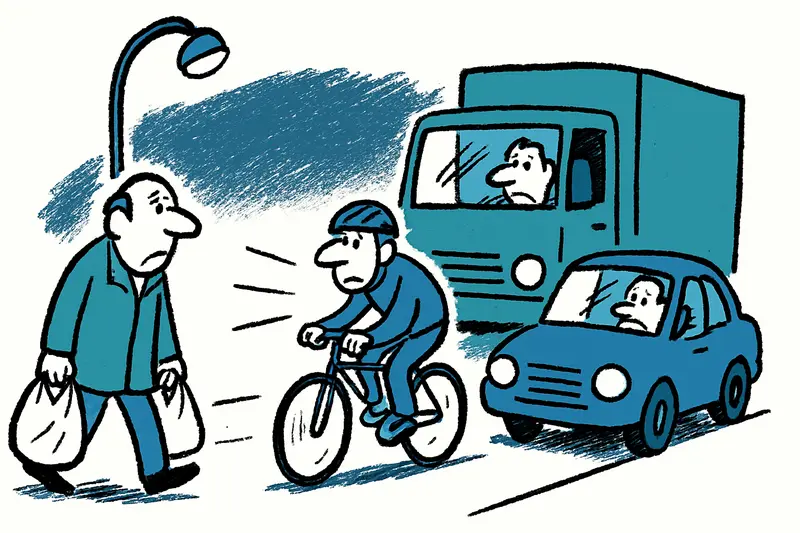
Everyday scene in Son Oms: on a Friday at half past midnight you don’t just hear engines, but also music from the venues, the dull roar of departing planes and the clatter of forklifts in the industrial halls. Pedestrians with plastic bags from night shifts walk along the carriageway, cyclists cross the Camí in the glare of headlights, and trucks wind past. Those who live or work here know the flickering road surface, the sharp cones of headlight beams — and the fear that grows with every overtaking maneuver.
Concrete short-term solutions: immediately measurable steps would include the prompt introduction of a visible speed reduction (mobile signs and enforcement), more presence by Guardia Civil or local police patrols during critical night hours, temporary narrowing measures to slow traffic (mobile lane reductions, warning barriers), targeted speed checks with mobile radar units and improved lighting at the critical crossing points near the nightclub and entrances to industrial areas.
Medium-term: structural measures such as marked cycle lanes, raised pedestrian crossings (raised zebra crossings), clear sidewalks, improved road drainage and an audit of carriageway width so trucks and bicycles do not have to share the same narrow edge. Where possible, turning lanes and better sightlines for turning traffic should be created. A comprehensive traffic study for the whole Son Oms area that takes into account operating hours of large businesses, nightlife venues and shift changes would also be sensible.
Long-term: a restructuring of traffic routing in and around Son Oms that separates truck routes from pedestrian zones, possibly through diversions or time-staggered access. Investment in public night transport could reduce the number of pedestrians on the road. Also conceivable: permanent traffic lights at particularly dangerous junctions and consideration of whether widespread speed limits need to be introduced on a lasting basis.
Conclusion: looking at the list of accidents reveals a pattern: mixed traffic, limited protection for vulnerable road users, and an accumulation of risk at night. Until concrete infrastructure measures are implemented, short-term interventions and stricter enforcement remain the most realistic levers to prevent further injuries and deaths. Authorities are aware of the incidents; the question is whether they also recognize the strain on residents and those who work here — and will act before another night claims another life.
Frequently asked questions
What is the best time of year to visit Mallorca for sunny weather?
Is it suitable to swim in Mallorca year-round?
What should I pack for a Mallorca trip?
Do I need a car to explore Mallorca or are public transport options enough?
What family-friendly activities are there in Mallorca?
What is Mallorca's climate like in winter?
What are common Mallorcan dishes and dining tips?
Is Mallorca safe for solo travelers?
Similar News

When Palma Becomes a Zombie Zone: 'Mallorca Z', AI and the Thought Experiment with Side Effects
A Mallorcan lawyer built a strategy game over a weekend using AI that treats the island as the scene of a zombie crisis....
Learning to Wait: How Leisure Is Making Space Again on Mallorca
Waiting doesn't have to be lost time. A mild October day in Palma shows how small pauses slow down our lives — and what ...
Cala en Brut: Body in the Sea — a Fatal Autumn Day and What’s Missing
In Cala en Brut (Ciutadella) a man's body was recovered during storm Dana "Adam". Why do autumn storms in the Balearics ...
When the road is gone: Port de Valldemossa cut off after storm 'Adam'
After heavy rains a retaining wall gave way and two sections of mountain road MA-1131 became impassable. Why are rural p...

Crypto Promises, Ferry, Arrest: How Investors in Mallorca and the Neighboring Islands Fall into the Trap
A Swiss man wanted under a German arrest warrant was captured in Ciutadella. The case raises questions about cross-borde...
More to explore
Discover more interesting content

Can Cap de Bou

Townhouse Lleo 72
