
Caution at Illetes and Cala Comtessa: When Small Fish Nibble Bathers — a Reality Check
Caution at Illetes and Cala Comtessa: When Small Fish Nibble Bathers — a Reality Check
Over the weekend, small fish again nibbled at bathers' feet and legs at Illetes and Cala Comtessa. Why this happens, what is missing on site and how to protect yourself.
Caution at Illetes and Cala Comtessa: When Small Fish Nibble Bathers — a Reality Check
Guiding question: How dangerous are these incidents really and what's missing in the response?
Last weekend, holidaymakers and locals at the beaches of Beach robbery in Illetes: When a moment ruins a holiday and Cala Comtessa reported that small sea fish repeatedly nibbled at feet and legs. Such encounters are not new in Mallorca during the summer, but the clustering of incidents on heavily visited beaches is causing concern — not just because of the brief shock, but because some people also experienced bleeding.
Critical analysis: Why is this happening more often now? The warm water in the Mediterranean plays a role: higher temperatures increase the metabolism and activity of many fish species, and young fish increasingly search for food in shallow zones. In addition, fish become tame where people feed them and may approach stationary bathers. The description of the animals fits sea breams (Diplodus species), which have strong teeth and like to nibble on dead skin or crusts.
What's missing in the public discourse: reports usually focus on individual incidents and rarely on systematic recording. There are no visible, uniform reporting channels on the beaches: reporting to lifeguards, to the municipality or to a central authority often happens by chance. Also insufficiently examined is how often tourists feed fish and how this permanently changes fish behavior, a gap noted in Sensors on Mallorca's Beaches: Help for Self-Regulation or Creeping Surveillance?.
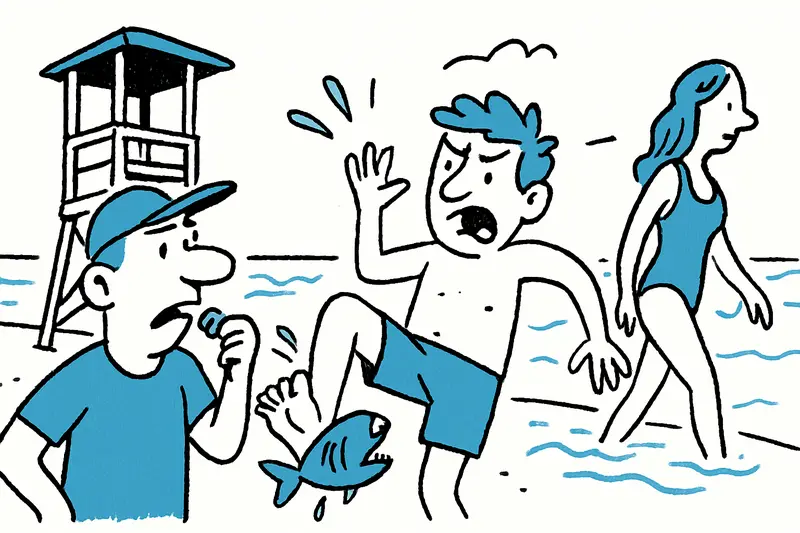
An everyday scene at Illetes: in the morning, when the sun is already strong, children's shoes squeak in the sand, ice clinks at the beach bar, motorboats dock in the bay. On the shore stands a small lifeguard tower, a lifeguard whistles, tourists wade in up to their knees — and it is exactly there that encounters are reported. Those affected describe a brief pain, sometimes a small drop of blood, and then a kind of unease: you don't want to go straight to hospital, but you want to be informed.
Concrete solutions: First: clear notices on the beach about frequent nibbling incidents and recommendations (do not feed, behave calmly in the water, wear water/booties for open wounds). Second: a mandatory reporting protocol for lifeguards so clusters can be recorded statistically. Third: cooperation with marine biologists for targeted population surveys and temperature measurements — this can scientifically demonstrate whether there is a link with warming. Fourth: informational material in several languages for tourists explaining simple first-aid steps (rinse the wound, disinfect, seek medical help if bleeding or inflammation persists). Fifth: greater awareness-raising against feeding fish through observation campaigns and fines, if municipalities wish to implement them.
Practical tips for beachgoers: Avoid standing motionless in shallow water. If you have open wounds, wear water shoes or stay a little deeper, where these cleaner fish less often nibble at people. Always report incidents to the lifeguard staff on site, whose interventions have proved crucial in emergencies such as Near-drowning in Cala Vinyes: Rescue raises questions about beach safety. Small bites are usually harmless, but clean wounds and keep an eye on them; consult a doctor if redness or fever persist.
What should happen now: Local administrations of Calvià and Palma could put up temporary warning signs at the most affected beaches and instruct rescue services to systematically document incidents. At the same time, beach operators and chiringuitos should ask their guests not to feed the animals. Scientists could combine temperature data and fish observations in short studies to support recommendations for action.
Punchy conclusion: This is not a horror scenario, but also not a reason for indifference. The combination of higher water temperatures and frequent human feeding makes some coastal sections more prone to such encounters. Those who stay alert, follow simple precautions and report incidents reduce the risk for themselves and others. And the municipalities? They should turn isolated cases into data instead of merely taking note — only then can sensible measures be planned.
Frequently asked questions
What is the best time of year to visit Mallorca for outdoor adventures?
Is it possible to swim in Mallorca year-round, or is it mainly a summer activity?
What should I pack for a Mallorca trip in spring or summer?
Which areas in Mallorca are best for beaches, and which are better for countryside experiences?
How easy is it to get around Mallorca using public transport?
Are there family-friendly beaches in Mallorca suitable for kids?
What kind of weather should I expect in Mallorca throughout the year?
Are day trips from Mallorca to nearby towns easy to do, and what should I consider?
Similar News
Fear in the Sa Teulera Forest: Youth Groups Harass Cruising Zone in Palma
In the wooded area of Sa Teulera, those affected report verbal attacks, property damage and intimidation. How safe is th...

Axa opens first health center in Palma: €3 million, 650 m² and more local access for La Vileta
In the heart of La Vileta, Axa has opened its first own health center in Mallorca. On around 650 square meters and with ...

30 Years of Nit de l'Art: What Palma's Art Night Really Shows — and Conceals
Nit de l'Art celebrated its thirtieth anniversary: full galleries, young visitors — and the quiet tensions between the a...

Hunt for Older Holidaymakers: Arrests after Suspected Pickpocketing in Port d'Andratx and Bellver
Five suspects were arrested after investigators accuse them of targeted pickpocketing of elderly tourists in Port d'Andr...

Knife stabbing in Magaluf: Why it must not remain an isolated incident
A 21-year-old tourist was stabbed in the chest in Magaluf and is in life-threatening condition. A reality check: what's ...
More to explore
Discover more interesting content

Can Cap de Bou

Townhouse Lleo 72
