
Why More Children in the Balearic Islands Are Turning to Vaping — a Reality Check
Why More Children in the Balearic Islands Are Turning to Vaping — a Reality Check
The number of vaping incidents at Balearic schools rose from 48 to 92. Why do devices reach minors, what is missing in the debate — and what practical steps can be taken?
Why More Children in the Balearic Islands Are Turning to Vaping — a Reality Check
More incidents, young users and a quiet schoolyard where something is in the air
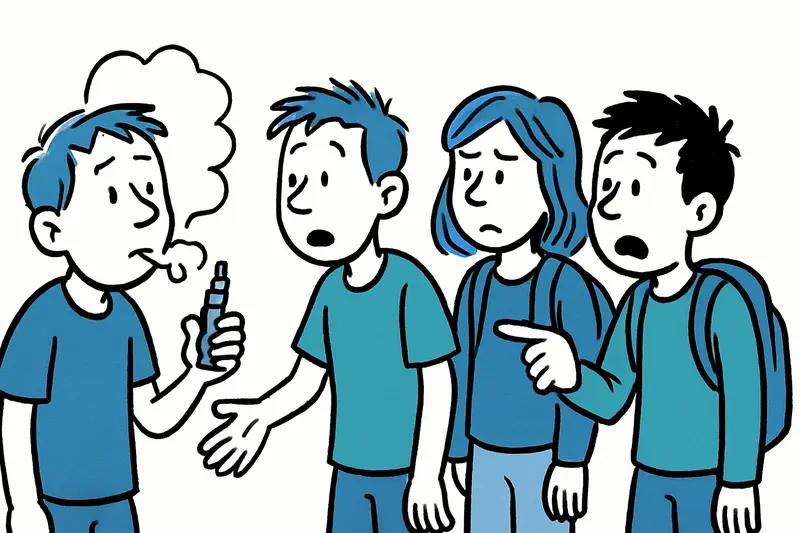
In the last school year, significantly more vaping cases were recorded in the schools of the Balearic Islands: incidents rose from 48 to 92. Educators and school police report that some children already use their first devices at around ten years old. At the same time there were more interventions related to other drugs outside school, especially hashish and marijuana. For the first time since the pandemic, however, schools are again seeing less bullying and fewer open conflicts — a strange contrast.
Key question: Why are e-cigarettes gaining popularity among children so quickly, and why do existing rules and controls apparently fail to have an effect? This question is not a dry numbers game; it sits right on the schoolyard: In Palma, on a cool February morning, you can hear the laughter of break groups, the bus passing on the Gran Via — and in the middle the short, sweet scent of a flavored liquid, barely noticeable, almost normalized.
Critical analysis: The development has several facets. First, the devices are increasingly inconspicuous and easy to hide; second, flavors and colorful designs attract younger users; third, online control remains patchy. Although sales to minors are legally prohibited, those responsible report that many adolescents obtain devices via online shops or classifieds, or trade them with each other on school premises. Added to this is social pressure: those who "vape" quickly come to be seen as part of a group — a factor that pure bans do not eliminate.
What is missing from the public discourse: There is too little discussion about the concrete supply channels, the role of social media and influencers, and the attractiveness of certain flavors. Equally invisible is how much prevention fails within families when parents hardly distinguish the devices from traditional cigarettes or do not know the technology. The psychological dimension — boredom, group belonging, stress with parents — also appears too rarely as a contributing cause. This lack of focus is also reflected in coverage such as Balearic Islands Reject Central Smoking Ban on Beaches and Terraces.
Everyday scene from Mallorca: In the playground in front of a middle school in western Mallorca, it is striking how quickly objects pass between children — a phone, a headphone, a small, blinking device. Teachers only notice it when a child suddenly has coughing fits or behaves differently. Parents pick up their children later at the bus stop on the Carretera, surprised by a new scent on the jacket. Such scenes are everyday occurrences and often remain invisible to authorities who only see the spikes in the statistics.
Concrete solutions: First: stricter controls for online vendors with mandatory age verification and sanctions for providers who are negligent. Second: schools need practical education that shows and explains the devices rather than just banning them — workshops that parents and children attend together. Third: a low-threshold contact point for young people offering short counseling and help to quit, for example in cooperation with health centers and pharmacies. Fourth: the introduction of anonymous reporting boxes at schools, combined with clear educational consequences instead of pure punishment. Fifth: exchange between schools, families and local retailers so that points of sale become more sensitive to tricks like "click & collect" without age checks.
Also practically feasible would be local information campaigns in shopping streets like Passeig del Born or in front of supermarkets, informational evenings in village clubhouses, and simple checklists for parents on how to recognize and dispose of devices. Schools could send short monthly online info videos to parents showing what current vape models look like — recognizable, concise, without moralizing.
Concise conclusion: The numbers are a wake-up call. Bans alone will not solve the problem; a combination of better sales control, concrete local education and an open offer for children who have already started is needed, as discussed in Balearic Islands Choose Voluntariness Over Blanket Ban: A Critical Look. If the island community — parents, teachers, retailers and health services — acts together and practically, the trend can be slowed before more ten-year-olds bring a light, sweet haze home.
Frequently asked questions
Why are more children in Mallorca starting to vape?
At what age do children in Mallorca start vaping?
How can parents in Mallorca tell if a child is vaping?
What should parents in Mallorca do if their child is vaping?
Is vaping among children in the Balearic Islands linked to social media?
Are children in Mallorca getting vape devices online?
Why are schools in Mallorca worried about vaping even when bullying is falling?
What can schools in Mallorca do to reduce vaping among pupils?
Similar News
New trick at Palma Airport: suitcase stolen from the belt — a reality check
On September 28 a 36-year-old allegedly stole a suitcase from the baggage belt of a 51-year-old German passenger at Palm...
Urgent Clearing of Palma's Torrents: Flood Prevention or Symptom of Short-Sighted Planning?
The city of Palma is responding to storm forecasts and has cleared several torrents. We ask: Is the short-term clearing ...

Evaneos and Mexico: A Reality Check for Sustainable Travel
Travel advertising often reads like a promise: local, sustainable, unique. But how deep do these promises really go? A c...

From Megapark to the Altar: Party Singer Now Offers Weddings in Mallorca
A well-known party artist combines partying and marriage: instead of a traditional church there are ceremonies at the Me...
The Maricarmen Case: Why an Eviction Is Forcing Spain's Housing Debate
Images of an 87-year-old woman on a stretcher have sparked a debate in Spain that also runs deep in Mallorca. Who protec...
More to explore
Discover more interesting content

Can Cap de Bou

Townhouse Lleo 72
