
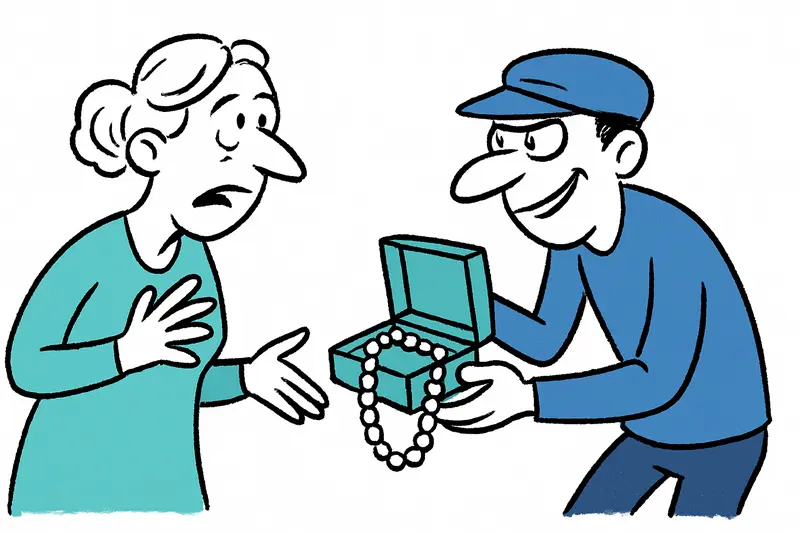
When Trusted People Steal: Family Jewelry Recovered in Sineu
When Trusted People Steal: Family Jewelry Recovered in Sineu
A cleaner confessed to taking family jewelry worth around €40,000 from a finca in the center of the island. The Guardia Civil seized the pieces — a case that raises a common question on Mallorca: How can households protect their heirlooms without sowing mistrust?
When Trusted People Steal: Family Jewelry Recovered in Sineu
Leading question: How can households maintain trust in domestic staff while effectively protecting valuable family items?
The Guardia Civil recently was able to secure jewelry worth around €40,000 that had been stolen from a residence in Sineu. A 37-year-old homeowner filed a complaint on August 3; a few days later the trail led to Inca. There a 46-year-old cleaner confessed and showed investigators the place where she had hidden the pieces. The stolen heirlooms were returned to the owners.
That is the concise core of the case. But there is more behind it: it's about trust, economic hardship, organizational gaps and the question of how families can protect their keepsakes without treating every helper as a suspect.
Critical analysis
On one side is the clear act: access to the house, opportunity, knowledge of the location and value of the items. On the other side are typical everyday scenes in Mallorca — keys used by several people, households with constantly changing staff during holiday seasons, sometimes inadequate storage. In Sineu's Plaça Major people talk about it in cafés over a café cortado: they are surprised, but not completely shocked. Everyone knows a case of "something that suddenly disappeared," such as the Porto Cristo jewelry theft.
Public discussion often focuses on the guilt of the suspect, as in coverage of Palma's jewelry theft. What is neglected is: How are working relationships organized? Were there written agreements, inventory lists or clear rules for access to private rooms? What role does financial insecurity play for perpetrators and what could help prevent this?
What is missing in public discourse
There is a lack of sober debate on prevention without stigmatization. Too often attention is reduced to individual morality instead of addressing systemic weaknesses: no secure storage place in the house, poor documentation of valuable items, unclear key management, no or only informal reference checks for employees. Also little discussed is how victims are supported emotionally — when heirlooms are involved the loss is not just financial.
Typical island scene
Imagine the kitchen of a finca: olive trees cast shade, it smells of lemons and freshly ground coffee. The cleaner comes regularly, brings her own thermos, chats with the neighbor's housekeeper. In such routines familiarity grows — and sometimes, unnoticed, a risk. Scenes like these play out daily in villages like Sineu or in side streets of Inca.
Concrete approaches
Prevention can be pragmatic without creating an atmosphere of fear:
1) Practical organization: Photograph and inventory valuables and keep them in a bank safe deposit box or a securely anchored safe at home. A simple list with owner details reduces later uncertainty.
2) Access management: Reduce the number of keys in circulation, set clear responsibilities when outsiders enter the house. Good practice: don't leave keys unattended and change locks or cylinders when staff change.
3) Fairer hiring processes: Obtain references, agree on short trial periods, and have written agreements about rooms and areas designated for cleaning.
4) Insurance and legal remedies: Check which policies cover loss or theft. After an incident, file a report as soon as possible and secure receipts and evidence.
5) Community measures: Inform neighborhood networks, use local mediation services or reputable agencies that screen staff carefully.
Conclusion
Fortunately the case in Sineu ended with the pieces being returned. The episode should nevertheless be an occasion to question habits: not to foster mutual mistrust, but to make everyday routines safer. Those who keep heirlooms should store and document them so they are as little vulnerable as possible. At the same time, workers need fair conditions so financial hardship does not become a desperate act. Both together — practical precautions and socially considered working conditions — make the island a little safer.
Frequently asked questions
When is the best time of year to visit Mallorca for beach weather?
What should I pack for a Mallorca trip across seasons?
Are Mallorca’s beaches safe for swimming?
What’s the climate like in Mallorca and how should it guide plans?
What family-friendly activities does Mallorca offer?
Are there good day trips from Mallorca to explore the island?
What about Mallorca’s water temperatures for swimming?
Which areas in Mallorca offer the best seaside views and sunsets?
Similar News
Finally Home: Mike and Leyla Heiter Buy Villa with Sea View in Mallorca
The reality TV couple Mike and Leyla Heiter have bought a house in Mallorca with a roof terrace and sea view. An Instagr...
Arrest after series in Palma: Who protects apartments from repeat offenders?
The National Police arrested a man in Palma who investigators say may have broken into several apartments. In one incide...
How a Teenager Without a Driver's License Stole a Rental Car — and What It Means for El Arenal
In El Arenal a minor took advantage of an unattended rental car with its engine running. Flight, climbing over walls and...
Three-ton llaut salvaged in Puerto Portals – volunteers clear microplastics from the harbor
During the weekend operation in Puerto Portals, divers pulled an approximately three-ton llaut from the harbor. Associat...
Naked Pillar in Bunyola: Why a Climbing Prank Is More Than an Accident
During the Sant‑Mateu verbena a 20‑year‑old fell at a protected wayside cross in Bunyola and pulled the stone cross off ...
More to explore
Discover more interesting content

Can Cap de Bou

Townhouse Lleo 72
