
Coachman Falls on Passeig del Born: Questions About the Safety and Future of Carriages
Coachman Falls on Passeig del Born: Questions About the Safety and Future of Carriages
An accident with a horse-drawn carriage on the Passeig del Born injured a coachman and reignited the debate about carriages in Palma's city centre. What was overlooked — and how can a safe transition to electric carriages be achieved?
Coachman Falls on Passeig del Born: Questions About the Safety and Future of Carriages
Bus, narrow streets and a fallen coachman — what does this mean for Palma's streetscape?
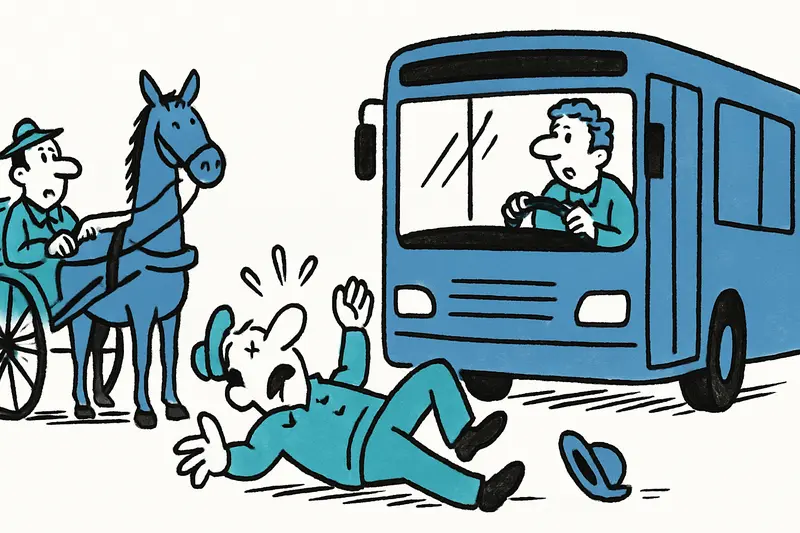
In the morning there was an incident on the Passeig del Born that quickly caused a stir: a roughly 60-year-old coachman lost control of his team, fell headfirst onto the roadway and was taken to hospital with head and leg injuries. A bus from the municipal transport company had stopped beforehand to let passengers off, apparently including German tourists. The horse was unharmed. Local police and emergency services secured the scene and accident investigators began their enquiries.
Key question: How safe are horse-drawn carriages in Palma's narrow city centre, and is the planned replacement model — electrically powered carriages — an adequate response to the problems?
The facts are sparse but clear: narrow streets, tourist foot traffic, stopping buses and traditional vehicles all meet in the centre. The Passeig del Born is already busy in the morning — cafés set out tables, tourists photograph facades, delivery vehicles search for parking spaces. In such an everyday scene small triggers are enough: a stopping bus, a manoeuvre to avoid something, an obscured stretch of road — and suddenly the situation flips.
The city administration is already working on reforming the carriage system, as reflected in Palma Struggles to End Horse-Drawn Carriages, and intends to introduce electric vehicles step by step; according to the authorities almost all licence holders support this plan. Currently there are 28 active carriage licences in Palma. At the same time, animal welfare accusations against individual operators remain an issue: overloading, improper parking and criticism of the animals' care are repeatedly mentioned, as highlighted by After Two Collapsed Horses.
Critical analysis: The debate is too often technical — it's about vehicles, drives, licences. What is missing is a sober view of the interaction between traffic, space and people: Where do buses stop? Are there fixed loading zones that block carriage routes? What are the sightlines for coachmen at junctions? What rules apply to parking and stopping in the peak tourist season? And: are the safety standards for the people who work with carriages sufficient?
What is often missing from public discussion is the everyday perspective of residents and bus drivers. A transparent cost-benefit calculation for the switch to e-carriages is lacking — who pays for conversion, maintenance and training? Also rarely discussed is how transition phases should be regulated exactly: time restrictions, driving bans during peak times or temporary diversions could prevent accidents.
A scene from Palma: morning on the Born, the sound of hooves mixes with the clatter of buses. An older coachman waves to passing tourists, a delivery van parks half on the roadway; a bus stops, doors open, a small crowd forms — and the street narrows into a trap. The image is easy to imagine because I see it often: lack of visibility grows quietly until it takes its revenge.
Concrete solutions that should be put on the table now: first, short-term regulatory measures — temporary no-stopping zones for buses in particularly narrow sections, designated disembarkation zones away from carriage routes, clear sanctions for illegal parking. Second, a timed driving ban for carriages during peak hours, combined with clearly defined alternative routes. Third, mandatory safety training for coachmen and bus staff with joint exercises on real routes so the interaction can be practised. Fourth, technical aids: convex mirrors, warning lights on carriages, clear marking of carriage lanes and geofencing so that e-carriages operate only in authorised zones.
The transition to electric carriages also requires a social plan: subsidies or leasing schemes for the new vehicles, financial support for workshop conversions and a binding deadline coupled with control mechanisms. Equally important is stricter oversight of animal welfare — regular checks by independent veterinary teams, mandatory rest periods for the animals and transparent reporting channels for violations.
Punchy conclusion: The fall on the Passeig del Born is not an isolated accident but a symptom of an urban imbalance; comparable episodes such as Horse Falls in Palma have fuelled the debate. It is not enough to change only the drive system. Palma's streets need clear rules, spatial planning and a social financing concept. Otherwise we will soon simply exchange one image problem for another: electric and modern, but no safer because nothing about the procedures has changed.
Frequently asked questions
Are horse-drawn carriages still safe in Palma’s city centre?
What is Palma planning to do with horse-drawn carriages?
Why are Palma’s narrow streets a problem for carriages and buses?
What should tourists know before taking a horse carriage ride in Palma?
Is Palma considering electric carriages instead of horse-drawn ones?
What happened on Passeig del Born in Palma?
Are there animal welfare concerns about carriage horses in Palma?
What rules could improve carriage safety in Palma?
Similar News

Fewer Airlines, Fewer Destinations: What Palma's Winter Flight Schedule Means for Mallorca
Analysis shows: Winter at Son Sant Joan Airport will be quieter, with significantly fewer airlines and destinations. Who...
German tourist dies in Sa Calobra – a reality check for emergencies on Mallorca's beaches
A 40-year-old tourist died at the Torrent de Pareis. The emergency call, a doctor who happened to be present, a defibril...
Deadly Tractor Accident in Bunyola: What Needs to Be Done Now
In a work accident on an estate near Bunyola, a roughly 40-year-old man lost his life. His wife and a small child were o...
Head-first dive into the shallow part of Cala Fonoll: An accident and the unresolved question of responsibility
A young tourist dove into Cala Fonoll and was seriously injured. Key question: Why are clear warning signs missing at da...
Mistaken identity with fatal consequences: Brutal assault in S'Aranjassa — what's missing in the follow-up?
At S'Aranjassa a visitor to a finca was tied up, beaten and thrown out of a van. Three men have been arrested, including...
More to explore
Discover more interesting content

Can Cap de Bou

Townhouse Lleo 72
