
Form requested – Complaint filed after incident on bus 341
Form requested – Complaint filed after incident on bus 341
A passenger alleges that a driver of line 341 physically attacked her when she asked for a complaint form. TIB has requested video footage; the Guardia Civil is investigating.
Form requested – Complaint filed after incident on bus 341
Key question: How safe are passengers when a simple request for a complaint form escalates?
On the evening of July 8, a woman stands on the curb in Pòrtol, the thermometer still showing summer heat, bells ringing somewhere, and line 341 is delayed again. The ticket in her wallet shows a validation at 7:23 p.m., although the scheduled departure was 7:05 p.m. According to her account, the woman asked for a complaint form when boarding – and by the end of the stop she not only had a completed complaint, but also a report filed with the Guardia Civil.
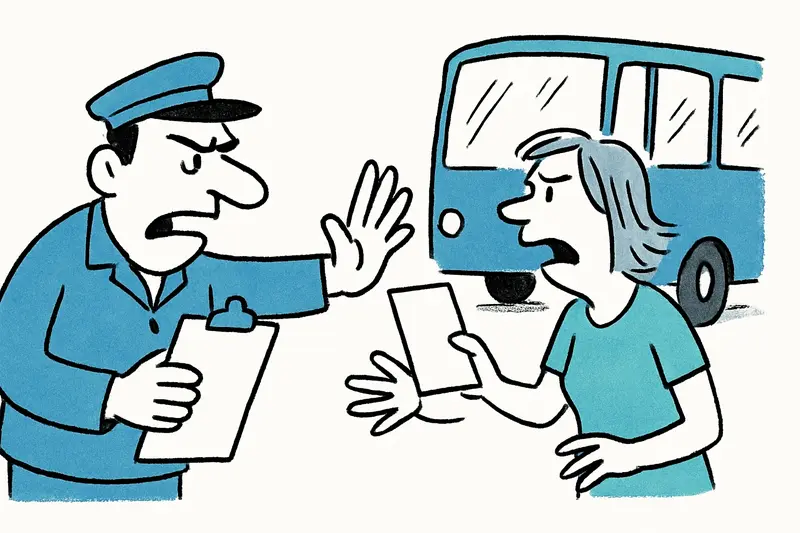
The complainant says the driver initially refused to hand over a form. After she insisted and involved another employee, the sheet was finally produced – but the conflict did not end there: the accused is said to have threatened her, struck her hand and kept the copy of the form. Such allegations are serious; the Consorci de Transports de Mallorca (TIB) confirms it is reviewing the case and has requested the recordings from the onboard camera. At the same time the operator is obtaining the driver's statement. If the allegation of bodily harm is confirmed, disciplinary steps will be considered – and the judiciary must decide.
This is not the woman's first complaint: already on June 16 she complained that a driver of the same line had not given her a form. At that time TIB apparently acknowledged her complaint and announced measures to the operator. Now the case is entering the judicial phase. Similar tensions have been reported elsewhere, for example Magaluf: Escalation at the Bus Stop — What the Incident Reveals About Safety and Civil Courage.
A scene like the one in Pòrtol is small and everyday, and precisely for that reason it should make us suspicious. At a busy stop the mood can quickly turn: passengers jostle, the heat makes tempers short, and delays are the fuel for friction. But that must not mean that a formal means of complaint – filling out a form – should carry the risk of bodily harm. The video recordings will clarify what exactly happened; until then many questions remain open.
Critical analysis
First: Why do such escalations occur at all? Delays on line 341 are, according to the passenger, recurring; prolonged delays increase stress for drivers and passengers. Second: The complaint procedure is apparently unclear or impractical for travelers. If drivers are allowed to retain original forms, there is no immediate verification – and that breeds mistrust. Third: The role of recordings. Cameras can neutralize and prove what happened, but only if the footage is complete, unaltered and evaluated promptly. Other episodes, such as abrupt maneuvers or driver impairment, highlight the broader safety debate (Eight Injured after Hard Braking in Palma – Heated Debate over TIB Working Conditions; TIB bus driver tested positive: Line 104 bus in Palma stopped).
What is missing from public debate
People talk about isolated incidents, but rarely about systemic issues. There is too little transparency about the frequency and causes of such incidents, and no easily accessible statistics on how often forms are refused or copies are retained. Equally rarely discussed is how burdened drivers are – duty rosters, buffer times, and how stress situations are handled. And last but not least, there is a lack of clear information for passengers: Where can I obtain a confirmed copy of my complaint? How long are camera data retained? Whom can I trust?
Everyday scene from the island
Anyone who has waited at the bus stop in front of the FAN shopping center during evening rush hour knows the murmur and the irritated mood: strollers, night-shift workers, tired seniors. In such moments small gestures matter – a stamp on the form, a quick 'I'll note that', and the situation calms. When that is missing, tensions rise quickly.
Concrete solutions
- Issue an immediately stamped copy: Every submitted complaint must be confirmed and returned to the passenger immediately; this can be done mechanically or digitally. - Digital form with timestamp: An app or a QR code on the bus that sends a sealed report to the consortium reduces on-site disputes. - Clear protocols for handling complaints: Training for drivers on de-escalation and legal conduct; service instructions prohibiting the retention of copies. - Regulate access to and retention of video recordings: Fixed retention periods, independent review in complaints, rapid preservation of relevant clips. - Transparency reports: TIB could publish semi-annual figures on complaints, outcomes and measures. - Independent ombudsman or hotline: Passengers need an external point of contact that tracks cases and communicates results.
These proposals require money and organization, but they would restore trust and reduce the number of heated confrontations.
Conclusion: The allegation against the driver is serious and is now under judicial review. But the bigger point remains: How can we prevent everyday situations at bus stops from turning into physical altercations? Not with empty words, but with clear rules, rapid transparency and practical measures for passengers.
Frequently asked questions
When is the best time to visit Mallorca for good weather?
What should I pack for a trip to Mallorca?
Are there beaches in Mallorca suitable for swimming?
What are easy activities to do in Mallorca?
How is public transport in Mallorca for getting around?
Is Mallorca suitable for families and solo travelers?
What should I know about Mallorca’s weather and sea conditions?
What practical tips help with budgeting and staying safe in Mallorca?
Similar News

Safely Withdraw Cash on Mallorca: Practical ATM Tips
Whether in Palma or on a mountain road in the Tramuntana: with a few simple habits you can avoid fee traps and fraud whe...
Don't drive there by car? The Tramuntana closures on the day of the solar eclipse — a reality check
The Balearic government will widely close roads on 12 August, including access to the Serra de Tramuntana. A reality che...
Traffic Light Update for Pedestrians: Mallorca Brings Clarity to Intersections
From 1 October 2026, flashing yellow for vehicles may no longer light at the same time as pedestrian green. What this me...
Playa de Palma without street vendors: What’s behind the sudden disappearance
The usual street sellers and massage offers have suddenly disappeared from Playa de Palma. Who pulled the strings, and w...

Salsa Before the Movie: Santa Ponça Gears Up for a Balmy Outdoor Cinema Evening
On July 24 the Mallorca Country Club in Santa Ponça will turn into a dance floor and open-air cinema: Mariia Maksina lea...
More to explore
Discover more interesting content

Boat Tour with BBQ along Es Trenc Beach
Private transfer from Mallorca Airport (PMI) to Pollensa
