
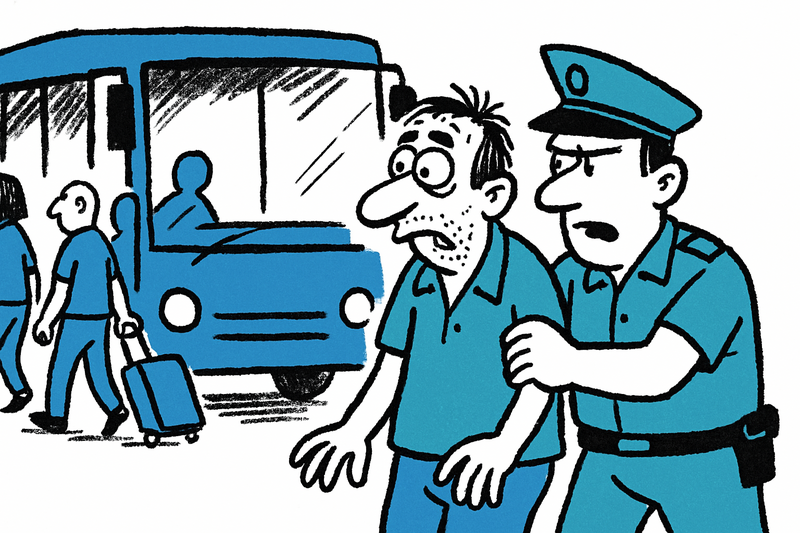
TIB bus driver tested positive: Line 104 bus in Palma stopped
At the Plaza del Progreso in Palma, the Guardia Civil stopped a TIB bus on line 104 after passengers called the police and a drug test on the driver came back positive. What does this mean for safety on Mallorca's intercity routes?
Plaza del Progreso: Line 104 bus comes to a halt, passengers exit calmly
Yesterday at around 5:20 p.m. a journey from Magaluf to Palma came to an abrupt end at the Plaza del Progreso, as described in a report on the TIB line 104 stop at Plaza del Progreso. Several passengers had called the police en route because they perceived the driver's behaviour as dangerous. On site, the Guardia Civil (Guardia Civil official website) asked the roughly 80 people on board to leave the bus in an orderly manner – suitcases, flip‑flops, tired holiday faces under Mallorca's warm late‑afternoon sun.
Key question: How safe are our intercity connections really?
The central question raised by this incident is not only: Was the driver under the influence of drugs? But: How could it come to this at all? The answers concern not only an individual, but the system behind the daily connections between holiday resorts like Magaluf and the island capital.
What happened on site and what is often overlooked
The Guardia Civil carried out a drug test on the driver at the scene, which proved positive, as reported in Conductor de TIB da positivo: autobús de la línea 104 detenido en Palma. A replacement TIB driver took over shortly afterwards and continued the journey, according to local coverage of the TIB line 104 incident. The intervention was widely praised on site – yet there are aspects that initial reports often neglect. For example: Who routinely checks the fitness for duty of driving personnel? How often are unannounced controls carried out, especially in the high season when time pressure is high and driver turnover increases?
Little considered: working conditions and prevention
Behind such incidents there are often structural reasons. Who are the drivers – permanent employees, temporary staff, subcontractors? What do break times and shift schedules look like when the sun is beating down and buses shuttle between holiday resorts? Fatigue, stress and language barriers are factors that receive little attention in public debate but can influence road safety.
Concrete measures: What should be reviewed and improved now
The experience at Plaza del Progreso suggests concrete recommendations. First: regular, unannounced drug and alcohol tests for drivers on all intercity lines. Second: better monitoring of working hours and realistic duty rosters so that fatigue does not become a safety risk. Third: technical solutions such as telematics monitoring, daily reports on driving style, and optional vital checks before the start of a shift.
Technology, control and prevention – a pragmatic mix
Telematics units that report abrupt braking, excessive speed or other risky maneuvers would not be science fiction. Combined with periodic medical fitness checks and clear reporting channels for passengers, the system could become significantly more robust. Of course data protection and fair treatment of drivers are important topics in this discussion – nevertheless: public safety must come first.
What passengers can do
For travellers, prevention remains partly their responsibility: trust your instincts, note the bus number or time if in doubt, and report suspicious behaviour immediately to the police (Spain emergency number 112 website) or by phone to the bus operator (TIB official website). A photo or short video often helps — of course only if it does not endanger your own safety.
Looking ahead: Opportunities for Mallorca
The incident has an unpleasant core – but also an opportunity: if authorities and operators take it seriously, it could lead to better standards for all intercity connections. More transparency, mandatory health checks, technical support and open complaint procedures would not only increase safety but also give visitors and residents greater confidence that Mallorca's roads are safe.
Conclusion
The bus stop at Plaza del Progreso was a wake‑up call on a hot afternoon: it reminded us that a single call from fellow passengers can save lives – but also that prevention and control must be expanded systematically. Investigations are ongoing; until reliable results are available, the main question remains how the island can prevent such scenes from repeating in the future.
Frequently asked questions
What should I do if a bus driver in Mallorca seems unfit to drive?
Are TIB buses in Mallorca generally safe to use?
What should passengers do if a Mallorca bus journey is suddenly stopped?
When should I call 112 about a problem on a bus in Mallorca?
Why are late-afternoon intercity buses in Mallorca sometimes more difficult for drivers?
What should I know before taking the TIB bus from Magaluf to Palma?
What is Plaza del Progreso in Palma known for as a bus stop area?
How can Mallorca improve bus safety on intercity routes?
Similar News

When coercive fines aren't enough: Could holiday rental owners soon face prosecution?
The island administration is stepping up action against unauthorized holiday rentals: high daily coercive fines up to €5...

Palma Airport on an Expansion Course — Who Decides How Much Growth the Island Needs?
Aena and Madrid are planning multi-million euro investments for Son Sant Joan and project higher capacities. Concern is ...
Who Gets Left Out? Why Overbookings Will Hit Many Mallorca Travelers This Summer
On hot check-in days at Son Sant Joan, frustrated travelers pile up. New figures from Reclamador.es show that a large sh...
When the Handyman Came: How an Engagement Ring Disappeared in Mallorca and What It Says About Trust
During a repair in Andratx a highly personal engagement ring went missing — a case that calls not only for punishment bu...
How Burglars Test Fincas in Mallorca — and What You Can Do About It
The Spanish National Police warn of a simple but effective trick: small markings on doors reveal whether a finca is occu...
More to explore
Discover more interesting content

Can Cap de Bou

Townhouse Lleo 72
