
Controlled fire, fatal consequences: What went wrong in Almallutx
Controlled fire, fatal consequences: What went wrong in Almallutx
In Almallutx (Escorca) a 78-year-old died after a planned burning of forestry waste. The fire spread over about two hectares. Why do such accidents happen, and how can we prevent them?
Controlled fire, fatal consequences: What went wrong in Almallutx
Key question: How could a planned burning of forestry waste in Almallutx turn into a forest fire that cost a man his life — and what lessons must Mallorca draw from it?
Summary of events
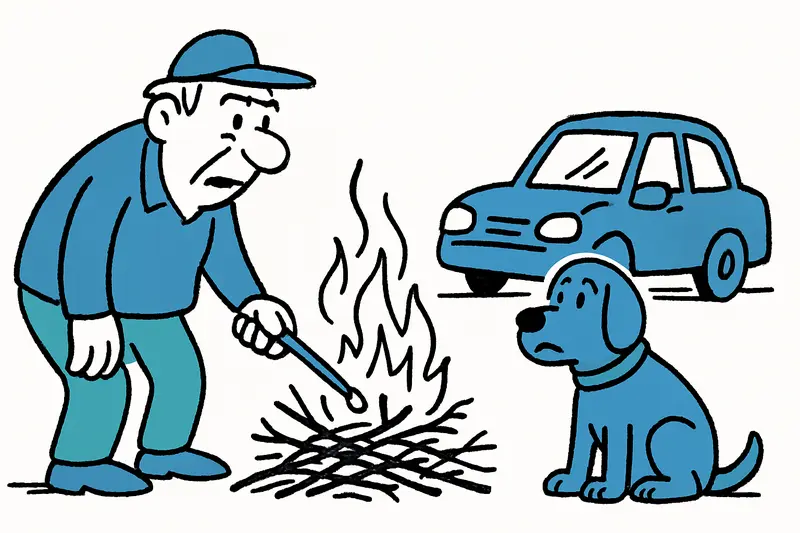
On the morning of a cool February day in the Serra de Tramuntana, a man allegedly burned garden and forestry waste near Almallutx. The fire spread and ultimately affected about two hectares. When firefighters from Sóller and Inca and specialists from IBANAT arrived, only his car and the dog remained at the edge of a narrow mountain road. The 78-year-old was later found with fatal burn injuries. A firefighting helicopter and a water tender supported the crews. Similar operations have occurred elsewhere, for example Field fire near Manacor: What the operation on the Ma-15 reveals about Mallorca's fire risk. The Guardia Civil has opened an investigation; an autopsy will clarify the cause of death. Early indications point to a medical impairment during the work.
Critical analysis: more than an accident
It is obvious: an open fire in hilly, wooded terrain is dangerous — especially when wind, dry underbrush or a lack of extinguishing means are involved. But it's not only natural conditions. Many of these incidents have a social component: older people take care of fields and plots, often alone and without support. If someone of advanced age is physically overstrained or suddenly becomes ill, there is no protective mechanism — no second person, no ongoing connection to an alarm centre, no standing water reservoir.
Another aspect is the information and infrastructure question. How well do residents of remote settlements know the risks and the permitted disposal routes? Are there services to collect cuttings, or is burning the only solution? Those who enforce local rules or offer alternatives are often not visible in rural areas — and coverage of multiple blazes, such as Wildfire in s'Albufera: Six Fires Quickly Extinguished — but Questions Remain, often highlights the pattern of repeated incidents rather than long-term prevention.
What is missing in the public discourse
Immediate reporting names the sequence and those involved, but it rarely addresses prevention at the everyday level: concrete help for older landowners, reliable disposal services outside tourist centres, and practical, locally adapted awareness measures. A calm discussion about accessibility and emergency communication in remote places is also often missing: no app, no neighbour, no phone call — and the risk rises. Responder safety should also be part of the conversation, as seen in incidents like Fire next to the sports field in Inca: A firefighter injured — what now?.
An everyday scene from Almallutx
Imagine the morning: cold air, the finca a few kilometres from the main road, cicada sounds still distant, the smell of damp pine wood. A dog barks, a tractor in the distance, bells from a small village church. Such places are idyllic — and dangerous if a wind shift or a fainting spell occurs while burning branches. Many know this scene; it's part of island life.
Concrete solutions
Prevention must be practical. Proposals that can help immediately:
1. Mobile collection campaigns for cuttings: Municipalities could organise seasonal collection tours, especially in rural zones. This reduces the need to burn.
2. Local support networks: Neighbours, volunteers or municipal teams should have registered helpers who assist with work — especially for older people.
3. Simple safety checklist before burning: Check wind with AEMET, have extinguishing water ready, establish firebreaks, never work alone, keep a mobile phone at hand, inform neighbours, have the emergency number 112 ready.
4. Publicly visible information: Orientation boards in village centres and on municipal websites explaining how to properly dispose of green waste and what risks open fire carries.
5. Training for volunteers and homeowners: Courses on safe firefighting with practical exercises — even simple handheld extinguishers and hose connections can save lives.
Concise conclusion
This fatal incident is not just a statistic. It points to gaps: in care, disposal and everyday safety. People living in rural Mallorca need practical alternatives to fire — and a village network that steps in when an older person needs help. Otherwise the story will repeat itself.
Frequently asked questions
Why is burning garden waste in rural Mallorca so risky?
What should I do before burning branches or garden waste in Mallorca?
Can older people in Mallorca safely handle controlled burns on their own?
What happened in Almallutx in the Serra de Tramuntana?
How do firefighters respond to a forest fire in Mallorca's mountain areas?
How can Mallorca reduce the need to burn garden waste in the countryside?
Why is communication so important for people working alone in remote Mallorca?
What does the Almallutx fire say about fire prevention in Mallorca?
Similar News
More water than last year: Mallorca's reservoirs breathe easier
September rain refilled the Tramuntana's reserves: overall fill around 35 percent, Cúber at 40.42 percent, Gorg Blau at ...
Three Luxury Hotels in Banyalbufar: Lots of Money, Many Questions
A Danish investor plans three exclusive accommodations in Banyalbufar — including the historic Son Valentí. The announce...
2.1 tonnes of cocaine on sailing yacht off Spain's coast – a reality check for the coastguard
A 14-metre yacht was seized with 2.1 tonnes of cocaine. Who monitors the ports, how does the international hunt succeed ...
Heat Bonus in Mallorca: 100 Euros Extra for Outdoor Staff at MarSenses
MarSenses pays employees who worked outdoors in August an extra €100 as recognition. Lighter uniforms, reduced hours for...
Renovating in Mallorca: What You Really Can Do Without Neighbour Consent
Many think they can do whatever they want in their apartment. That's partly true — but only as long as structural elemen...
More to explore
Discover more interesting content

Can Cap de Bou

Townhouse Lleo 72
