
Why Mallorca's Country-house Boom Has Slowed — a Reality Check
Why Mallorca's Country-house Boom Has Slowed — a Reality Check
Building permit applications for single-family homes in the campo have fallen sharply within a year. Who benefits, who loses — and what gaps the public debate leaves open.
Why Mallorca's Country-house Boom Has Slowed — a Reality Check
Key question: Is the dream of owning a country house over for good — or are we just witnessing a pause?
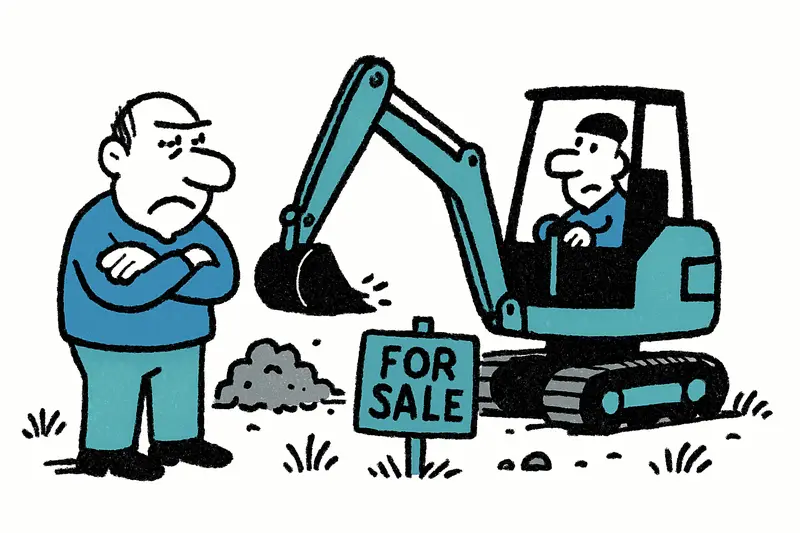
On the way to Llucmajor, when the MA-19 slowly leads out of Palma and the olive trees at the roadside rattle in the wind, you still see signs saying "Finca for sale" and occasionally an excavator on a new access road. Yet the numbers tell a different story: the number of building permit applications for single-family homes on agricultural land has fallen within a year from 686 to 358 — a drop of around 48 percent. Permits, by contrast, stand at 484 (2024) and 402 (2025, until November), a similar range that points to the time lag between application and approval. This slowdown mirrors the wider property sales slump in September.
What lies behind the slump? Three drivers immediately stand out: massively increased land prices for buildable agricultural plots, legal uncertainty in recent years, and concrete changes to allowable development that have forced builders and investors to rethink. Since 2017 application numbers (except in the pandemic year) regularly exceeded 500. Political debates and legal changes triggered precautionary behaviour: when restrictions were announced, many people rushed to file applications — a pull effect that shaped the 2017 peak.
At the same time, regulatory adjustments led to real limitations: the maximum buildable area temporarily fell from three to 1.5 percent; pool areas were limited to a maximum of 35 square metres. The three-percent rule was later reintroduced, but the experiences of recent years have left their mark. For many buyers the question remains: why buy now if the rules might change? Added to this is the price spiral for plots larger than 14,000 square metres, reflecting the rising prices per square meter — a factor that can turn a dream into an unaffordable project overnight.
One factor that is often underestimated is spatial and infrastructural strain. If one were to add up all applications submitted since records began (14,797) and realise the approved chalets (12,199), the newly created areas would exceed the urbanised area of entire municipalities. This affects not only the landscape and species, but water consumption, wastewater, access roads and the maintenance of rural power and communications networks. Anyone sitting in a café in Deià in the morning listening to the church bells can hardly imagine what additional traffic load small country roads would have to bear.
What is missing in the public debate
The discussion often focuses on application numbers and political shifts. Important aspects remain underexposed: the origin of the capital (private or institutional), long-term consequences for water management and biodiversity, the costs for municipal infrastructure and the question of whether new construction is really the best way to expand living space. Also rarely discussed is how many of the approved buildings are actually completed and permanently occupied — or whether they sit largely empty as speculative second homes, linked to the vacation rentals boom.
Everyday scene: a Saturday morning in the campo
On a Saturday morning in the small village of Sencelles a tractor passes by, dogs bark and a construction sign creaks in the wind. An older Mallorcan who has been harvesting olives for decades says that places used to be kept free for neighbours; today plots are sold to buyers from foreign agencies, a trend discussed in reporting on fewer foreign buyers on Mallorca. These voices from the field are often missing from official tables, but they are crucial when it comes to intensity of use and social consequences.
Concrete approaches
- Transparency in purchase: Mandatory disclosure of buyer profile (natural person vs legal entity) and planned use could curb speculation.
- Priority for renovation and infill: Financial incentives for converting empty townhouses instead of sealing new land.
- Land-use and infrastructure balancing: Before any new approval procedure, a cost-benefit assessment for water, wastewater, roads and emergency services should be carried out.
- Use-binding instead of free rein: Time-limited permits with conditions for permanent occupation can prevent second-home vacancy.
- Community land trust models: Municipalities could acquire land and enable socially bound housing models.
- Improved data policy: Faster, publicly accessible statistics from the island council on usage (construction progress, completion, ownership changes) would create planning certainty.
Conclusion: Not an abrupt end, but a correction
The decline in building applications is no coincidence, but an expression of high prices, changing rules and growing sensitivity to land consumption. For the island this means: we should not only argue about construction figures, but about consequences. Anyone walking through Plaça Cort in Palma in the late afternoon and hearing the voices in the cafés knows that this issue is about more than square metres — it is about landscape, infrastructure and a coexistence the island can sustain. Clear rules, more transparency and alternatives to new construction could prevent the next boom from turning into either rampant sprawl or cold speculation.
Frequently asked questions
Why has the country-house market in Mallorca slowed down?
Is it still possible to build a finca on rural land in Mallorca?
Why are land prices for buildable plots in Mallorca so high?
What planning rules have changed for rural house building in Mallorca?
What does more country-house building mean for Mallorca’s infrastructure?
Are new country houses in Mallorca often used as second homes?
What is happening with finca sales around Llucmajor in Mallorca?
Why is Sencelles often mentioned in discussions about rural development in Mallorca?
Similar News
By Boat Instead of the Road: Palma's Water Bus — a Reality Check
The 'Bus Nàutic' launches in two stages — but questions remain over interim operations, fares and environmental requirem...
Several Days of Rain Approaching: How Well Is Mallorca Prepared?
Aemet says: rain from Thursday until at least Tuesday, especially heavy on Monday. Temperatures remain mild. A reality c...
Nervous Reaction at a Traffic Stop: Why Campos Is Not Just a Sniffer-Dog Problem
At a traffic stop in Campos a 37-year-old German was arrested with a bag full of drugs. Our reality check explains why s...

Cameras Against Illegal Dumping: Porto Cristo Monitors Problem Areas – a Reality Check
Manacor has installed four surveillance cameras at particularly problematic waste spots in Porto Cristo. A local check a...
Reality check: Palma's "white" torrent — harmless salt or neglected warning sign?
White crusts on the Torrent de Sa Riera are causing a stir. Emaya describes them as salt deposits. Our reality check: wh...
More to explore
Discover more interesting content

Can Cap de Bou

Townhouse Lleo 72
